



A Legacy Forged in Ink: The Unflinching History of 'Pratap'
Newspapers were not merely sources of information; they were battlegrounds for truth, platforms for resistance, and chronicles of a nation's soul. This is the historical backdrop to the story of Pratap, a publication that defied both the British Empire and the dark forces of militancy.
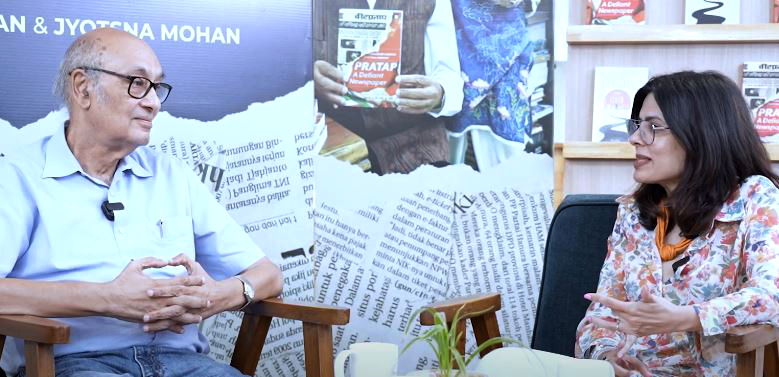
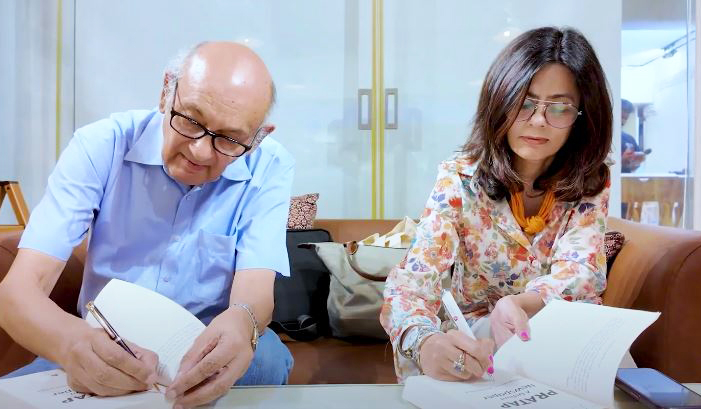
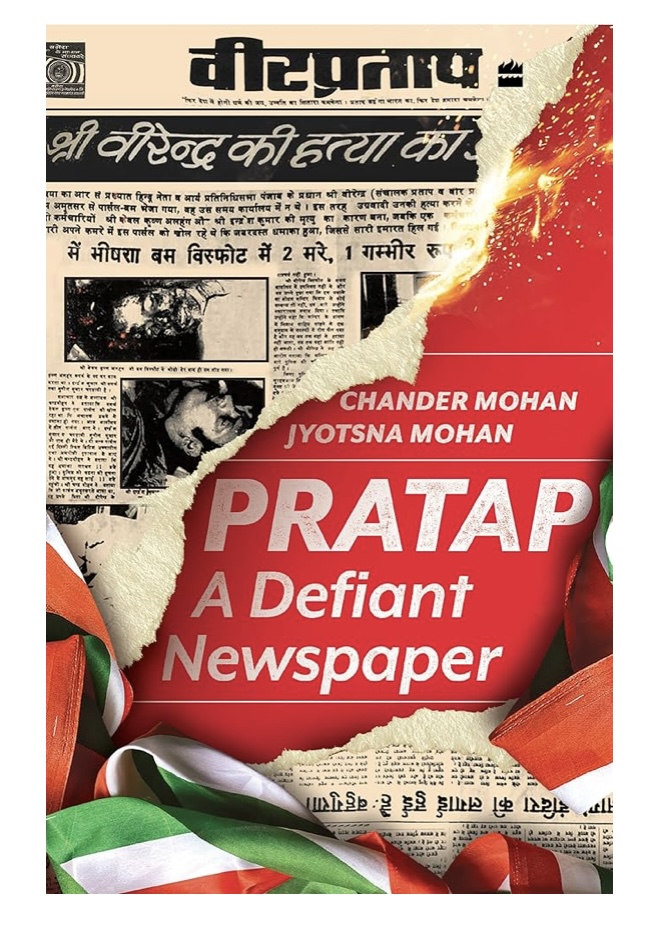
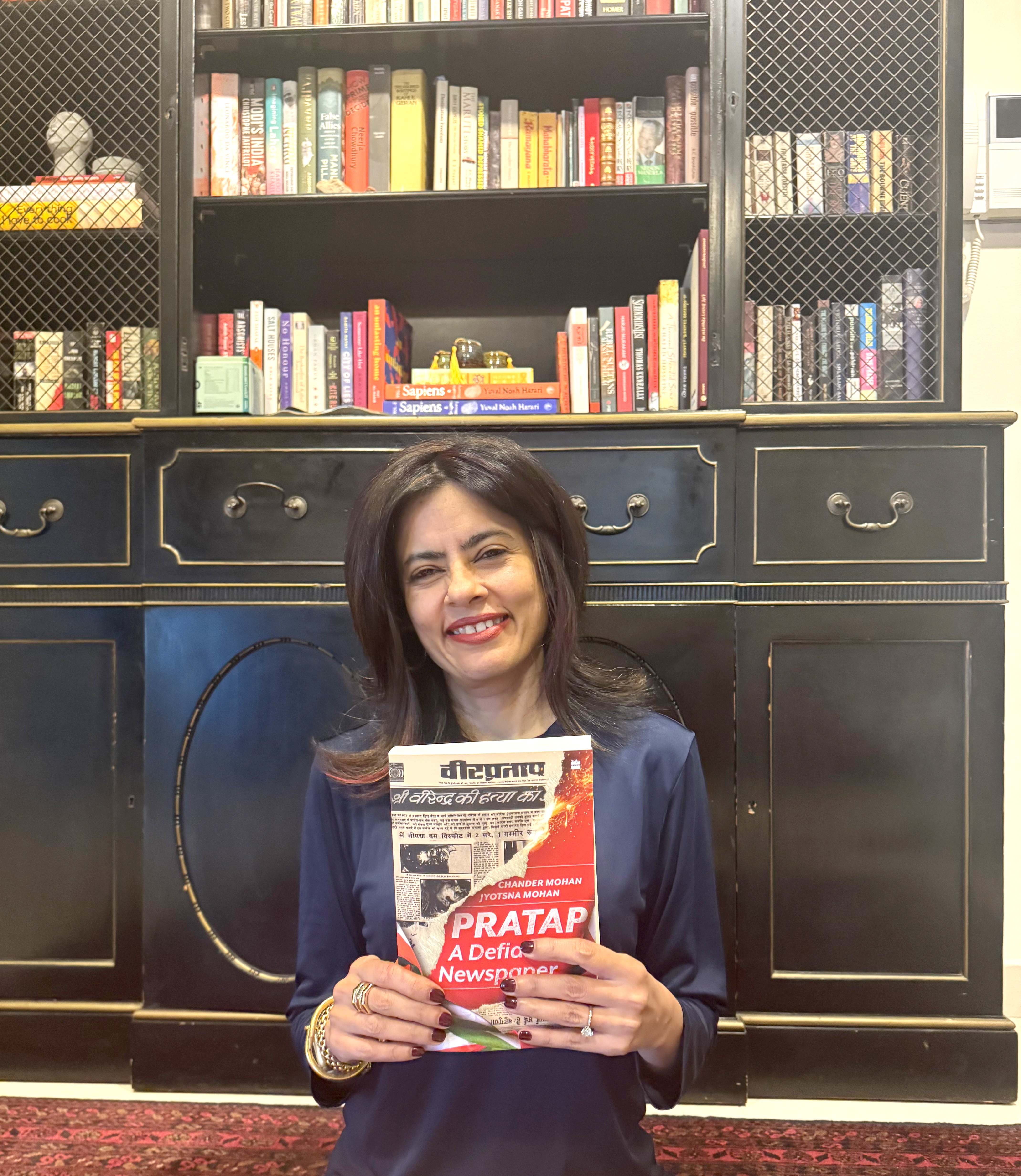
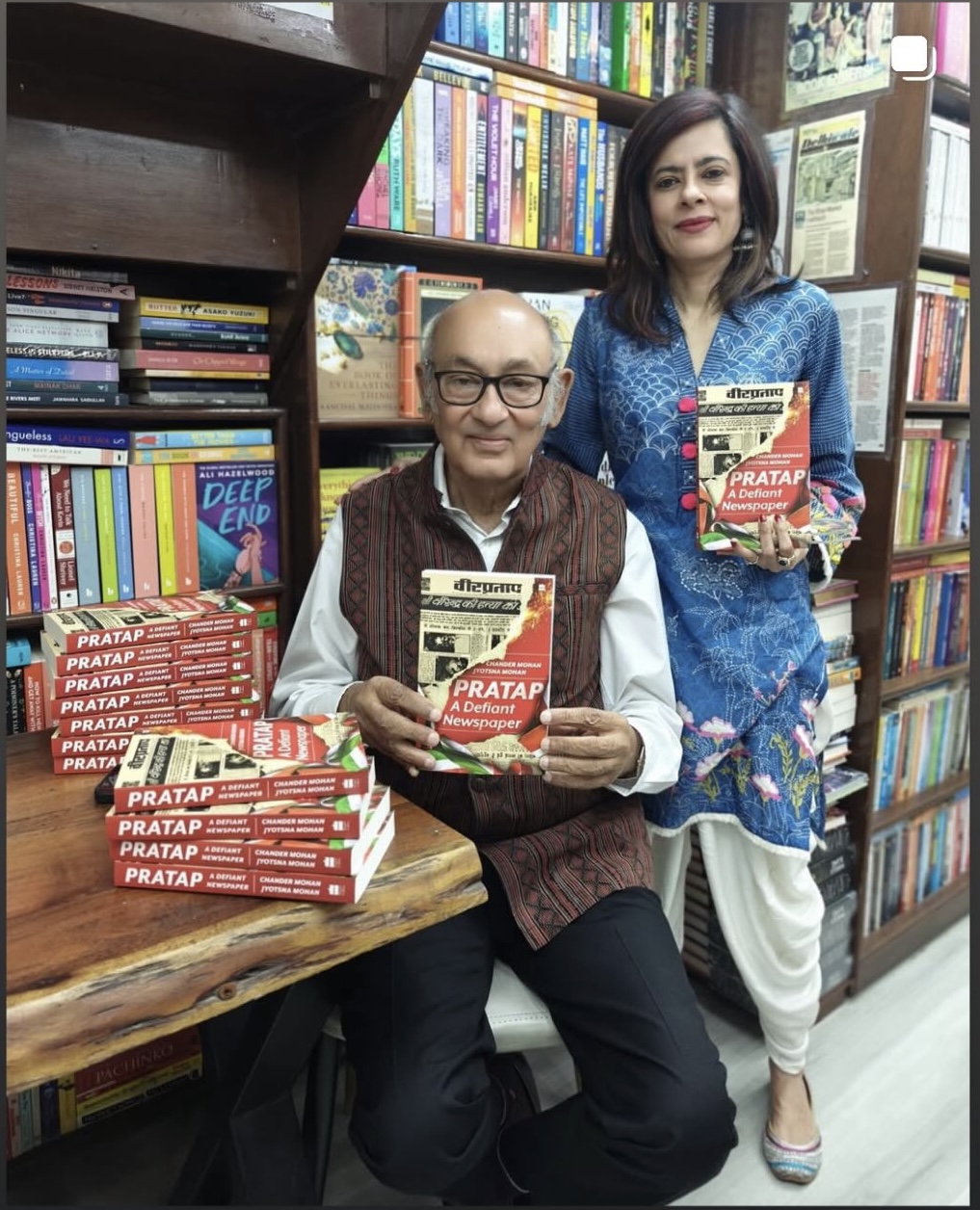
This article is just a glimpse into the heart of what happens on Bocca Bytes, a space where voices, especially young and thoughtful ones, are celebrated through meaningful conversations. This profound history was the subject of a special event held at Bocca, a vibrant hub for literature and community whose name is an acronym for Books, Office, Coffee, Culture, and Art. Presented in association with “MyCityLinks” magazine and a candid and insightful conversation led by Editor-in-Chief Satyabrata Sanu Rath, the third episode of Bocca Bytes brought together two remarkable authors to share this story. It was a privilege to host Shri Chander Mohan and his daughter Jyotsna Mohan, authors of the book ‘Pratap: A Defiant Newspaper’.
Shri Chander Mohan is a veteran journalist and columnist who served as the distinguished editor of the Hindi daily Veer Pratap for 40 years. Born in pre-partition Lahore, he has been a leading voice in vernacular journalism, witnessing several eras of politics and media, from penning uncompromising editorials during militancy in Punjab to travelling with Prime Ministers Rajiv Gandhi and Shri Atal Bihari Vajpayee.
His co-author and daughter, Jyotsna Mohan, is an award-winning writer and journalist with nearly three decades of experience across television, print, and digital media. A former senior editor and senior anchor at NDTV, her work blends journalistic insight with a deep sense of social responsibility. She is also the author of her debut book, ‘Stone, Shame, depressed’, and her writings often reflect societal issues, a legacy she proudly carries from her family.
Together, their book chronicles a legacy forged not just in ink, but in courage, sacrifice, and an unyielding commitment to truth. The following is a Q&A from the podcast, offering a direct glimpse into the historical narrative that defines the newspaper and its fearless editors.
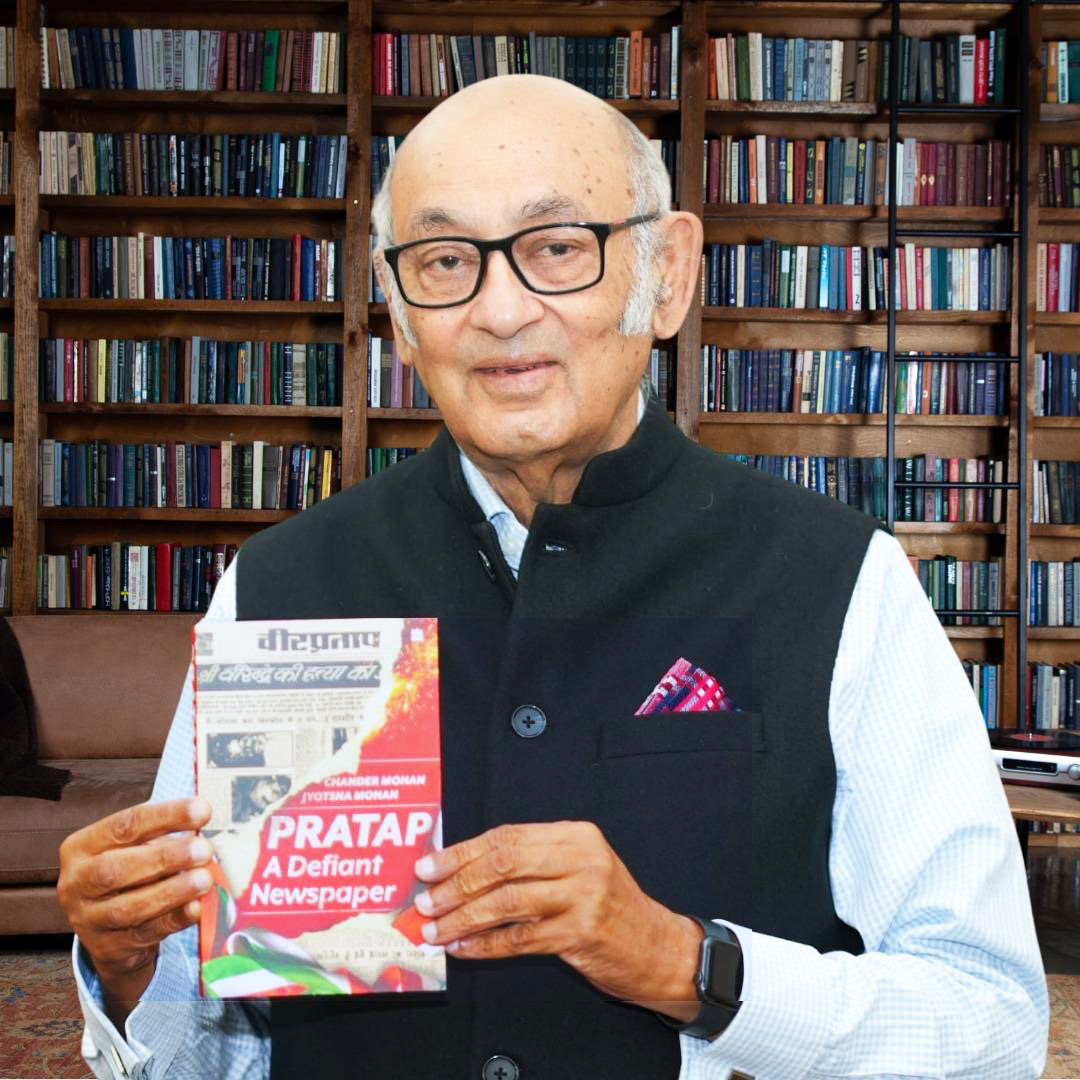
Shri Chander Mohan, Journalist and Communist
Being a father-daughter duo, did you face any personal defiance while collaborating on this book?
Thank you for having us; it’s a privilege to be in the land of Jagannath. As for the father-daughter dynamic, to be honest, there was never a problem because I am quite an obedient father. Seriously, though, since we were writing about our family's legacy, there couldn’t be any major differences. We are from different generations, of course. My upbringing was that of a displaced family from Lahore in 1947, a time of struggle. Jyotsna had a different upbringing. But for this book, our outlook was probably the same.
Pratap was more than just a newspaper; it was resistance, revolution, and history in ink. What made it such a powerful voice against the empire and censorship?
The one word I would use is defiance. Our grandfather wrote that we were not vendors of news, but had to stand up for the rights of the people. Launched on March 13, 1919, just a month before the Jallianwala Bagh massacre, the paper was shut down by the British for a full year after only a few days of publication because we were giving out unfiltered news. We came back, and the paper sold out immediately. The editors were sent to jail almost nine times. There was one time when there was no male member left in the family; everyone was inside. They imposed fine after fine, a princely sum of 3000 rupees at the time, but the people collected the money and kept the paper running. That’s how the paper built its legacy.
Defiance obviously has its own dangers. Did your family face risks to life as well?
All the time. My father was just 18 years old when he was dragged from his home, taken to prison, and tortured. Yet, he never broke. My grandmother, an illiterate village woman, had to face repeated raids on our house in Lahore. My mother, a newly married woman, even developed a kind of pleurisy when my father was imprisoned for three years. These were the personal costs that the family paid.
The parcel bomb attack is a major part of the book. Can you share what happened and how it tested the newsroom’s spirit?
On June 25, 1983, a parcel came wrapped in a white cloth. I tried to open it, but I couldn't because it was sealed with so many nails. Two of our young staff members then tried to open it, and it blew up, killing both of them. One died on the spot, and the other died on the way to the hospital. Both were young men with little children. It was a very traumatic period. To write about it was another kind of pain. The threats were constant; our family members had to be taken out of Punjab. My wife would not know if I was coming back home from work every day. That’s the cost the family has to pay.
You mentioned that a journalist's legacy can also be a burden. Can you elaborate on that?
The legacy can definitely be a burden because people always remind you of what your father or grandfather used to write, and you feel the constant pressure to live up to that. Abul Kalam Azad once wrote that my grandfather "writes with a knife," and that kind of reputation is always in the back of your mind. You can't just be an ordinary journalist; you have to be a fearless one, and that's a huge burden.
How do you think the values Pratap upheld stand in contrast to today’s journalism?
The most difficult period for me was during militancy. While fighting the British, you knew who the enemy was, and there was still a system. But during militancy, you didn’t know from where the bullet was going to come. The bomb was not the only instance. Here, with your own government, you can still fight with the courts or public opinion, but with militancy, you cannot.
What do you think about the future of print media?
Print is still better than electronic media. If you want to be sure of something, go back to a legitimate newspaper. Some newspapers are still doing a great job. I always say that after ‘Operation Sindoor’, the reliable information came from newspapers.
The book mentions your father, Virendra, as Bhagat Singh's jailmate. How does the book portray the lives of these revolutionaries beyond what we read in school textbooks?
Our book goes beyond the stereotypes. It tells the stories of the unsung heroes and the behind-the-scenes events. We detail how revolutionaries tried to blow up the Viceroy's train and failed, and how they tried to kill a governor and failed. When Bhagat Singh managed to escape Lahore after the Saunders case, it was my grandfather who was left behind. He was picked up and tortured because he was a key figure in that network.
Jyotsna Mohan, Senior editor and senior anchor at NDTV
Being a father-daughter duo, did you face any personal defiance while collaborating on this book?
I think I'm just a little bit more emotional, so he had to calm that down at some points. But otherwise, we knew exactly how we wanted to start it. Our editor at the time suggested we go in chronological order, but we both decided against it. We said, "No, this is our story, and this is how we want to tell it." And I think we did it well.
As co-authors from different generations, how did your perspectives and writing process converge while telling this story?
It wasn’t very tough. I think history can only be written one way, and that's the truth. We couldn't exaggerate or play with it. My connection was based on the stories I heard and what I'd read, while for my father, it was more personal. I have always been very aware of this legacy from a young age. We tried to connect the dots that had been left unconnected. For example, my grandfather was arrested and tortured for the Saunders case, an episode often overlooked in history books. We try to bring out these "unsung heroes" of the freedom struggle.
How do you think the values Pratap upheld stand in contrast to today’s journalism?
I think the values are not there. The media is at its lowest depths at the moment, with so much propaganda, misinformation, and fake news. Now we have content creators and influencers who think they are journalists just because they have a social media platform. I was trained by professionals on how to report and read the news. Today, anyone with a phone and a camera thinks they can do it. I think people are getting confused.
Your first book, ‘Stone, Shame, depressed’, tackled a very different and relevant topic about urban teenagers. How did your experience as a journalist influence that book?
My journalistic insight and a deep sense of social responsibility were crucial. I've always felt that my family's legacy is about challenging the status quo, and I brought that same outlook to my first book. It was an attempt to give a voice to a silent crisis among teenagers that was not being talked about. It was about using journalism to shine a light on hidden societal issues, which is something I learned from my family's work.
The Unspoken Legacy: A Compass for Courage
In a world that often struggles to find its moral footing, the legacy of a defiant newspaper is not merely a piece of history; it is a compass. The lives of Shri Chander Mohan and Jyotsna Mohan, a father and daughter united by a family legacy, offer a potent reminder that the pursuit of truth is a timeless journey. Their story, documented meticulously in their book, is not just about a newspaper that survived bombings, censorship, and political oppression; it is about the unseen fortitude of individuals who refused to bend. Their journey from Lahore to Jalandhar, from the era of British rule to the chaos of militancy, serves as a testament to the idea that a truly free press is not just a right, it is a choice. For anyone seeking to understand the price of conviction, this book stands as a guide, urging us to question, to challenge, and most importantly, to never stop looking for the truth.
To experience the full conversation and feel the energy of Bocca Bytes in motion, head over to https://www.youtube.com/@MyCityLinks on YouTube and watch the complete episode there.
