


A Tête-à-tête With Padma Bhushan Pratibha Ray
One of the most prolific Odia women writers, Pratibha Ray has immensely enriched the modern Odia literature by her pioneering short stories and novels. Her works not only depict the urbane milieu of Odia culture but also depict the tension of modern life, corruption and degeneration of values in every sphere of life while questioning the caste and religious discriminations. She also delves deeply into the life of tribal communities and has successfully woven the different aspects of tribal life in her novels like Bhagavamra Desha. Ray is the daughter of a school principal who caught everyone’s attention with her first novel ‘Barsha Basanta Baishakha’ (Rain, Spring And Summer) in 1974, which was set in a rural ambience.
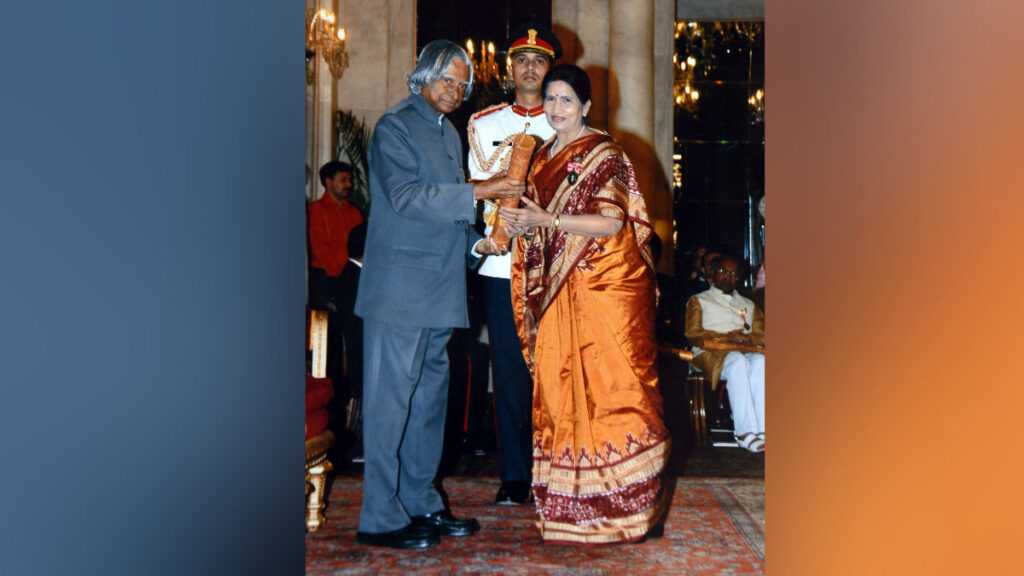
Pratibha Ray’s name was announced for Padma Bhushan award on Republic Day 2022 for her contribution to the field of literature and education. She has also been the recipient of Padma Shri in the year 2007 for the same. The 78-year-old writer has also been conferred the Orissa Sahitya Akademi Award, Moortidevi Award by Bharatiya Jnanpith, Saptarshi Award, Odisha Living Legend Award, and many more. Her works have been translated into English and various Indian languages and she has represented the literary delegation to Russia, U.S.A., U.K., Australia and Bangladesh through the Indian Council of Cultural Relations (ICCR). My City Links got into a candid conversation with the reputable persona to get an insight into her life which has been a long road to success. Excerpts.
Congratulations for the Padma Bhushan award! How does that make you feel?
I am elated and humbled to be nominated for the Padma Bhushan award. It is an honour. This is more celebratory to me as the honour is not given to me only as an individual, but to my mother tongue, to Odia literature and to my state Odisha. It is a moment of pride for us all that the Centre gave recognition to Odia literature which is a classical language. Writing is my passion and I can never keep myself away from it. The award will certainly increase my responsibility for my people. This honour is for the people of Odisha.
What prompted you to take up writing?
There is no concrete reason why I started writing. I have been enjoying my time with pen and paper since I was 8 or 9 years old. Probably it was my intrinsic inspiration that compelled me to scribble my emotions which ultimately appeared to me as a poem. Since I became conscious of my feelings and whenever I was overwhelmed with emotions, be it joy or sadness, I started jotting them down. It was pure love for me. I fell in love with nature in my childhood which inspired me to write. I reminisce about my late parents with immense nostalgia, my school teachers, friends, river Alka, the paddy fields stretching on both sides of the narrow lane leading to my primary school and my childhood fears. I was a timid girl who was afraid of insects, monkeys, police, ghosts, dark clouds, lightning and what not! I was specifically afraid of the dark. But one dark night, attracted by the gentle smell of the jasmine flower, I went to our garden and forgot all my fears and was filled with a strange happiness. I came back to my room, scribbled down my feelings and sent it to a prominent Odia daily. I was ecstatic to find my maiden composition in print in the literary page of a famous Odia daily, ‘Prajatantra’. I was in class six then. This momentous event in my life and the encouragement from my parents and elder brother- who gave me a Champion fountain pen, a prized article for a school girl in those days- set my heart to writing and freed me from all fears.
Was writing always your ambition in life? Was it difficult to work, write and manage the house at the same time?
For me, writing is neither a profession nor an ambition. Rather, I would describe it as a passion for me since the very beginning and it still continues to be the same. It is my space of calmness while walking on the meandering path of life. I have never been a full time writer, as I was a working woman, homemaker and mother of three children. I worked as a professor and was also in the Public Service Commission as a member for six years. Even after retirement I am not a full time writer. Managing my home and looking after my family has and will always remain my priority. Being a woman and a writer is not an easy task. You know women work more comparatively all over the world. Therefore in every field, the number of women achievers is less. But women are always multitasking and it is true for me also.
You are so passionate about your work. Who inspired you to walk on this barely trodden path back in your time?
(laughs) Seems like you are getting the hang of my poetic phrases. I believe my inspiration has always come from within me. The instinct to take up this area of interest during a time when writing, let alone, as a woman, was not taken seriously or given credibility. My father was very supportive and inspired me most and always urged me to follow my gut. His support is what has encouraged me to reach here. Besides, my husband, my children, my readers, critics and media personnel like you, have always remained a driving force in my life, motivating me with their kind words throughout my literary journey.
We are honoured to have a personality like you to look up to. You are an acclaimed writer not only in Odisha but across the country.
Thank you, but Odia literature reaching different corners of the world is a milestone reached for all of us. Be it my writings or the works of any other writer or individual who has put Odisha on the global map, it is a matter of pride for all of us. I would extend my earnest gratitude to all people involved in this dissemination of literary works. I am thankful to my translators in other Indian languages and in foreign languages like English, Hungarian, Russian, German and others. I am also thankful to my publishers both in India and outside and the editors of literary journals in Odia, English, Hindi and other Indian languages for publishing my stories. They are equally responsible for the name and fame that Odia literature has and is still gaining.
People associate most of your writings with empowerment and social justice. What prompted you to venture into this topic?
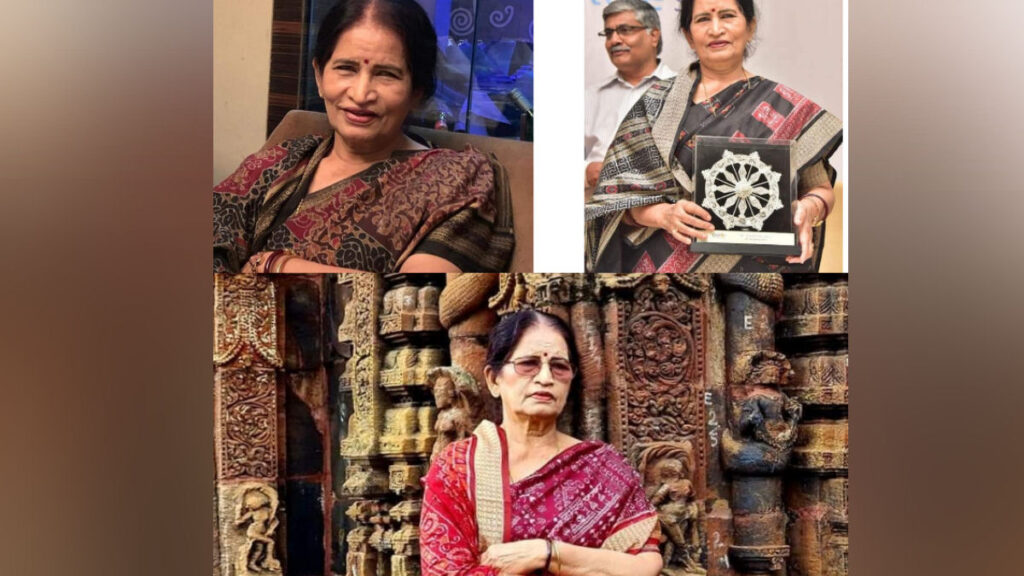
My writings are all an upshot of injustice in society. I attribute the boldness, revolt, compassion and humanism in my literature to the profound influence of my Gandhian father who preached and practised the same in his life. Whatever I have learnt from him about caste, class, religion or gender discrimination, I have commited to my writings. A sensible reader can mark the protest against injustice and oppression of downtrodden people, whether man or woman, in my writings. Since I first wielded my pen at the age of nine, I have explored topics like social order based on equality, love, peace, non-violence and national and international understanding and integration. I sincerely wish to see men and women be empowered and live a life of justice. It is sad to say that after decades of independence, our country is still not free from social injustice.
Do you think women in today’s generation are really subjugated and not given equal rights?
Education is the birth right of all human beings. If women are not educated, they are deprived of their right to be self-sufficient. This makes them a burden to the family and society, following which subjugation becomes the fate of the women. Unfortunately, we sometimes also see educated and financially independent women being subjugated and not given equal rights by the orthodox society. In true sense, educated women should take this up upon themselves and fight for themselves and the women around them to get their rightful stance in the society. It is high time that the unjust social conventions and orthodox practices in our society be defied. Women are devis and not abalas. I find myself lucky to have been born to parents who treated each of their five sons and two daughters as humans. I was brought up not as a girl child but as a human child. I got the freedom that an individual should get. There was no discrimination.
You have a plethora of exceptional writings. Which one is your favourite amongst them?
All my writings are dear to me but some short stories and novels are closer to my heart. My novel ‘Magnamati’, based on the 1999 super cyclone, ‘Aadibhumi’, the novel on Bonda tribes and the novel on Ahalya, ‘Mahamoha’ are my personal favourites. The reason being that I had to do a lot of labour to read and understand the characters myself first and gain an insight into the problems of their societies which made me literally cry and made my heart bleed. I always say that I don’t write while sitting in my study room. I write sitting on the soil of my theme with my blood being my ink.
Tell us about your family and their reception towards your work.
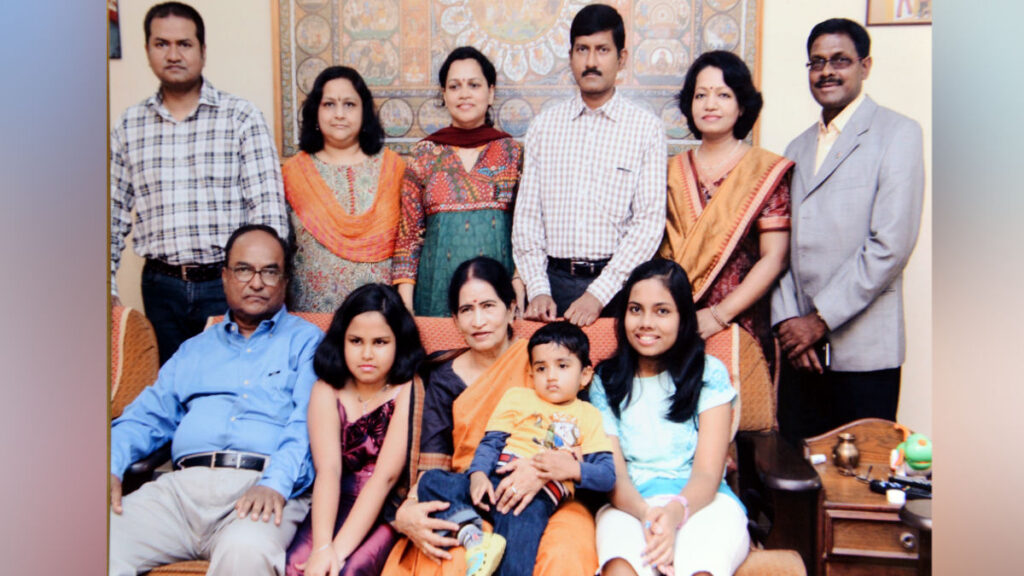
I was married into a joint family and till today we maintain the same status. But ultimately, as time advanced, we adopted the nuclear family system in city life. All my three children are grown up, one daughter and two sons. I have two granddaughters who are studying in foreign universities, one in Canada with her parents and one in the US, and a grandson. My entire family remains my major source of inspiration. Whenever we get together, we have family discussions, where they sit around like my fans and urge me to unravel my stories’ characters and narrate the themes of my writings and such. My grandchildren too enjoy it and say they are proud to have a writer grandmother.
Are you currently working on any script/ novel? Please give us a brief about it.
Yes. I am midway on my 23rd novel. I always keep the theme a secret from my readers and critics till the publication of the book. It is a novel on contemporary hazards of modern life. Please be patient till it is published. Hopefully people will relate to it and enjoy it like my other novels.
There has been a technological boom in almost all fields. Do you think the pleasure of reading books in real life is losing its essence? How far is technology helping in the world of literature?
There is no substitute for printed books in giving pleasure and satisfaction to readers. From Papyrus plant in Egypt to paper is a long journey in making quality papers of modern day’s publication firms. Printing machine itself is an example of how science and technology has been a boon in the world of literature as well. I don’t think printed books are losing their essence with the technology boom as there are still book lovers across the globe who prefer physical books. The huge quantity of books being published and sold in India and other foreign countries is proof to that. Social media definitely inspires budding writer’s creativity. In the future, maybe writing will start from there and end in printed books. You can’t use e-books where there is no wi-fi connection and electricity! So printed books have their own aura and essence and cannot be replaced.
For the children/adults who are interested in creative writing, what pointers would you like to give them?
Everybody cannot be a writer. You should identify your creative talent and strive to hone and better it with practice. Writing is not a time pass but a single-minded penance. You have to experience, be part and parcel of the place, time and character, celebrate and suffer with the characters. Relating to your characters and themes is what will make you understand your own work better. Then it becomes easier to refine and express the experience and realisation with appropriate language and style. This gives birth to a piece of literature. Love, compassion and boldness are the qualities of a good writer. Literature is the humility of the brave. Ego is not the quality which suits a creative person. One should be passionately attached to his or her creative self. Awards and honours, name and fame should not be the goal. It comes subsequently. One should be faithful and serious about the truth of life which is ultimately reflected in writing and will be universally accepted.

Author: Aafreen Firdaus
Aafreen is a doting mother to several kitties and a doggo who loves to pamper everyone with delicious food. She is a free spirit and a wizard of words and she loves to tell beautiful stories through her writing. She is also a loving and caring soul, always ready to pitch in with a helping hand and a smile on her face.
Read more from author