


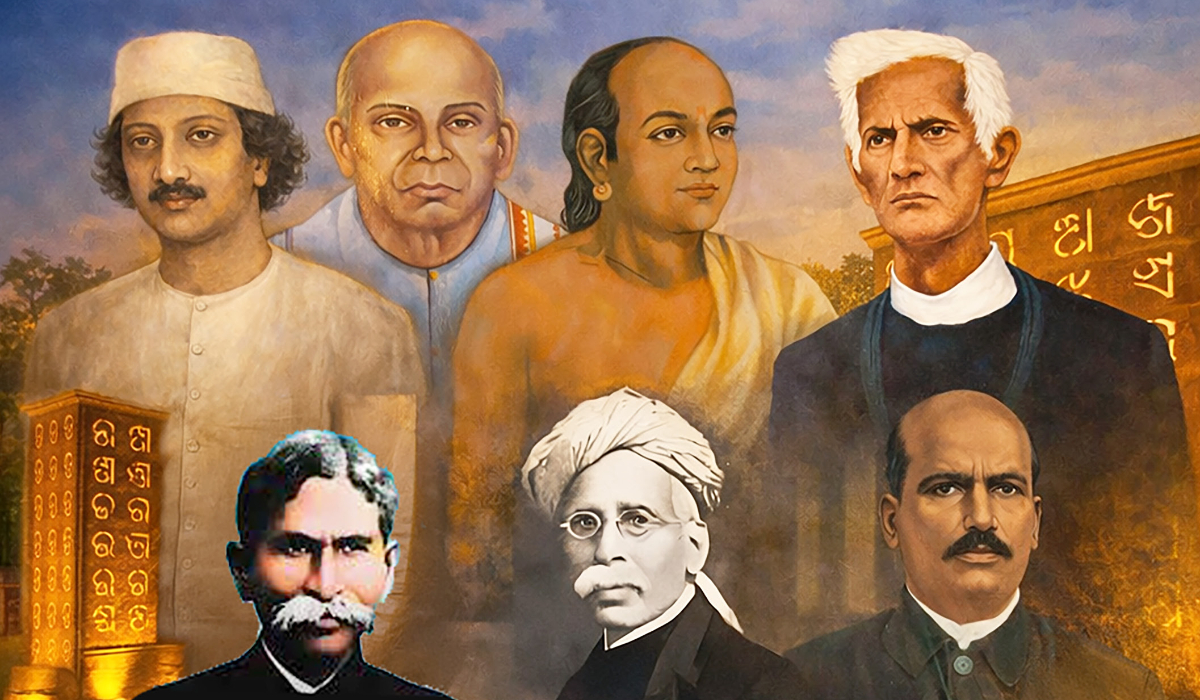

Odisha's Socio-Cultural Landscape: Shaped by The Legends: Part 2
As calendars turn and resolutions are made, the deeper question quietly lingers: what values will guide us ahead? In times of rapid digital churn, shrinking attention spans, and cultural amnesia, the search for grounding becomes more urgent than ever. Odisha’s socio-cultural legacy offers such an anchor, rooted in voices that spoke not for moments, but for generations.
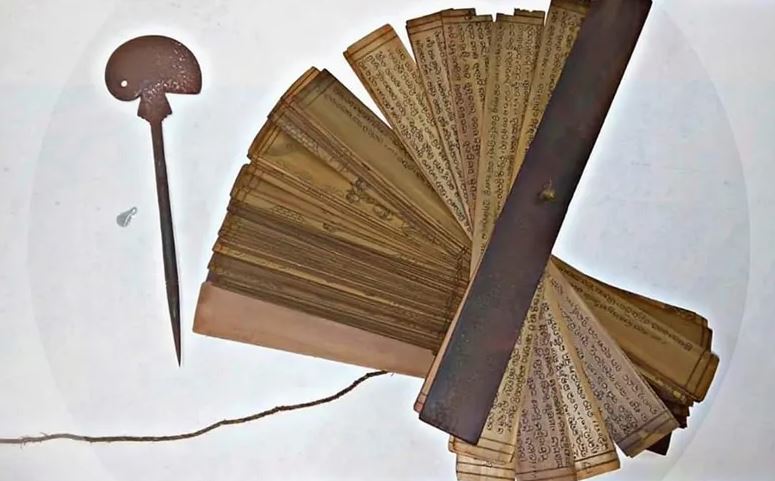
Long before hashtags shaped movements and algorithms curated thought, Odisha’s poets, saints, reformers, and thinkers used words as instruments of awakening. Their verses questioned power, their ideas challenged injustice, and their lives stood as living testaments to truth, service, and resilience. Each new year, as we seek clarity amid change, their works remind us that progress without conscience is hollow, and modernity without memory is fragile.
Utkala Gouraba Madhusudan Das, Vyasa Kabi Fakir Mohan Senapati, Swabhaba Kabi Gangadhar Meher, Kabibara Radhanath Ray, and many more, were not ceremonial labels but reflections of lived influence. They marked how deeply these individuals shaped public thought, moral courage, and cultural confidence. In today’s world, facing ethical uncertainty, environmental crisis, and social fragmentation, their voices sound uncannily relevant, offering not prescriptions, but perspective.
Odisha’s legends did not write from ivory towers; they wrote from villages and temples, classrooms and courtrooms, fields and freedom movements. Through poetry, science, devotion, and reform, they shaped a cultural identity resilient enough to face both history and the future.
To revisit them at the dawn of a new year is not an exercise in nostalgia, but an act of renewal. Their words invite us to step into the year ahead with humility, courage, and a renewed sense of purpose, reminding us that the most meaningful new beginnings are often rooted in timeless wisdom.
Here is the second and final part of our cover story “Odisha's Socio-Cultural Landscape: Shaped by the Legends” (The first part was published in My City Links’ previous issue).
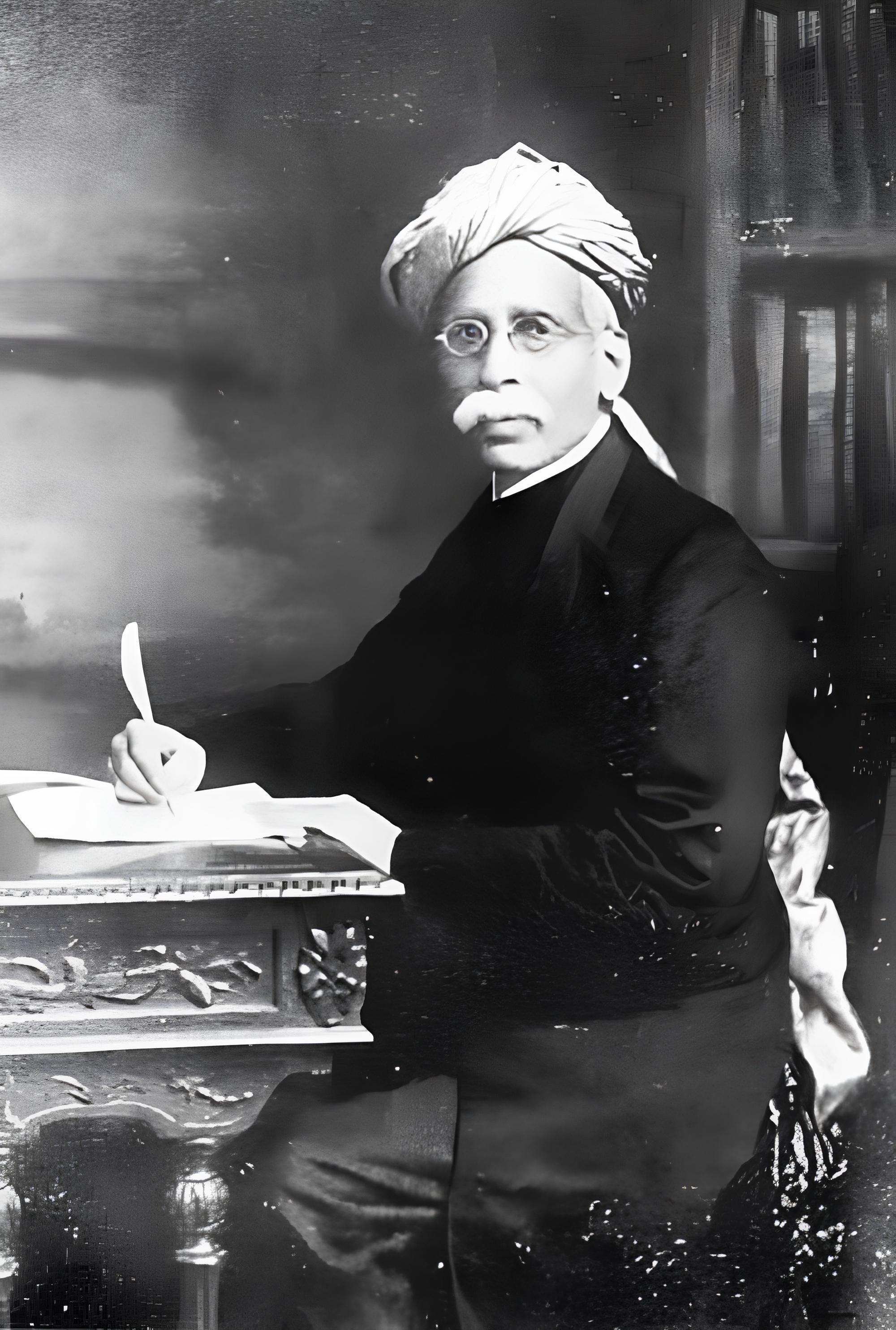
Utkala Gouraba- Madhusudan Das
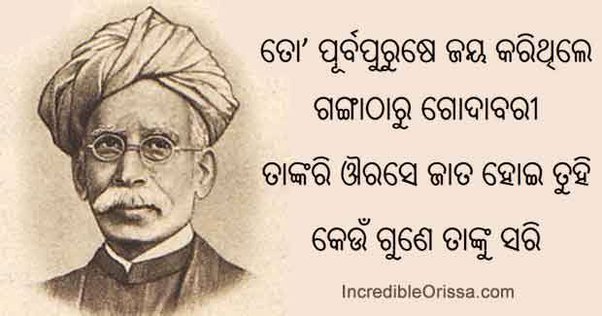
“Jātira unnati se kāhũ kariba, Swārthe jāra byasta mana. Shāgunā biluā chikitsaka Hele, shaba ki pāiba prāna!”- Meaning: “How can someone work for the progress of a nation when their mind is constantly busy with selfish interests? If vultures and cats become doctors, can a dead body ever regain life? The poem strongly criticises selfish leadership and hypocrisy, suggesting that people driven by greed cannot bring true social or national upliftment, just as predators cannot be trusted to heal the dead.”
The quote by Madhusudan Das urges the Odias to look beyond personal benefit for the greater good of Odisha. Utkala Gouraba, meaning “The Pride of Utkal,” Das (1848–1934) stands tall as the Architect of Modern Odisha and one of the most influential figures in the state’s history. Born in Satyabhamapur near Cuttack, he became the first Odia graduate and advocate, breaking colonial-era barriers through education and legal excellence. Affectionately known as Madhu Babu and revered as Kulabruddha (“Grand Old Man”), he devoted his life to the social, political, and economic upliftment of the Odia people. As the founder of the Utkal Sammilani, he led the historic movement to unite scattered Odia-speaking regions. This struggle culminated in the formation of Odisha as a separate province on April 1, 1936. A visionary reformer, legislator, writer, and industrialist, Madhusudan Das championed self-reliance, cultural pride, and regional identity, leaving behind a legacy that continues to define Odisha’s modern consciousness.
Born on April 28, 1848, in Satyabhamapur, near Cuttack, into a family deeply rooted in Odisha’s cultural landscape. Growing up during colonial rule, he witnessed the marginalisation of the Odia people, which ignited in him a lifelong commitment to social justice and political unity. Determined to break barriers, he pursued higher education at Calcutta University, becoming the first Odia to earn a B.A. degree in 1870, followed by an M.A. in 1873 and an LL.B. in 1878, making him Odisha’s first graduate and advocate.
Champion of Odisha’s Unification
Das is best remembered for his pivotal role in the movement to unify Odia-speaking regions into a single administrative province. In 1903, he founded the Utkal Sammilani (Utkal Union Conference), a socio-political organisation that campaigned relentlessly for the integration of scattered Odia tracts. His leadership galvanised people across caste and class lines, fostering a shared sense of identity and purpose. These efforts were central to the eventual creation of the Odisha Province on April 1, 1936, an achievement that forms the core of his legacy as the Architect of Modern Odisha.
His progressive outlook led him to champion industrial development in Odisha: he established the Utkal Tannery in 1905 and the Odisha Art Ware Works in 1897, promoting local artisans and industries. His work boosted economic self-reliance and broadened opportunities for marginalised communities.
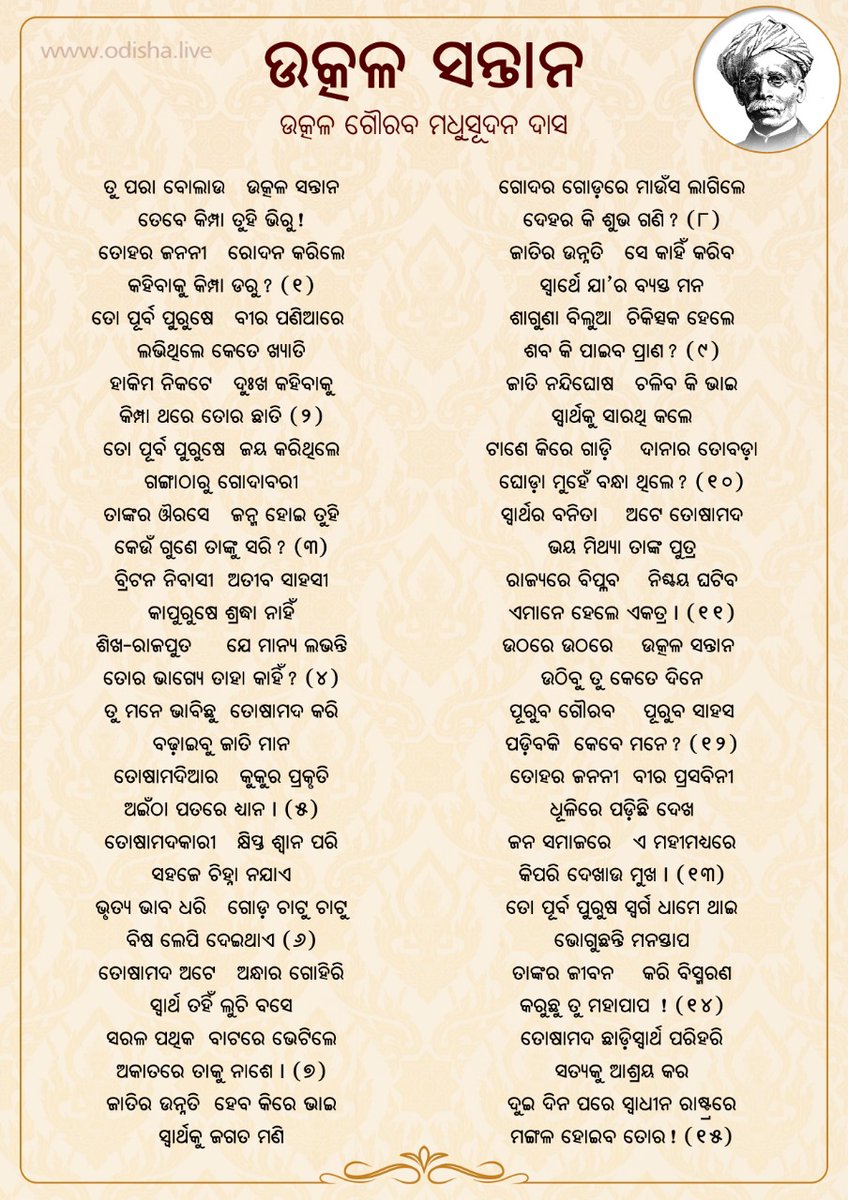
He was also a prolific writer and poet, infusing his literary works with patriotism and reformist zeal. Writing in both Odia and English, he penned influential pieces such as Utkal Santan, Jati Itihasa, and Jananira Ukti, contributing significantly to Odia literature and nationalist discourse.
His towering spirit continues to shape Odisha’s cultural and political identity. In Odisha, his birthday on April 28 is celebrated as Lawyers’ Day, honouring his contributions to law, society, and thepursuit ofr justice. Revered as Madhu Babu and Kulabruddha, his life remains a testament to courage, unity, and visionary leadership, the very qualities that helped birth modern Odisha.
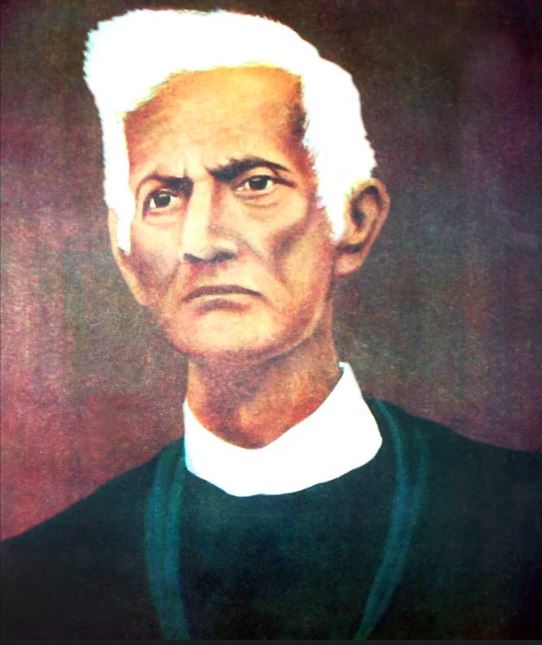
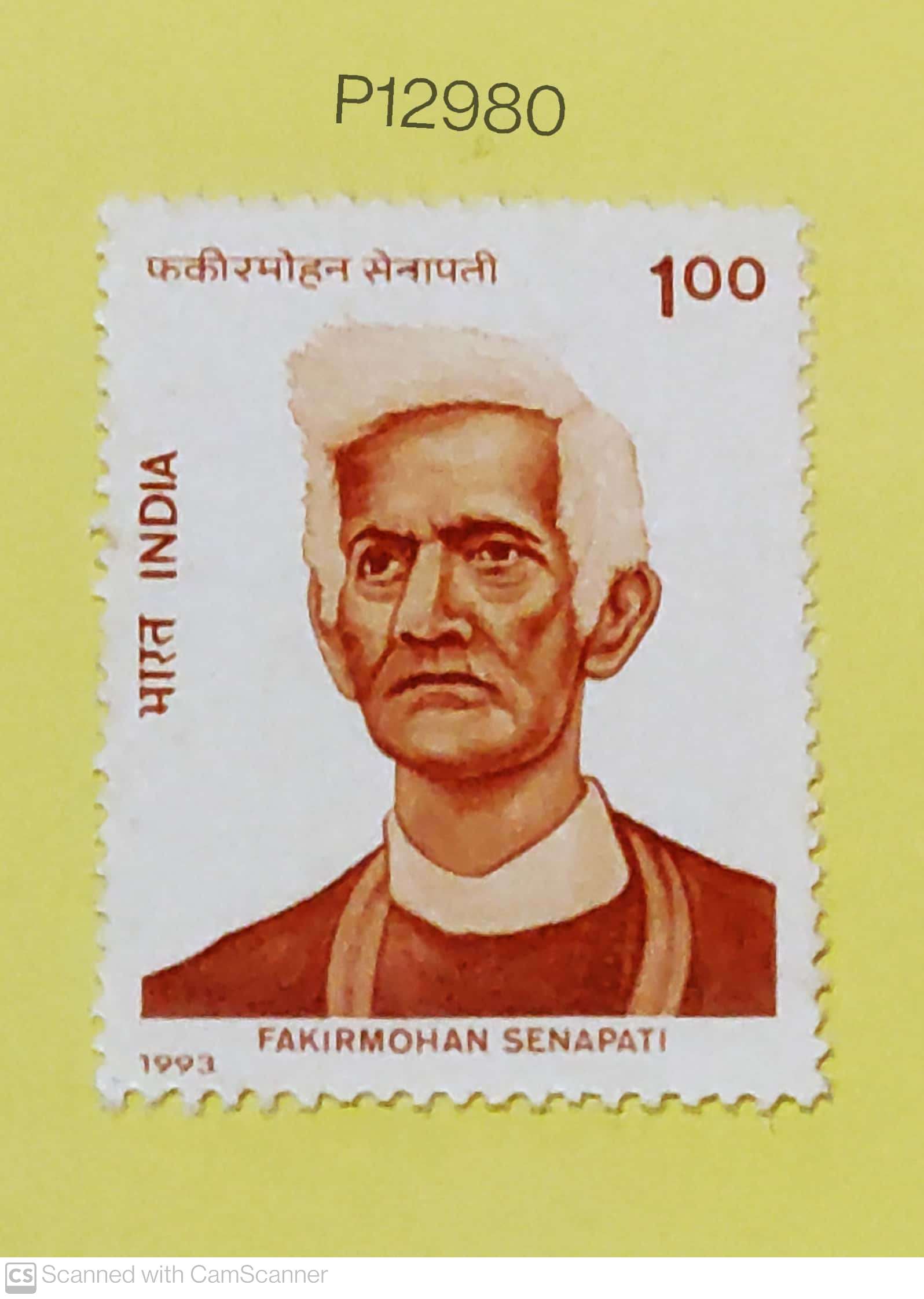
Vyasa Kabi- Fakir Mohan Senapati
“Bholānātha khamāriā jāṇibu. Mahārāṇīṅka putraṅka sakāśe shahe pāna dui shahe guā nitānu darakāra. Uttara paṭaru māhārā kari ākhu bāḍiku pāṇi maḍāibu. Nahele ākhu bāḍi bināśa jiba jāṇibu.”- Meaning: “Bholanath Khamaria, take note. For the Maharani’s son, one hundred betel leaves and two hundred betel nuts are urgently required. Water must be diverted to the sugarcane field by making a channel from the northern side. Otherwise, the sugarcane field will be destroyed, remember this.”
During his time as the Dewan of Keonjhar, Fakir Mohan Senapati was placed under house arrest by mutineers and was restricted from communicating with the outside world. To break the blockade and call for help, he sent a coded message disguised as a mundane letter to his friend Bholanath Khamaria.
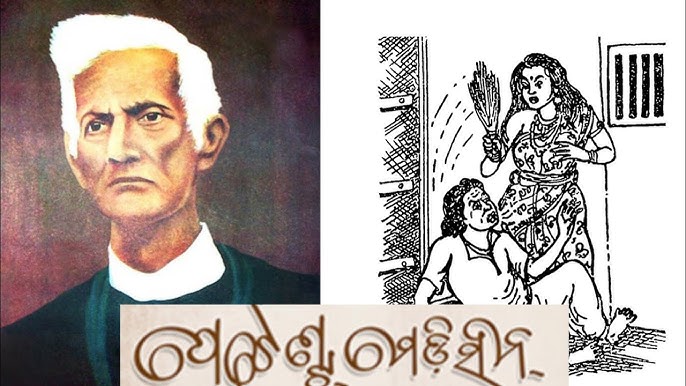
Now let’s decode it. Betel leaves represented guns, betel nuts represented bullets, and sugarcane fields referred to the palace or the administrative centre. Watering from the North: Was a tactical instruction to the British-backed forces to attack the mutineers from the northern side. The recipient correctly decoded the message and dispatched armed soldiers, leading to Senapati's successful rescue. This incident is a celebrated example of his wit and statesmanship during the British colonial era.
Vyasa Kabi, meaning “The Vyasa of Odisha”, refers to Fakir Mohan Senapati. Born on January 13, 1843, in Mallikashpur, Balasore district, Senapati died on June 14, 1918. He was an Indian writer, poet, philosopher, and social reformer who played a central role in establishing the distinct identity of the Odia language and literature. Senapati is widely regarded as the Father of Modern Odia Literature and Odia Nationalism, helping to ensure that Odia survived linguistic suppression from neighbouring influences during British rule.
Senapati was born into a middle-class Khandayat family. Orphaned early in life, he was raised by his grandmother and faced obstacles in accessing formal education, which he pursued by working from a young age. Despite these challenges, his passion for writing and commitment to social causes soon put him at the forefront of Odisha’s cultural renaissance.
At a time when the Odia language was at risk of marginalisation in favour of Bengali and other languages under colonial policies, Senapati’s literary activism helped save Odia from suppression.
Pioneer of Short Stories
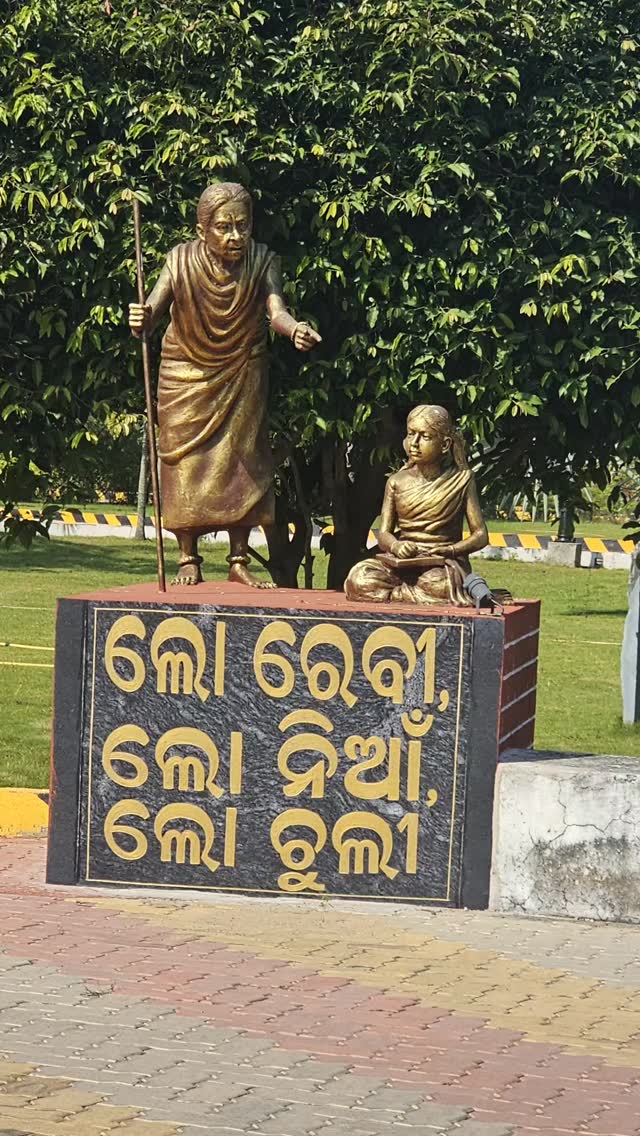
He wrote Rebati in 1898, which is widely recognised as the first Odia short story. Set against the backdrop of a cholera epidemic in a conservative village, Rebati explores themes of education, fate, and societal change through the story of a young girl’s aspiration and struggle, marking a new era in Odia narrative fiction.
Senapati’s novel Chha Maana Atha Guntha, often translated as Six Acres and a Third, is considered one of the earliest Indian novels to address social injustice, depicting the exploitation of landless peasants by feudal landlords. Written well before similar social reforms emerged in broader Indian literature, this work marks a pivotal shift toward modern prose and social realism in Odia fiction.
Versatile Contributions Beyond Fiction
Senapati’s body of work was vast and varied. He wrote poetry, including Utkala Bhramanam (1892), and contributed short stories like Patent Medicine, Daka Munshi, and Adharma Bitta, noted for their humour and social insight. He also authored the first Odia autobiography, Atma Jivana Charita, and worked with journals and presses to expand the reach of Odia literary expression.
Swabhaba Kabi- Gangadhar Meher
On Mother Tongue and Identity, Gangadhar Meher quoted, “Matrubhumi matru bhashare mamata ja hrude janami nahi, taku jadi gyani ganare ganiba agyani rahibe kahin?”- Meaning, "If a person does not have love for their motherland and mother tongue in their heart, and we still consider them a scholar, then where will the fools go?"
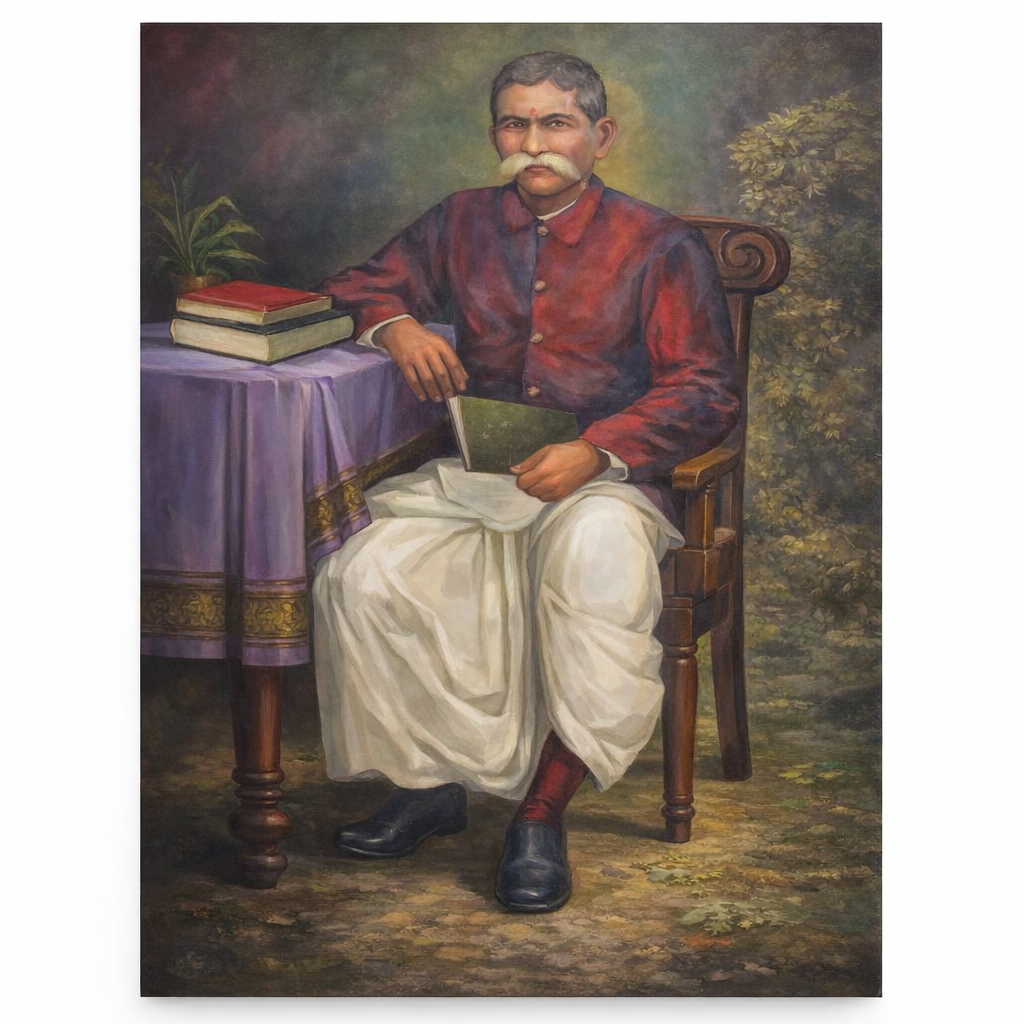
Swabhaba Kabi, meaning “The Poet of Nature”, refers to Gangadhar Meher, one of the most beloved and prolific poets in Odia literature. Born on August 9, 1862, in Barpali (now in Bargarh district, Odisha), he is celebrated for his lyrical genius, vivid descriptions of the natural world, and deep ethical insight, despite having limited formal education. His works continue to be acclaimed for their melodic language and emotional depth.

Meher was born into a weaver family to Chaitanya Meher and Sevati Devi on the full moon day of Shravana Purnima in 1862. Financial hardship meant that his formal schooling did not go beyond the fifth standard, yet his passion for literature drove him to read extensively, including the Jagamohana Ramayana, Odia Mahabharata, and Sanskrit classics like Raghuvamsham. He also learned Hindi and Bengali, enriching his literary sensibility from childhood.
Despite educational limits, Meher’s talent caught the eye of the local zamindar of Barpali, who appointed him as an Amin (patwari) and later promoted him to Moharir (accounts officer), with postings in Sambalpur, Bijepur, and Padmapur before returning to Barpali. Beyond his administrative duties, he worked for the upliftment of his community, organising conferences for weavers and proposing reforms to improve social standards.
Key Works & Contributions
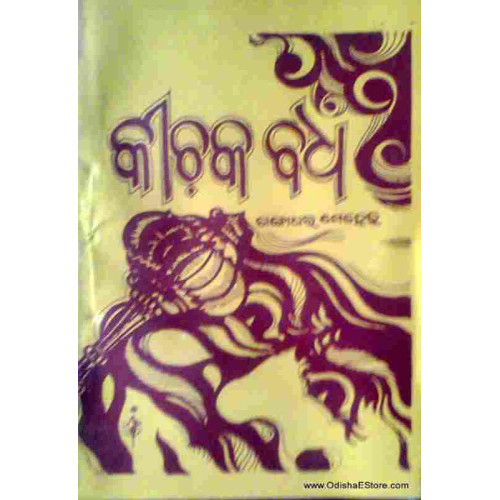
Meher’s literary output includes numerous celebrated works. His first major poem was Rasa-Ratnakara, but his magnum opus remains the epic poem Tapaswini, which solidified his reputation as a master poet. Other notable works include Indumati, Pranaya Ballari, Kichaka Badha, Utkal Laxmi, Ayodhya Drusya, and Padmini. These poems showcase his ability to weave emotional narratives with scenic beauty, making him a pillar of Odia literature.
Gangadhar Meher’s literary legacy continues to be honoured across Odisha and beyond. Sambalpur College was renamed Gangadhar Meher College in his memory in 1949, later becoming Gangadhar Meher University. The Gangadhar Meher National Award for poetry, instituted by Sambalpur University, celebrates excellence in modern poetry. His birth anniversary is marked with cultural programs that reflect his enduring influence on Odia culture and identity.
Kabibara- Radhanath Ray
“Utkala kamalā bilāsa dīrghakā, Marāḷa mālinī nilāmbu Chilika. Utkalara tuhi chāru alaṅkāra, Utkala bhuvane shobhāra bhaṇḍāra.”- Meaning: “O Chilika, you are the vast playground of blooming lotuses of Utkal, adorned with graceful swans and deep blue waters. You are the beautiful ornament of Odisha, a treasure house of splendour that enhances the glory of the land of Utkal.” This poem by Radhanath Ray celebrates Chilika Lake as a living jewel of Odisha, portraying it as a symbol of the region’s beauty, richness, and cultural pride.
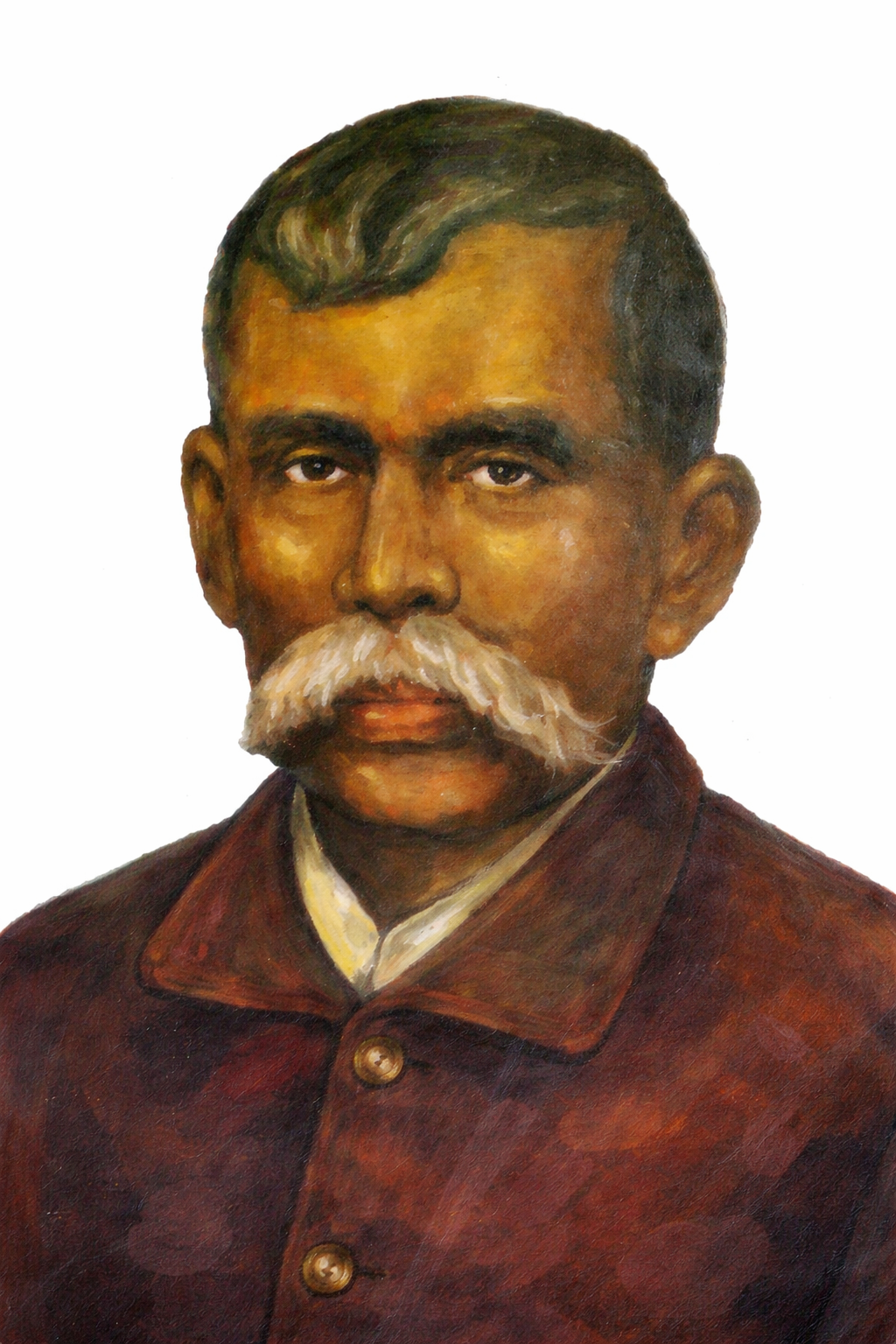
Kabibara, meaning “The Best Among Poets,” is the honorific title given to Radhanath Ray. Born September 28, 1848, in Kedarpur, Balasore district, Odisha, he died on April 17, 1908. He is one of the most influential figures in modern Odia literature, celebrated for infusing Odia poetry with fresh aesthetics and innovative forms that bridged classical tradition and emerging literary modernism.
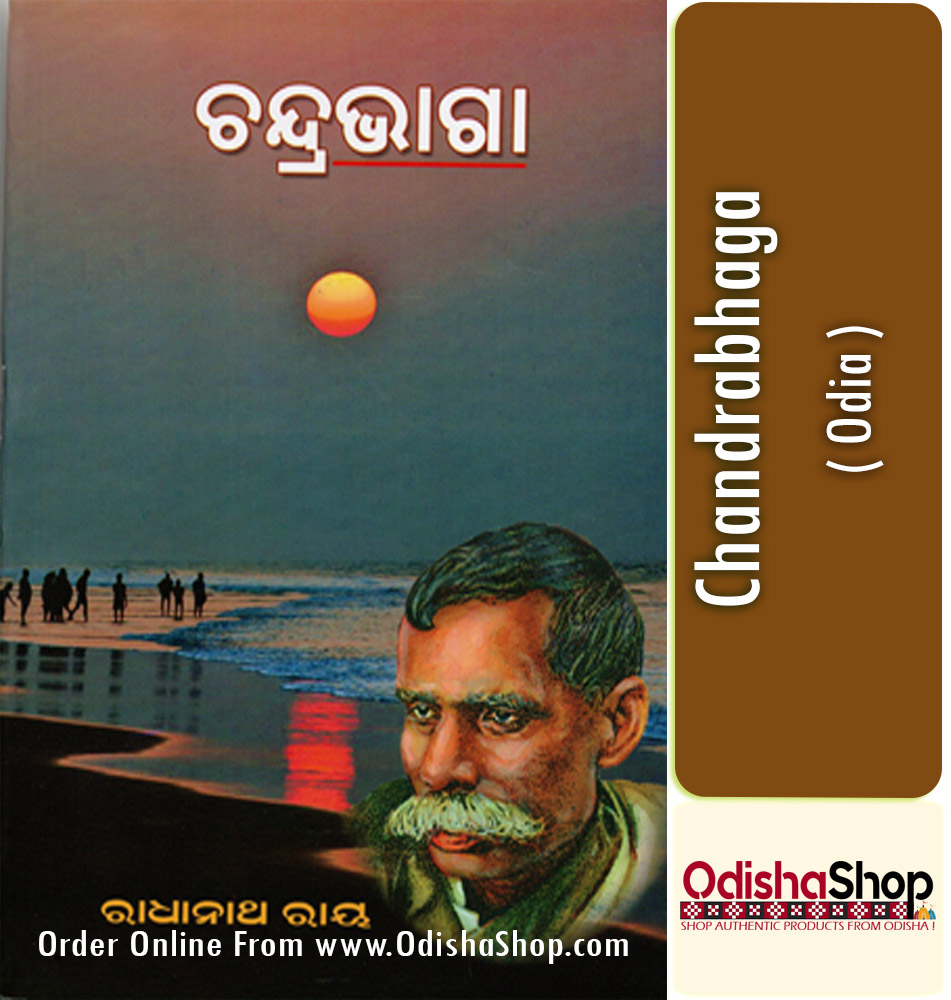
Ray was born into a Zamindar Karan family in Kedarpur village of Balasore district. Though early biographical details vary, scholars note that his education began locally and continued in regional schools, where he developed a deep interest in literature and languages. While he initially wrote in both Odia and Bengali, he soon devoted his creative energy entirely to Odia literary expression, becoming a leading voice in the language’s revival during the late 19th century.
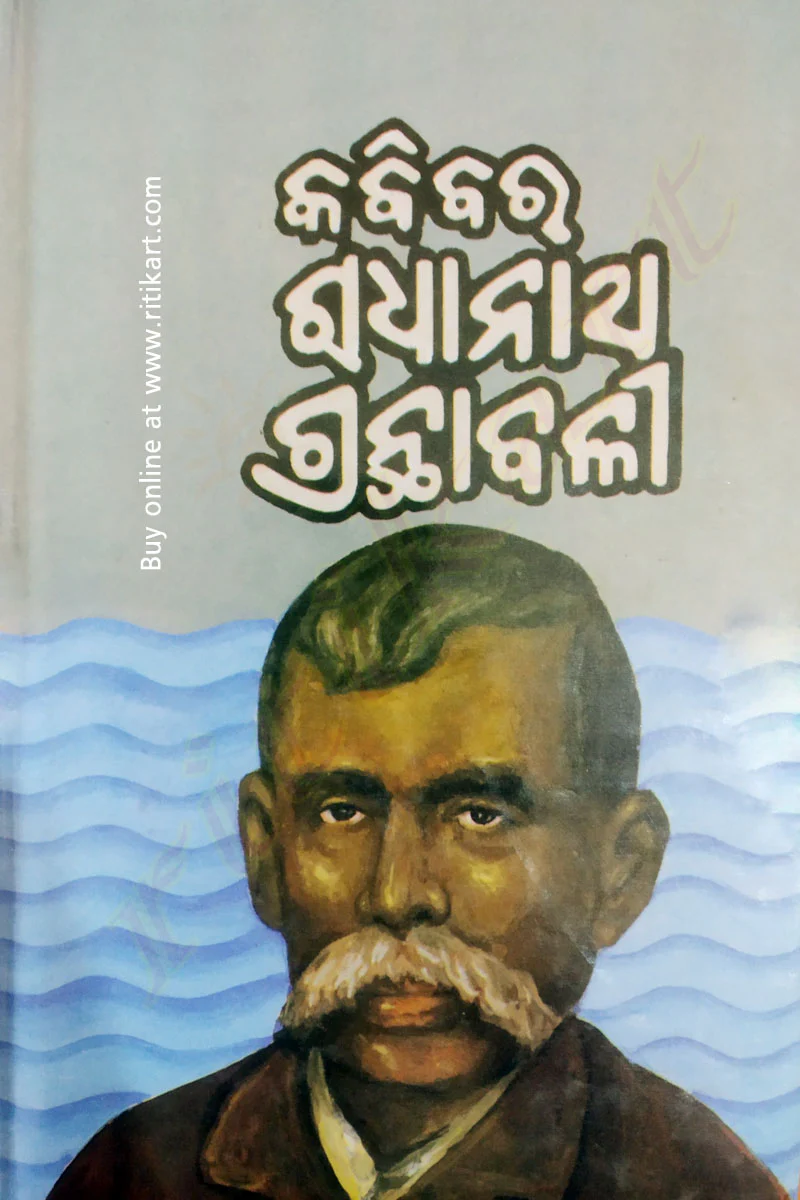
During the 19th century, the Odia language faced suppression in education and administration as Bengali influence grew under British rule. Radhanath Ray emerged as a key literary advocate for Odia identity alongside contemporaries such as Fakir Mohan Senapati and Madhusudan Rao, helping to promote Odia literature, textbooks, and linguistic pride that were essential to the Odisha movement.
Major Works & Narrative Poetry
Radhanath Ray’s body of work is both vast and varied, featuring epic and narrative poems that celebrate Odisha’s landscapes, mythology, human experience, and cultural pride. Among his most acclaimed works is Chilika, a narrative poem glorifying the scenic beauty and spiritual resonance of the Chilika Lake, blending natural imagery with lyrical intensity. Other significant compositions include Kedara Gauri, Nandikeshwari, Mahajatra Jajatikeshari, Urbashi, Darabara, Dasaratha Biyoga, and Savitri Charita. He also authored essays and translations, further expanding his influence.
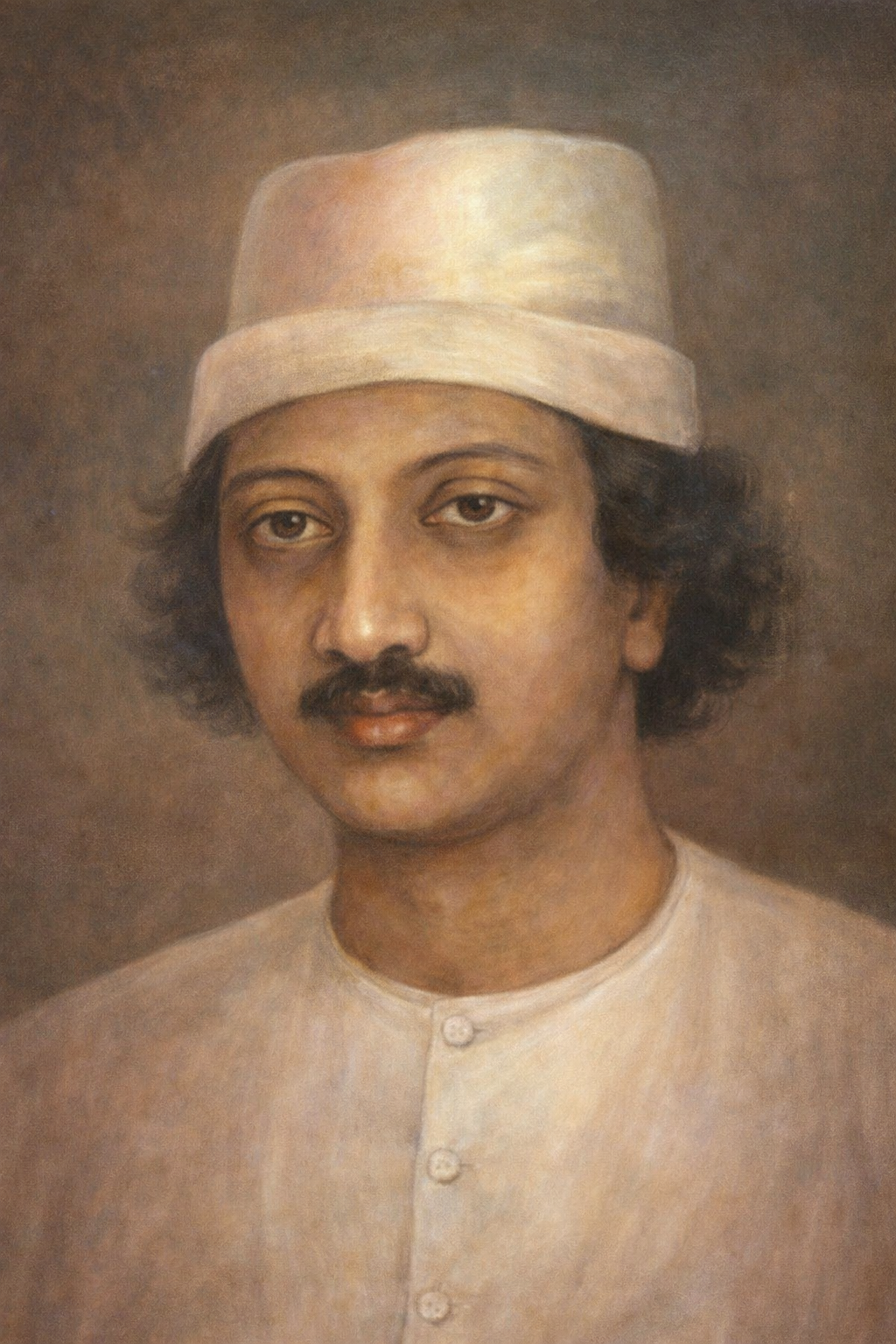
Bidagdha Kabi- Abhimanyu Samanta Singhara
“Aprākṛti prema mūrti jaya Rādhā Hari, Abyakta līlāku byakta kara avatarī.”- Meaning, “Victory to Radha and Hari, the embodiment of divine, transcendental love. O incarnate Lord, reveal and make manifest the mysterious and unexpressed divine play (līlā) of the Supreme.” The poem by Abhimanyu Samanta Singhara is a devotional invocation praising Radha and Hari (Krishna) as the embodiment of divine, transcendental love.
Bidagdha Kabi Abhimanyu Samanta Singhara is one of the finest representatives of the ornate (rīti) tradition in Odia literature. Renowned for his aesthetic sophistication and devotional depth, he earned the title Bidagdha Kabi, meaning “the learned and refined poet.” Flourishing in the 18th century, he mastered Sanskrit poetics and Vaishnava philosophy, weaving them into exquisitely structured Odia compositions.
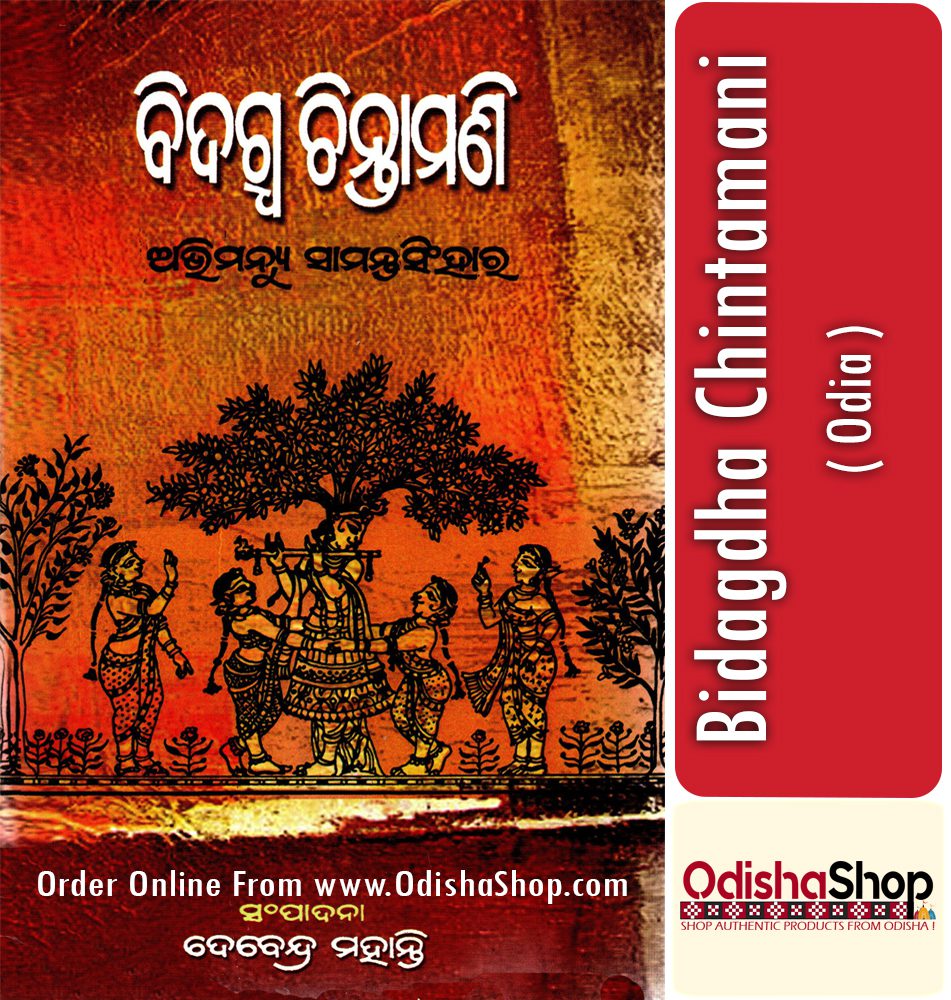
Literary Magnum Opus
His most celebrated work, Bidagdha Chintāmaṇi, is a monumental devotional text centred on the divine love of Radha and Krishna. The work elevates śṛṅgāra rasa into a spiritual experience, presenting love as a metaphor for the soul’s longing for the Supreme. Apart from Bidagdha Chintāmaṇi, Singhara composed several important works that further demonstrate his literary brilliance and devotional intensity. His notable works include Prema Chintāmaṇi, Rasa Chintāmaṇi, Alaṅkāra Chintāmaṇi and Vaishnava devotional poems. His works remain important for understanding how devotion, beauty, and intellect came together in the classical phase of Odia literature.
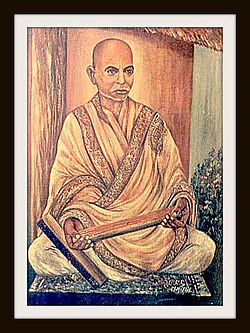
Pathani Samanta Chandrasekhar Behera
Pathani Samanta Chandrasekhar Behera stands as one of the most extraordinary scientific minds India has ever produced. Revered as a great astronomer, mathematician, and self-taught scholar, he achieved global recognition for calculating celestial movements, eclipses, and even the height of hills using nothing more than simple bamboo sticks and indigenous observational methods. His life is a shining example of intellectual brilliance rooted in curiosity, discipline, and indigenous knowledge.
Samanta was born in 1835 in Khandapara, Nayagarh District. Coming from a modest background with no access to modern scientific instruments or formal higher education, his genius unfolded through self-study, observation, and relentless experimentation.
From an early age, he showed a deep fascination with the sky, stars, planets, and timekeeping, often spending nights observing celestial bodies with his naked eyes and handmade tools.
What sets Samanta apart is his method of scientific inquiry. Without telescopes or advanced instruments, he used bamboo sticks, measuring cords, angular calculations and naked-eye astronomical observations. With these, he accurately determined planetary positions, solar and lunar eclipses, sidereal time, latitude and longitude, heights of hills and geographical measurements. His results were found to be astonishingly precise, comparable to calculations made using modern instruments.
Masterpiece: Siddhanta Darpana
Samanta’s most celebrated and monumental work is Siddhanta Darpana (Mirror of Astronomical Principles). This text is considered one of the finest works of indigenous Indian astronomy in the modern era. Written in Sanskrit, it systematically presents astronomical calculations, planetary motions, eclipse predictions, Mathematical formulas and corrections to earlier astronomical tables.
Apart from Siddhanta Darpana, Samanta authored several important scholarly texts, including Bhu-gola Nirṇaya, Golādhyāya, Astronomical commentaries and calculation manuals, used by traditional scholars and almanack makers (panjika kartas). These works demonstrate his deep command of astronomy, mathematics, and observational science.
British scientists and scholars were astonished by his precision and methodology. Despite working in isolation, Samanta’s calculations matched contemporary Western astronomical data, leading to his recognition as a global scientific genius. He was honoured by several scholarly institutions, and his work was studied well beyond Odisha.
Samanta Chandrasekhar Behera passed away in 1904, but his legacy continues to inspire scientists, students, and thinkers.
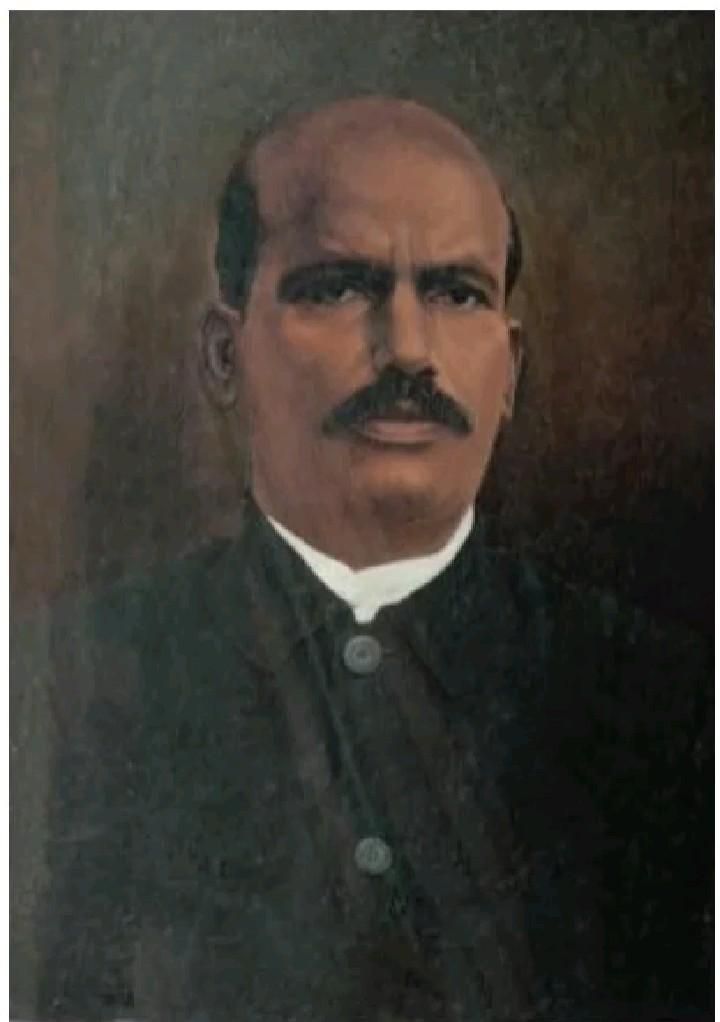
Palli Kabi- Nanda Kishore Bal
“Raha āre kāṭhuriyā na pakāa hāṇi, Śuṇa kāna ḍeri thare e gaẏa gacha kāhāṇī!” Meaning, “Stop, O woodcutter, do not strike with your axe. Listen carefully for a moment to the story of this tree.” These lines by Nanda Kishore Bal are a gentle yet powerful plea to pause before destruction. The poet urges the woodcutter to listen to the silent story of the tree, highlighting compassion for nature and respect for life, and subtly warning against mindless exploitation of the environment.
Palli Kabi Nanda Kishore Bal is fondly remembered as the “Poet of Rural Life” in Odia literature. With rare sensitivity and lyrical grace, he captured the soul of village Odisha, its fields and forests, rivers and seasons, folk customs and everyday emotions. His poetry stands as a gentle yet powerful documentation of rural simplicity, ecological harmony, and cultural continuity at a time when modernity was rapidly changing social life. His notable works include books like Nirjharini, Palli Chitra, Basanta-Kokila, Prabhata Sangeeta, Sandhya Sangita, Tarangini, Charuchitra, Nirmalya, Sarmishtha and many more.
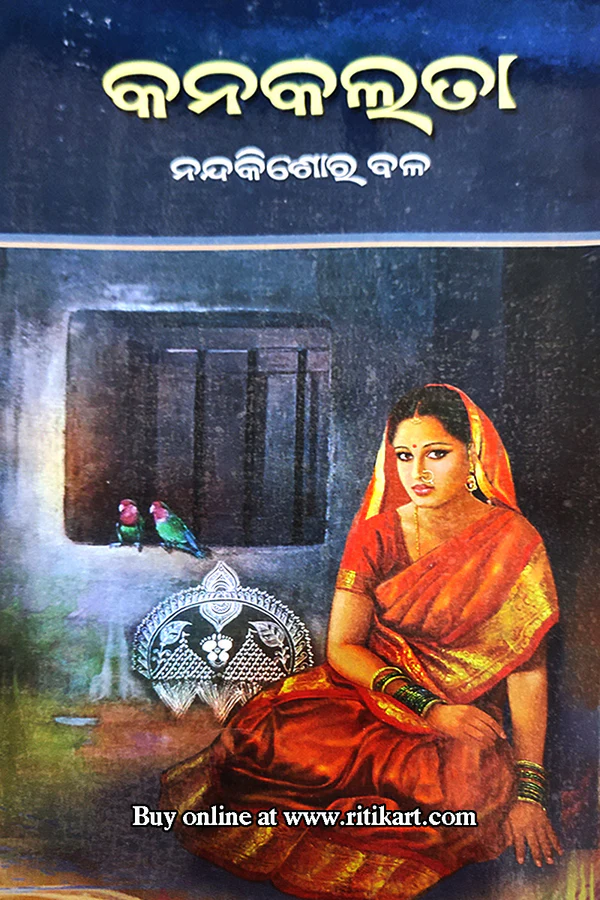
Bal was born in Odisha in the early 20th century, growing up in a rural environment that deeply influenced his imagination. Village life, agricultural rhythms, folk songs, and close-knit community living shaped his worldview from childhood. Though he received a formal education, his strongest education came from nature and lived experience. This intimate connection with rural surroundings later became the defining feature of his poetry.
Literary Career and Contributions
Bal emerged as a significant poetic voice during a period when Odia literature was expanding into modern forms. Unlike urban-centric or elite literary expressions, his work remained firmly rooted in the soil of the countryside. Rather than romanticising village life, Bal presented it with honesty and affection, acknowledging hardship while celebrating resilience and beauty. His work helped future generations understand village life not merely as a social setting, but as a cultural and emotional universe.
He remains a vital figure in Odia literature, one who turned the ordinary life of villages into enduring poetry, ensuring that the voice of rural Odisha would never be forgotten.
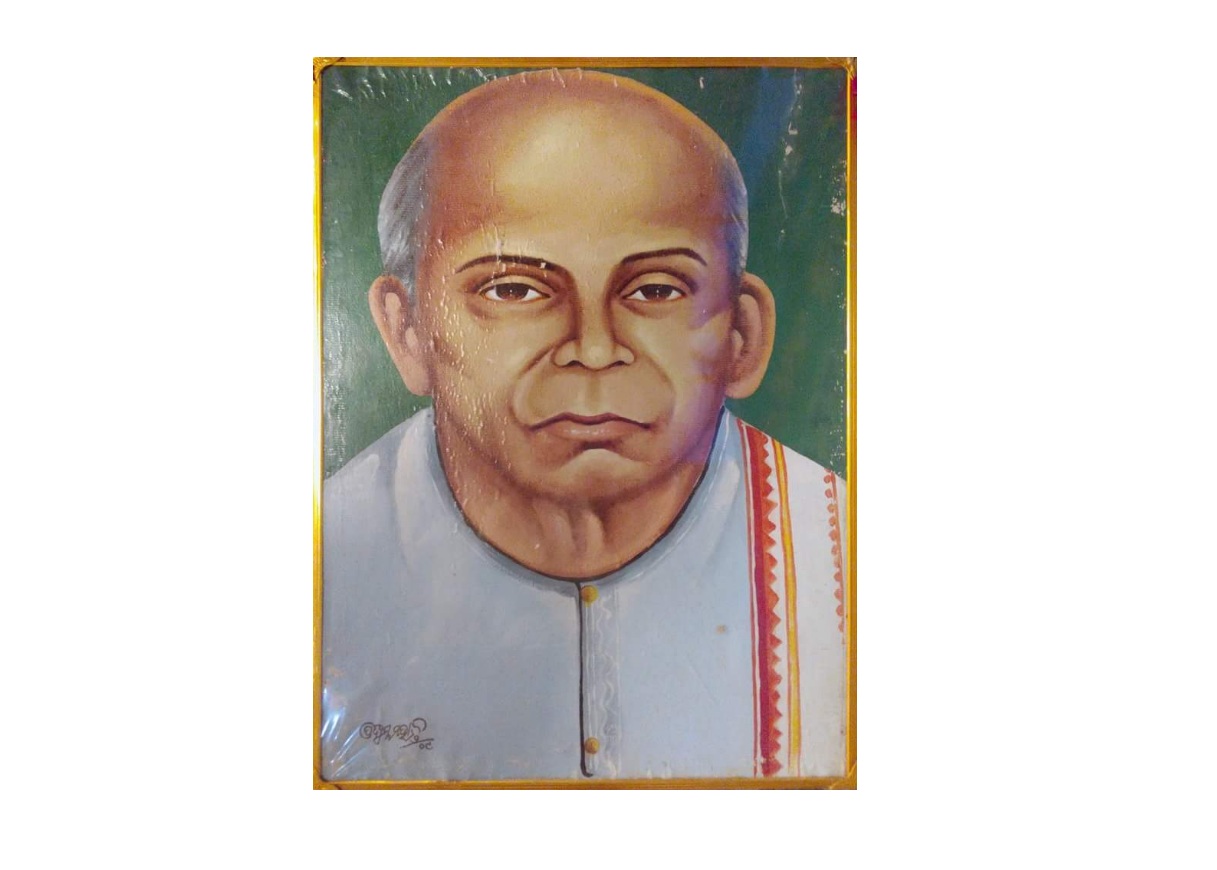
Ganakabi- Baishnab Pani
Ganakabi Baishnab Pani is celebrated as one of the most influential voices of people-centric literature in Odisha. The title “Ganakabi”, meaning Poet of the Masses, was earned through his lifelong commitment to writing poetry that spoke directly to ordinary people, reflecting their emotions, struggles, joys, and moral dilemmas. His works blurred the line between literature and performance, making poetry a living social force.
Born in 1926 in Odisha, Pani grew up amid folk traditions, village life, and the vibrant culture of jatra and oral storytelling. Though he lacked elite academic training, his sharp social awareness, natural poetic instinct, and close connection with common people shaped his literary journey. His life and creativity unfolded during a period of social transition, which deeply influenced his themes.
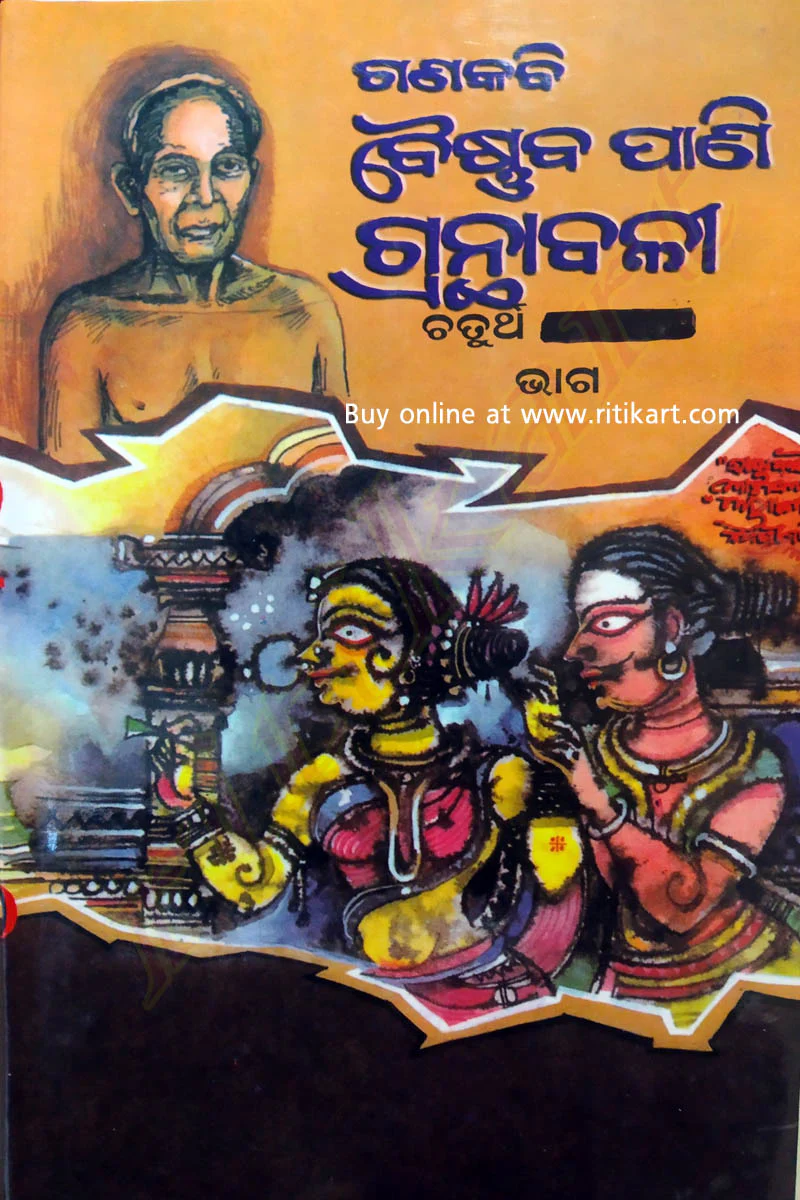
Literary Contributions
Pani was a prolific writer whose creativity flowed across poetry, songs, and theatrical compositions. His writings were accessible, emotionally powerful, and meant to be performed and shared rather than confined to books. Some of his notable literary and performative works include Nisithara Naba Sakala, Mo Gaon ra Mati, Jibana Jatra, Manisa Pain Manisa, Ama Samaja and numerous jatra scripts and lyrical compositions widely staged across Odisha.
Many of his poems were later adapted into songs and stage performances, helping them reach a vast audience beyond traditional readers. Pani passed away in 1985, but his influence remains deeply embedded in Odisha’s cultural memory. His poems continue to be recited, sung, and staged, reminding generations of the power of words spoken with sincerity.
Kavisurya- Baladev Rath
“Baraji barashe dei mānasa, Baraji barashe amedhya grāsa. Dehe Mandākinī raja lagāei, Grāma shukariki hoiba gāi! Jane hasibe.”- Meaning, “The poem speaks in a symbolic and satirical tone. It says that even if the mind is trained or restrained for twelve years, and even if impure food is avoided for twelve years, merely applying the sacred dust of the Mandakini river to the body cannot truly transform one’s inner nature. A village pig cannot become a cow just by external purification. In the end, people will only laugh at such pretence.”In his poem, Baladev Rath states that true transformation comes from inner change, not from outward rituals or appearances. Rath, whose title literally means “Sun Among Poets,” stands as one of the most luminous figures in Odia literary and musical history. Flourishing during the late 17th and early 18th century, he was a master poet, scholar, and composer who elevated Odissi music and poetry to classical refinement. His works represent a golden phase where devotion, aesthetics, grammar, and music merged seamlessly.
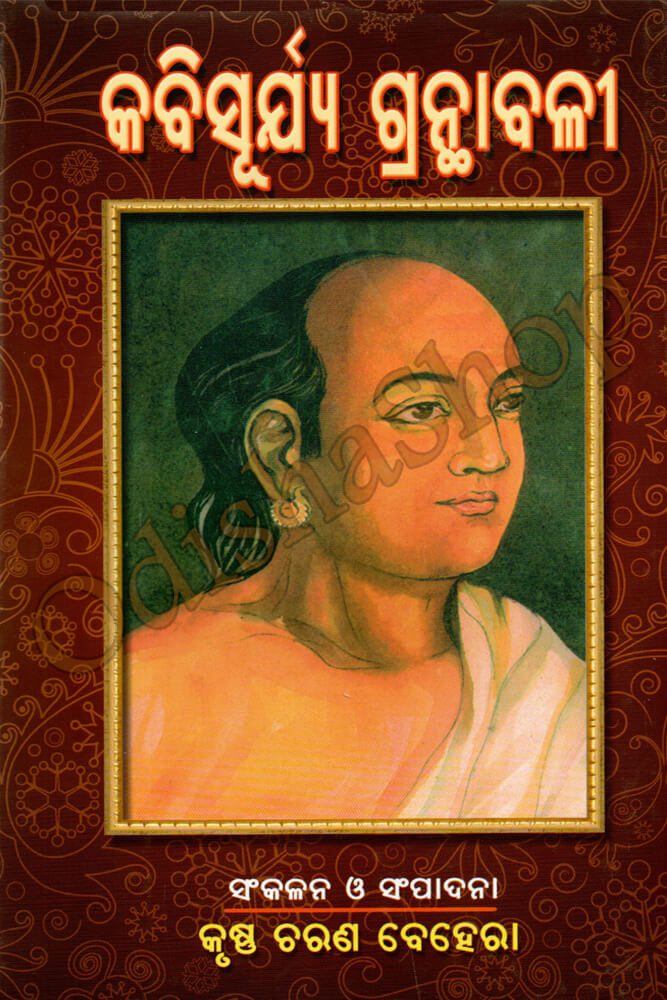
Rath was born in Odisha into a learned family deeply connected with Sanskrit scholarship and temple traditions. From a young age, he was trained in Sanskrit grammar, rhetoric (alaṅkāra śāstra), prosody, and classical music.
Literary and Musical Genius
Baladev Rath is best known for his immortal compositions like “Kishore Chandrananda Champu”. This work is regarded as a masterpiece of Odia Champu literature, a classical form that blends prose (gadya) and poetry (padya). The text glorifies Lord Krishna (Kishore Chandran), celebrating divine love, beauty, and spiritual bliss. Many compositions from this Champu are still performed in Odissi concerts, making Baladev Rath one of the earliest architects of Odissi’s classical framework.
Rath belongs to the classical lineage that follows Sarala Das and the Atibadi poets, but he represents a more courtly, musical, and refined phase of Odia literature. His contributions helped cement Champu as a prestigious literary form in Odisha, strengthen the classical identity of Odissi music, and inspire later poet-composers and Odissi musicians.
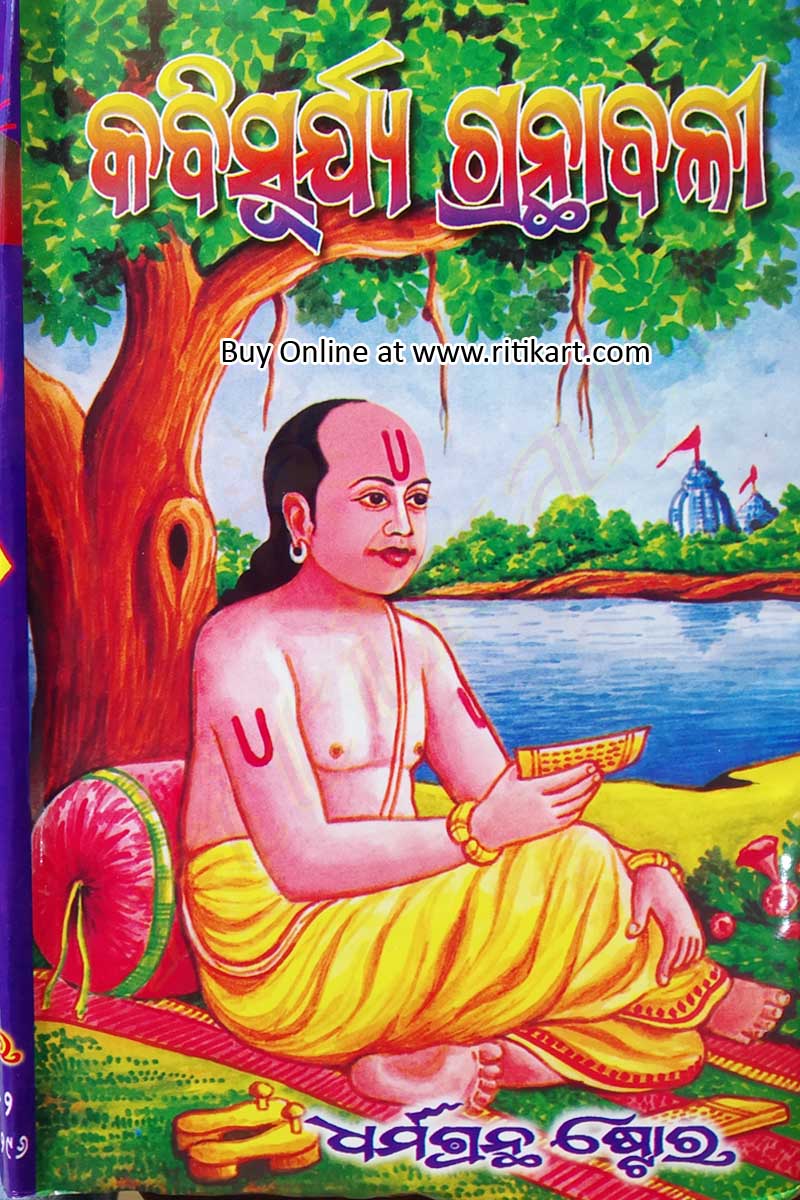
Even centuries later, Kavisurya Baladev Rath remains a towering presence in Odisha’s cultural heritage. His compositions continue to resonate in temples, concert halls, and classical repertoires. He is remembered not merely as a poet, but as a sun-like force who illuminated Odia poetry and music with lasting brilliance.
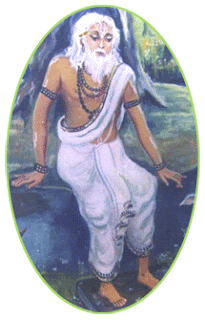
Mahāpurusa Achyutananda Das
Mahāpurusa Achyutananda Das is one of the most revered spiritual figures in Odisha’s religious and literary history. A 16th-century saint, mystic, philosopher, and poet, he was one of the illustrious Panchasakhas, the five great Vaishnava saints of Odisha. Others are Balaram Das, Jagannath Das, Ananta Das, and Jasobanta Das. Celebrated for his prophetic visions, profound mastery of Yoga, Tantra, Ayurveda, and spiritual science, Achyutananda Das occupies a unique place where devotion, mysticism, and indigenous knowledge converge.
Das was born in the late 15th century in Nemalo (present-day Cuttack district, Odisha). From an early age, he showed signs of extraordinary spiritual insight and detachment from worldly life. He became a devoted disciple of Chaitanya Mahaprabhu, whose bhakti movement deeply influenced him, while he simultaneously pursued intense yogic and mystical practices. His life reflects a rare synthesis of Vaishnava devotion and esoteric wisdom, earning him the honorific “Mahāpurusa”, a great realised soul.
Among them, Achyutananda was especially known for his occult knowledge, prophetic writings, and mastery over inner sciences. He believed the human body to be a microcosm of the universe, where spiritual realisation could be attained through disciplined inner practice.
Major Literary Works
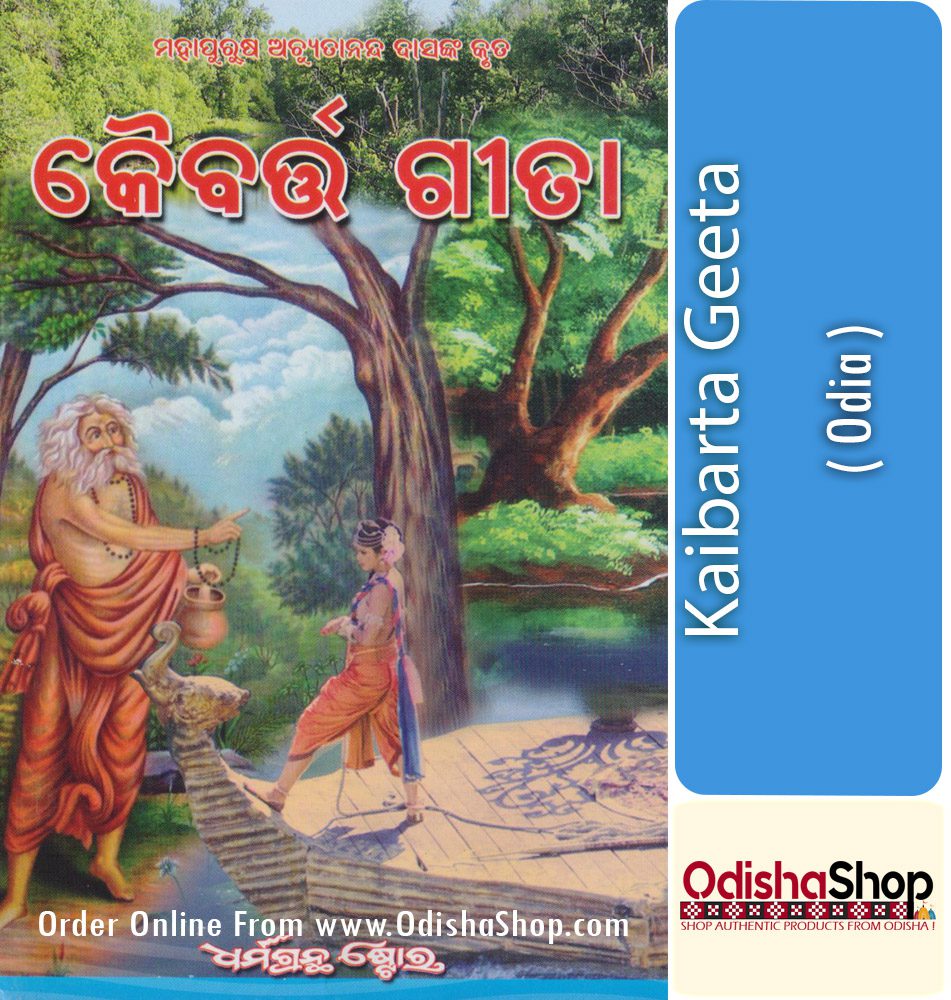
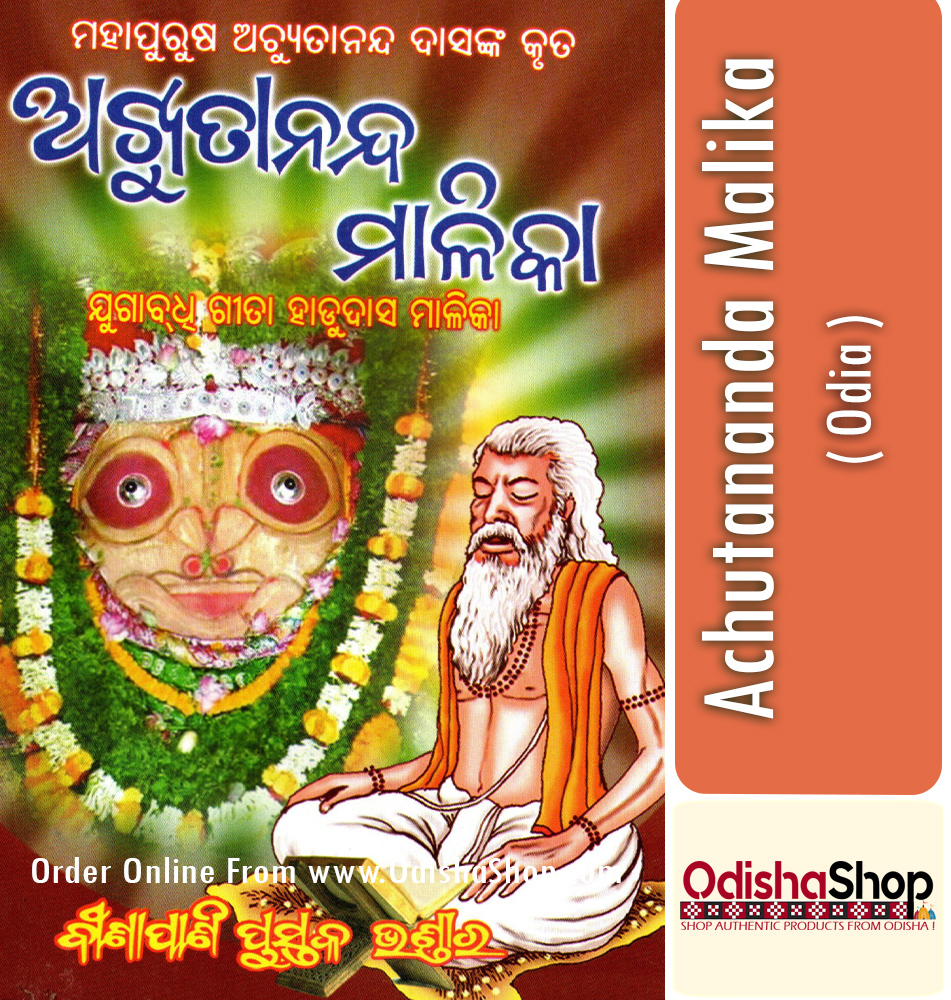
Das was an extraordinarily prolific writer. His works span devotion, mysticism, yoga, medicine, and prophecy. Some of his most notable works include Achyutananda Malika, Sunya Samhita, Gupta Gita, Kaivarta Gita and Yoga Sara. These works were written in simple yet symbol-laden Odia, making complex spiritual ideas accessible to common people.
Achyutananda Das passed away in the 16th century, but his presence remains deeply embedded in Odisha’s spiritual consciousness. Das stands as a timeless reminder that spirituality, science, and prophecy can coexist, rooted in discipline, compassion, and the quest for ultimate truth.

Author: Jyoti Prakash Sahoo
Hailing from the entertainment industry, Jyoti started his career as a cine journalist in 2017. He is an anchor, actor and creative writer too. Currently working as the Content Head of the Odia entertainment YouTube channel 'Mo TV', Jyoti also loves to write human interest and positive stories that can inspire the readers.
Read more from author