



Pride 2025: Queer Stories from the Heart of Odisha
Love comes in many colors. It has various shades; it’s just a matter of perception in our minds. Love doesn’t care where you come from, what your gender is, or who you choose to love. It doesn’t ask whether you are gay, lesbian, transgender, straight, asexual, bisexual, demisexual, or anything in between. Love is love.

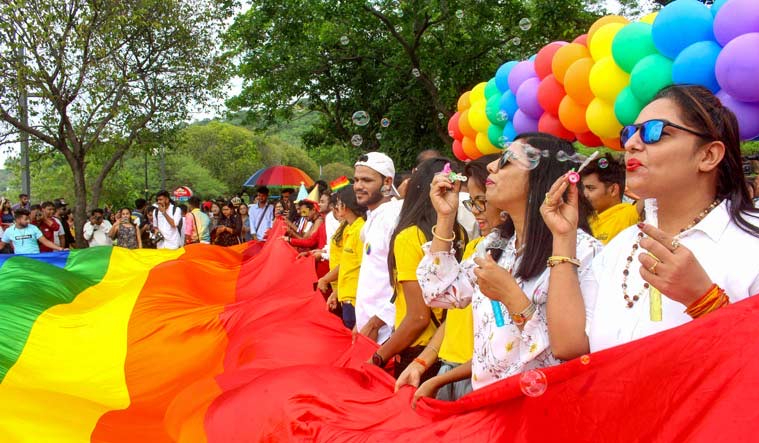
Each year in June, we observe Pride Month, a period dedicated to honoring the history, culture, and ongoing struggle for equality within the LGBTQIA+ community. Pride Month in India, is a time of reflection, celebration, and advocacy for the LGBTQIA+ community. This month is marked by a series of events, including parades, marches, cultural activities, and educational programs that aim to increase awareness and promote acceptance. Across the world, people come together to stand in solidarity, raise awareness, and advocate for equal rights, dignity, and acceptance.
Major cities like Delhi, Mumbai, Bengaluru, and Chennai are known for their large, colorful parades and inclusive events. But Pride is not just limited there. In recent years, Odisha has been steadily making its presence known on the map of LGBTQIA+ visibility. The capital city, Bhubaneswar, has become a beacon of acceptance and solidarity, hosting annual Pride Parades that bring together people from all walks of life, the queer community, allies, students, artists, and activists; to march side by side, proudly and fearlessly. The growing participation and visibility here reflect a slow but meaningful shift in mindset, one that signals hope and courage in a state still battling social taboos and silence around queer issues.

The different colors within the flag were meant to represent togetherness, since LGBTQIA+ people come in all races, ages and genders, and rainbows are both natural and beautiful. The original flag featured eight colors, each having a different meaning. At the top was hot pink, which represented sex, red for life, orange for healing, yellow signifying sunlight, green for nature, turquoise to represent art, indigo for harmony, and finally violet at the bottom for spirit.
In a world where identities are often misunderstood, reduced to labels, or ignored altogether, listening becomes a powerful act. For Pride Month, we wanted to move beyond definitions and dive into lived experiences. So, we reached out to individuals across Odisha who identify as part of the LGBTQIA+ community. People with different identities, journeys, and perspectives, to understand what it truly means to live as themselves in a society that doesn’t always make space for that.

1. More Than a Label: Anshuman’s Story
We spoke with 24-year-old Anshuman Swain, a law student from Cuttack, Odisha. He identifies as gay, and his journey with that identity has been one of quiet resilience, painful realizations, and growing pride.
“I wish people would just see me as a normal person,” he began. “Being gay isn’t something I chose. It’s simply the way I was born.” Anshuman has had to remind others and sometimes himself that his identity isn’t a flaw, or something he needs to apologize for. “It’s not a phase, and definitely not a disease,” he said. “What hurts is when people treat me like I’m different or broken. I’m just like anyone else; I laugh, love, dream, and feel.”
He told us about the first time he understood who he was. “I think I knew when I was 15. But I didn’t really say the word ‘gay’ out loud until I was 19, even to myself.” The years in between were filled with internal battles, fear, and isolation. “There was always this voice in my head, warning me of what could go wrong. What if my parents found out? What if I lost my friends? What if I never found love?”
But slowly, the silence around him started to crack. “I saw people online talking about being queer. I read stories, watched shows where people like me existed not as jokes, but as real people. And then I met others, people who were also figuring themselves out.” For the first time, Anshuman didn’t feel so alone. “That changed everything. I realized I wasn’t broken. I was just me.”
He came out to his friends first. “Some of them were quiet, unsure. A few never spoke to me again. But many of them stood by me, and that gave me strength.” Telling his parents was harder. “When I finally came out, they reacted like it was an illness. Like I needed help or a cure. It was heartbreaking.” Anshuman didn’t give up, though. “I gave them time. I kept talking, kept showing them that I hadn’t changed. I was still their son.” Now, five years later, things are better. “They’ve accepted me. It’s not perfect, but it’s peaceful. And that means the world.”
What makes Anshuman’s story powerful is not just what he’s lived through, but how much he wants to give back. “I said yes to this interview because I want others who are struggling to know they’re not alone.” He knows how scary it can be to live with uncertainty, to feel like your very existence is up for debate. “It’s exhausting,” he admitted. “But I promise it gets better.”
His advice to anyone discovering their identity is simple: speak up. “Talk to someone. Anyone you trust. Don’t hold it all in. You don’t have to fight this alone.” He paused and then added, “There is nothing wrong with you. Your identity is not a burden. It is a part of your story, and it deserves to be loved.”
Anshuman’s story stays with us. Not just because he’s witty or fierce or brave but because beneath all that is someone who spent years trying to believe he wasn’t broken. To grow up gay in a place where queerness is either denied or demonised is to carry a secret like a second skin. But there’s something almost revolutionary in the way he says, “I’m not someone’s bad luck.” That line hits hard. It’s not just about superstition, it’s about all the small ways society tries to tell you that your existence is a problem to solve, rather than a life to be lived. And yet, here he is, living. Loudly. Softly. Freely.

2. Quiet Pride: Ananya’s Story
Ananya Mohapatra is 32 years old and works as a consultant. She is from Berhampur, Odisha. She identifies as asexual, and she’s aware that even within the LGBTQIA+ community, asexuality is often misunderstood or overlooked.
“For the longest time, I didn’t know there was a word for what I felt,” she told us. “Or rather, what I didn’t feel.” Ananya was in her late teens when she began noticing that her friends spoke about attraction, dating, and sex in ways that felt completely foreign to her. “I thought I was broken. Or that I just hadn’t ‘met the right person yet.’ People said that to me all the time.”
In college, she tried dating. “It was mostly out of peer pressure. I wanted to feel what everyone else seemed to feel.” But the more she tried to fit in, the more alienated she felt. “I wasn’t repulsed by physical closeness, but it never did anything for me. I never craved it.” It took her several years and many quiet nights of reflection to understand that what she was feeling had a name.
“I found the term ‘asexual’ on an online forum,” she recalled. “Reading those posts, it was like someone had finally described me. Every word felt like a mirror.” It was a relief, but also a heartbreak. “I realized how little people understood about asexuality, and how quick they were to dismiss it.”
When Ananya came out to friends, their reactions ranged from confusion to disbelief. ‘Maybe you just haven’t had good sex yet.’ ‘Are you sure it’s not trauma?’ “I heard it all,” she said, shaking her head. “People always try to pathologize what they don’t understand.”
Her family, on the other hand, still doesn’t quite know. “They think I’m just focused on my career. That I’ll marry someday, when the time is right.” For now, Ananya has chosen not to correct them. “It’s a balance. I don’t want to lie, but I’m also not ready for that battle just yet.”
Despite everything, there’s a calm strength in her words. “I don’t need validation to know who I am. I’m at peace with my identity.” What she wants, though, is visibility. “Asexual people exist. We feel deeply. We love. Just differently.”
She dreams of a world where people ask more and assume less. “Instead of saying ‘you’ll understand when you’re older’ or ‘just wait for the right person,’ maybe ask what love and intimacy mean to me. You might learn something new.”
Her message is quiet but firm: “Not every love story has to be about physical desire. And not every person who doesn’t feel it is broken. We’re whole, just as we are.”
Ananya in nature is Quieter, composed, thoughtful. Listening to her talk about asexuality made us realise just how invisible certain identities remain, even within the queer community. She doesn’t ask for validation. She isn’t looking for pity. She just wants to be understood, in her own language. And in a world obsessed with desire and romance, there’s something incredibly freeing about her clarity. That it’s okay not to want what everyone else wants. That intimacy can look like comfort, safety, shared silence. That love doesn’t need to follow a script.
3. In Between and Proud: Satabdhi’s Story
At 27, Satabdhi Panigrahi stands firm in who she is. A spirited creative professional from Sambalpur, she identifies as bisexual and she’s had to fight for space both inside and outside the queer community.
“For a long time, I felt invisible,” she said. “Straight people thought I was just ‘confused.’ Some folks in the queer community said I wasn’t ‘queer enough.’ It was exhausting, always having to explain myself.”
Her realization wasn’t sudden. “I had crushes on boys and girls growing up, but I didn’t think much of it. I assumed everyone did. Then in college, I fell for a woman and that changed everything.” That relationship didn’t last, but it opened a door inside her. “I started to understand that this wasn’t just a phase. This was me.”
Coming out wasn’t easy. “There’s a kind of erasure that bisexual people deal with all the time. When I dated a guy, people assumed I was straight. When I dated a girl, I was suddenly ‘lesbian.’ Nobody let me just be both.” She laughed a little bitterly. “It’s like people need neat boxes. But life isn’t neat, is it?”
Her parents are still not fully aware. “They know I’ve had ‘close friends,’ but I haven’t spelled it out. I think they suspect, but we don’t talk about it.” Among friends, she’s more open. “I’ve found a circle that gets it. People who don’t question my identity depending on who I’m dating.”
For Satabdhi, being bisexual means having the capacity to love people beyond gender. “It’s not about being ‘greedy’ or ‘confused.’ It’s about connection. About seeing a person for who they are.” She wishes more people would understand that.
Her story is one of dualities, but also of fierce pride. “I live in the in-between. And that’s okay. It’s real. It’s valid.”
Her hope? “That someday, no one will have to explain their identity just to be accepted. That we’ll believe people when they tell us who they are. That we’ll listen more.”
With fire in her voice and softness in her smile, Satabdhi leaves us with this: “Being bisexual isn’t a stop on the way to something else. It’s a destination. And I’m proud of it.”
Satabdhi, she feels like someone you’d meet at a bookstore or a friend’s house party and immediately connect with. There’s something deeply grounded about her. Being bisexual, she walks a tightrope that many don’t even see dismissed as “confused” by some, judged as “too much” by others. But her refusal to be boxed in is its own kind of protest. She loves without apology. She exists without explanation. And maybe that’s the most radical thing of all.

Three voices. Three lives. And a shared, deeply human desire, to simply be.
What ties their stories together isn’t just queerness: it’s honesty. And it’s the quiet, persistent courage it takes to show up as yourself in a world that constantly demands compromise. These aren’t just narratives of struggle. Yes, there’s pain. Yes, there’s rejection. But there’s also joy. And humour. And resilience. And a kind of softness that feels like home.
The truth is, queerness in Odisha like everywhere else isn’t monolithic. It’s layered, complicated, full of contradictions. But what these three voices show is that despite the fear, despite the silence, people are finding ways to live, to love, to breathe a little easier. They’re building spaces where none existed. They’re becoming those spaces for others.

We have learned that pride isn’t just about rainbow flags or slogans. Pride is subtle. Sometimes it’s just getting through the day. Sometimes it’s finding the words you couldn’t say five years ago. Sometimes it’s telling your story, even when your voice shakes. At the heart of it, these aren’t just queer stories. They’re human stories. They ask us to listen differently, to feel deeper, and to unlearn so much of what we thought we knew. And maybe, if we let them, they’ll help us imagine a world where no one has to shrink themselves to fit.
A world where being yourself isn’t brave, it’s just… normal.

As these stories show, people from across the LGBTQIA+ spectrum carry diverse identities, but at the heart of it all, their hopes are simple and deeply human; to be seen, accepted, and loved for who they are. This desire isn’t radical, and it certainly isn’t wrong. It’s not a crime, nor should it ever be treated as a taboo. With each Pride parade, every open conversation, and growing awareness in families, schools, and workplaces, we’re slowly moving toward a society where love and identity aren’t questioned; they’re respected. But this journey doesn’t end in June. Pride isn’t just a celebration for one month, it’s a commitment to empathy, inclusion, and everyday visibility. Let us carry that spirit into every day of the year, until everyone, everywhere, feels free to live and love without fear. Because pride, at its core, is about being unapologetically yourself and knowing that’s something worth celebrating.
