



RMRC Director Ranked Second-Most Influential Researcher Globally
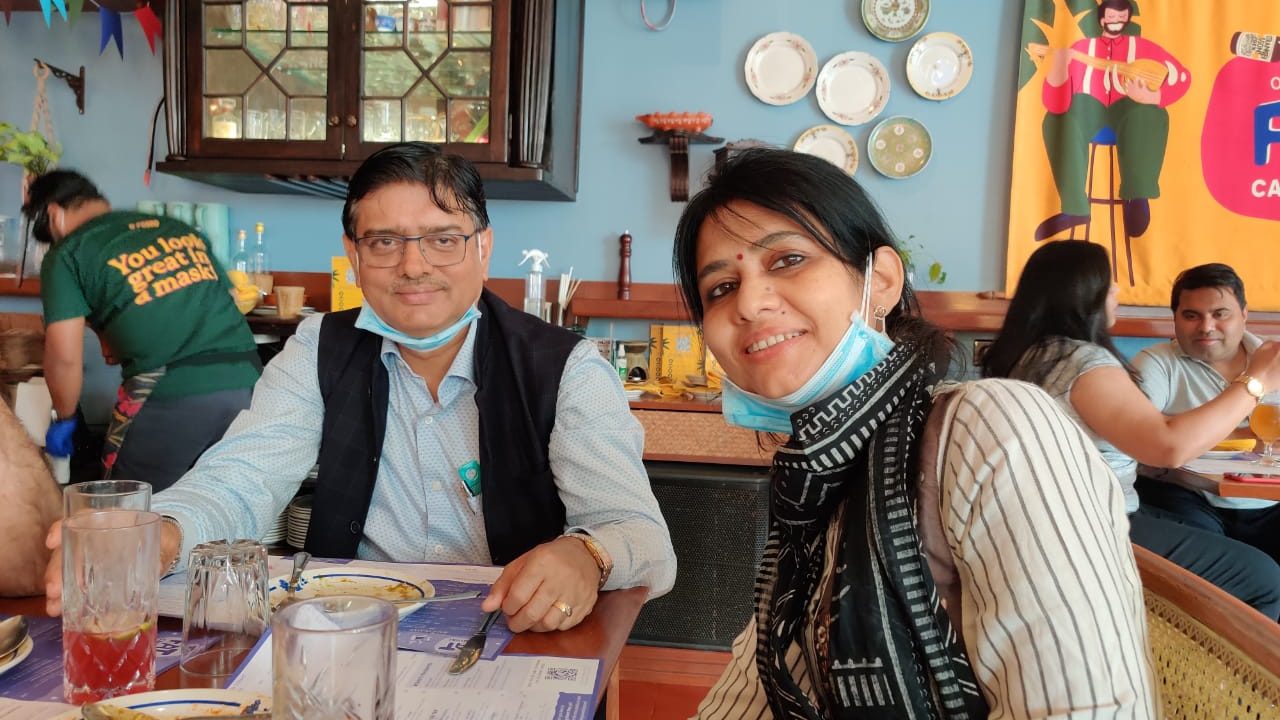
Many Odias have managed to etch their names across fields both at the national and international levels. Women too have stamped their authority in almost all the spheres and become role models for people of Odisha. One such woman is Sanghamitra Pati, the Director of the Indian Council of Medical Research (ICMR)-Regional Medical Research Centre (RMRC), Bhubaneswar. Sanghamitra has been ranked the second-most influential researcher from India and the first among ICMR globally by Elsevier, a publisher of scientific books and journals. My City Links caught up with the researcher to know more about her achievement and the current Covid-19 situation.
Tell us about this ranking.
Every year, Elsevier ranks scientists across the globe in different fields like physics, mathematics, natural science, medical, etc. It is multi-disciplinary and not restricted to any one subject. They go through different publications that are published and then do a citation matrix analysis on them. This determines how impactful and prolific a person’s research is. As per the analytics, I secured the second rank under the sub-category of public health within the category of general and internal medicine from among the top two percentile researchers across the world.
What is your research based on?
I have published many scientific and research articles in various nationally and internationally-acclaimed journals. Most of these articles have been cited by many scientists, medical practitioners and researchers. One of the most cited articles was on the multi-morbidity of people. It is a new term which can be defined as the presence of more than two diseases in a human body. The major problem of multi-morbidity is the conflicting nature of diseases. If a person has chronic obstructive pulmonary disease (COPD), a doctor will advise him/her physical activity. But the COPD patient with arthritis cannot do physical activity. It is called bi-directional interplay between the conditions that creates problems for well-being of patients. The aim of this study was to look at the burden of multi-morbidity on healthcare settings in the lower and middle-income countries.
What was the breakthrough?
I started my research on multi-morbidity in Odisha way back in 2013 after getting a fellowship from the UK. After this, many other experts have conducted research on this topic by citing my study.
I had developed a tool (MAQ-PC) to assess multi-morbidity in primary care. This is used by many lower and middle-income countries including Ethiopia, Kenya and Malaysia. It is a milestone study in my career which is being followed by many researchers. We have also conducted a study on multi-morbidity management amid Covid-19.
You’ve been actively involved in Covid-19 research. Tell us about your work.
Before joining ICMR, I was involved in research on chronic diseases. After joining here, I got involved in the study of infectious diseases because ICMR primarily focuses on containment, outbreak, epidemic and pandemic. Since we were prolific in scientific research, I and my team assisted and contributed in laboratory investigations during the pandemic and also tried to generate evidence. No research is complete without evidence. This is how our research on Covid started.
What is the new strain of Covid-19 now?
Reportedly, there are no new strains now, but we have to be careful of any new mutations or emerging variants. This may happen if we don’t adhere to Covid appropriate behaviour. The vaccines prevent severity and mortality but not infection. Having said that, even if we are vaccinated and already been infected with Covid-19 in the past, it does mean we will take safety guidelines lightly. Researchers have pointed out new mutations. The last one was the delta plus mutation. So we have to ensure that these mutations do not lead to increase in transmission of the virus and severity of the disease.
How is the Covid situation now?
I would say much better. Mass vaccination has slowed down the transmission and there has been a major decline in the number of Covid cases. But all the precautions still need to be adhered to. Recently, we also reached a huge milestone of administering 100 billion doses of vaccines in India. So the situation appears to be in control. However, we have to stay careful and follow all Covid regulations.
What should be the major concerns regarding Covid-19 now?
Covid appropriate behaviour like wearing masks, maintaining social distance, washing hands thoroughly, etc still need to be adhered to. Being fully vaccinated is most important. If a family member has any Covid symptom, isolating them is very necessary, so that others are not infected. Vaccine doesn’t prevent one person from infecting another. So continue with the safety drill.
According to your research and understanding, when will the pandemic finally come to an end?
There is no end to a pandemic. A pandemic should end as an endemic. A pandemic is an epidemic spread across multiple countries or continents. On the other hand, an endemic belongs to a particular group of people or country. The Covid-19 pandemic should be reduced to a threshold, which will be below the level of public health concern. Eradicating a virus overnight or in a year or two is not possible. But we can strive to bring it down to a level where it no longer scares or infects others severely. If we break the transmission chain, it will die down faster.
Tell us about yourself and your family.
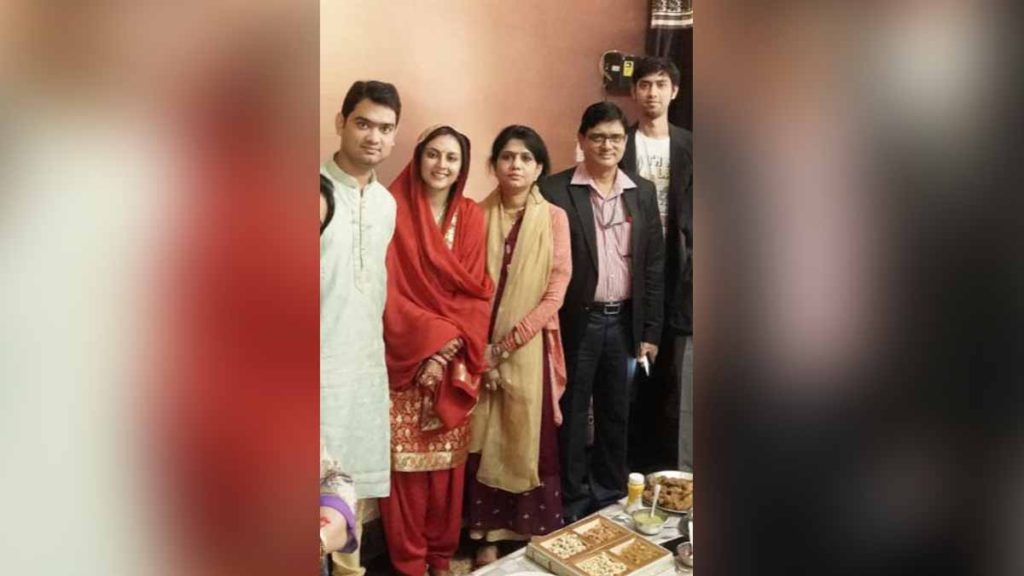
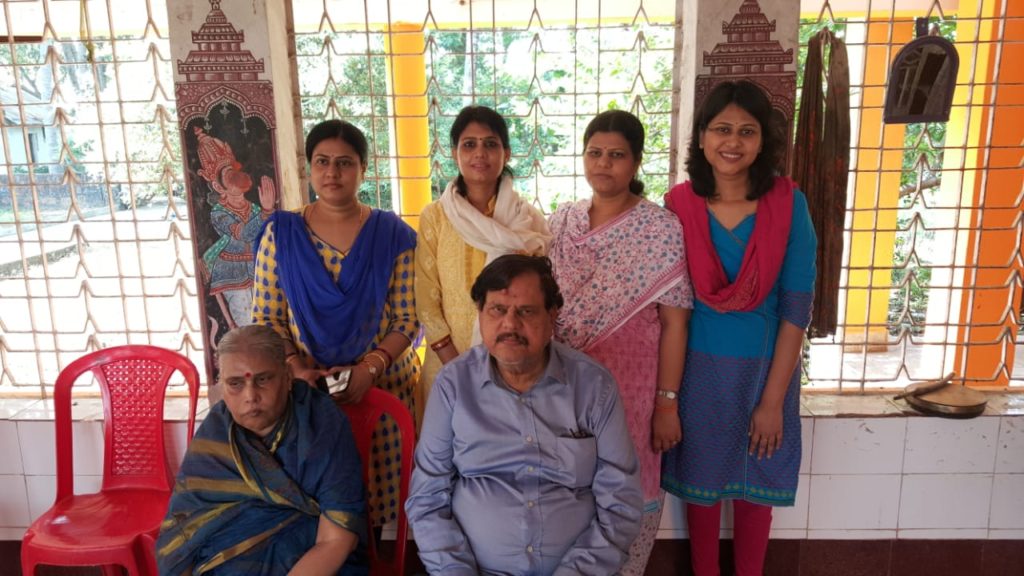
I hail from Berhampur in Odisha. Initially, I served as a medical officer and then worked as a faculty in various medical colleges of the state. I completed my MBBS and MD, both from the MKCG Medical College and Hospital, Berhampur. Later, I earned a fellowship to pursue Masters of Public Health (MPH) in the University of Maastricht, The Netherlands. I started my career as a clinician and later shifted to research because it excited me and I found it very fascinating. I am a physician-turned-laboratory scientist and public health researcher. I am the eldest among four sisters. I have two sons who are both engineers. The elder one is married.
How do you manage to juggle your family and professional life?
I have never given it a thought. The secret is to keep everything balanced and not overdo or underdo anything. I got married quite early in life. My elder son was born when I was pursuing my MBBS. For me, family and career went hand in hand. I did not have to give up one for another. Rather I chose to slow down. When you’re young, your strength to accommodate different experiences and aspirations is high.
Any advice for our readers?
Pursue your passion and listen to your heart. This is all that I have followed till now. And don’t forget to wear masks, wash your hands and maintain social distance.

Author: Aafreen Firdaus
Aafreen is a doting mother to several kitties and a doggo who loves to pamper everyone with delicious food. She is a free spirit and a wizard of words and she loves to tell beautiful stories through her writing. She is also a loving and caring soul, always ready to pitch in with a helping hand and a smile on her face.
Read more from author