
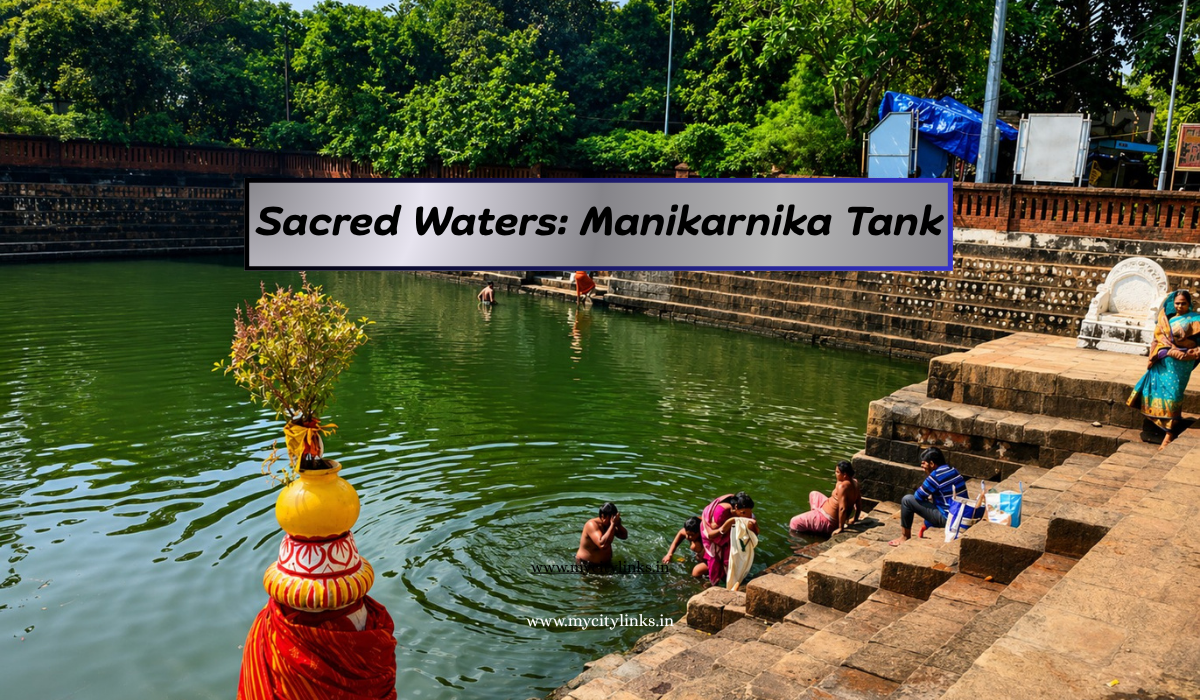

Sacred Waters: Manikarnika Tank
My City Links presents a new series on city tales extracted from the book ‘Sacred Waters’ by Anisha Swain under the guidance of Anil Dhir, Convener, Bhubaneswar Chapter at Indian National Trust for Art and Cultural Heritage (INTACH). In this series, we will be featuring some of the Temple tanks of Ekamra Kshetra.
Temple tanks, revered as sacred water bodies, have played a crucial role in religious and cultural traditions across India. In Odisha, these tanks, known as Kundas or Pushkarinis, are deeply linked to Hindu rituals, mythology, and community life. Historically, they were commissioned by kings and nobles as acts of spiritual merit and served as essential water sources. Rooted in Vedic traditions, these tanks are associated with Varuna, the water god, and believed to possess purifying qualities.
Bhubaneswar, the "Temple City," is home to many such sacred tanks, including Marichi Kunda, Kotitirtha, and Swetaganga, each carrying unique mythological significance. Pilgrims still bathe in these waters before visiting temples, maintaining age-old traditions. Beyond their spiritual role, temple tanks contribute to the ecological balance of urban landscapes, acting as natural reservoirs that sustain groundwater levels.
However, rapid urbanization threatens their existence. Encroachments and neglect have left many tanks dependent solely on rainfall, making maintenance crucial. Preserving these water bodies is not just about cultural heritage but also about sustainable water management. In a time of global water crisis, revisiting these ancient traditions can inspire a more respectful and sustainable approach to water conservation.
This time let’s have an overview of the Manikarnika Tank, Kapileswar in detail.
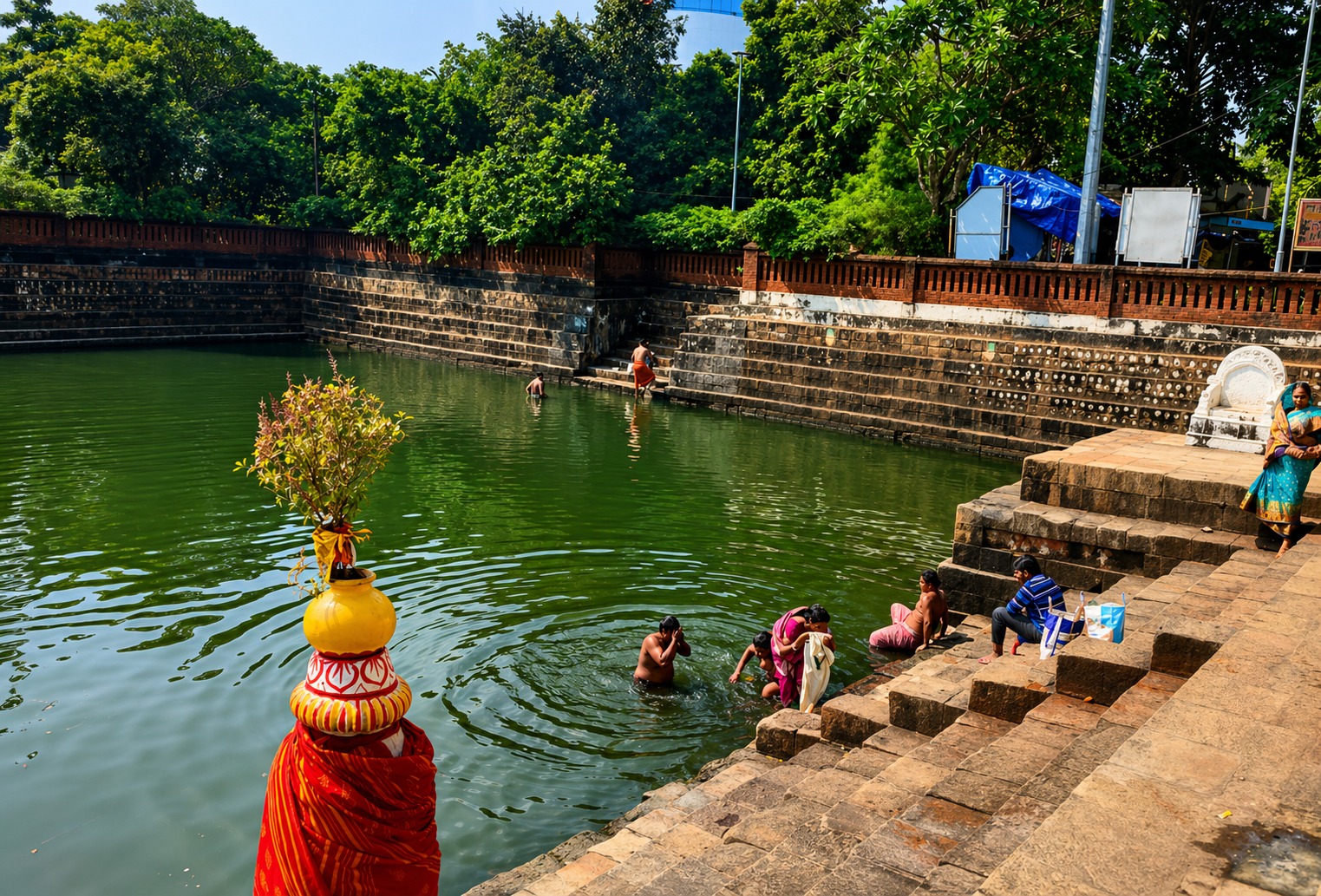
Manikarnika Tank, Kapileswar
Historic significance: Manikarnika Tank, dating back to the 14-15th century A.D., is regularly used by locals for various rituals and offerings as well as bathing. In local legend, during Goddess Parvati’s battle with the demons Kirti and Vasa, she lost her gem-studded earrings (mani-kundala). After defeating the demons, Parvati informed Lord Shiva of her lost earrings. To retrieve them, Shiva struck the earth with his trident at a place known as Kapila Kunda, where the earrings were recovered. Parvati then dedicated the earrings to Lord Kapileswar, who is also known as Kapila-muni. The kunda, or tank, where the earrings were found became known as Manikarneswar Tank.
Cultural significance: Festivals like Sivaratri, Jalasayii, Kartika Purnima, and Sankranti are observed. During these festivals, devotees gather at the lake for ritual bathing, offerings, and prayers. The offering of Pinda for honoring ancestors is also regular practice at the tank. During special occasions like Sankranti, as well as solar and lunar eclipses, Lord Kapilesvara is given a ceremonial bath in these sacred waters, marking the tank’s ritual significance.
Physical Description: The tank is surrounded by paddy fields on all sides except the northern side which is covered by the southern compound wall of the Kapilesvara temple. On the northern embankment there are a series of temples namely Pamesvara, Chakresvara, Bakresvara, Kardamesvara, Chitresvara and a Hanuman temple.
Architectural features:
Orientation: Bathing ghats with steps are provided on the northern embankment, which has nine ghats, and on the western and southern embankments, each having one ghat.
Architectural Features: The tank is rectangular in shape, measuring approximately 73.50 meters in length, 37.50 meters in breadth, and 3 meters in depth. The tank is 2.7 meters below the ground level.
Building Material: Constructed with dressed laterite blocks, which provide durability and aesthetic appeal.
Construction Techniques: Built using dry masonry, a technique where stones are fitted without mortar, enhancing its structural resilience.
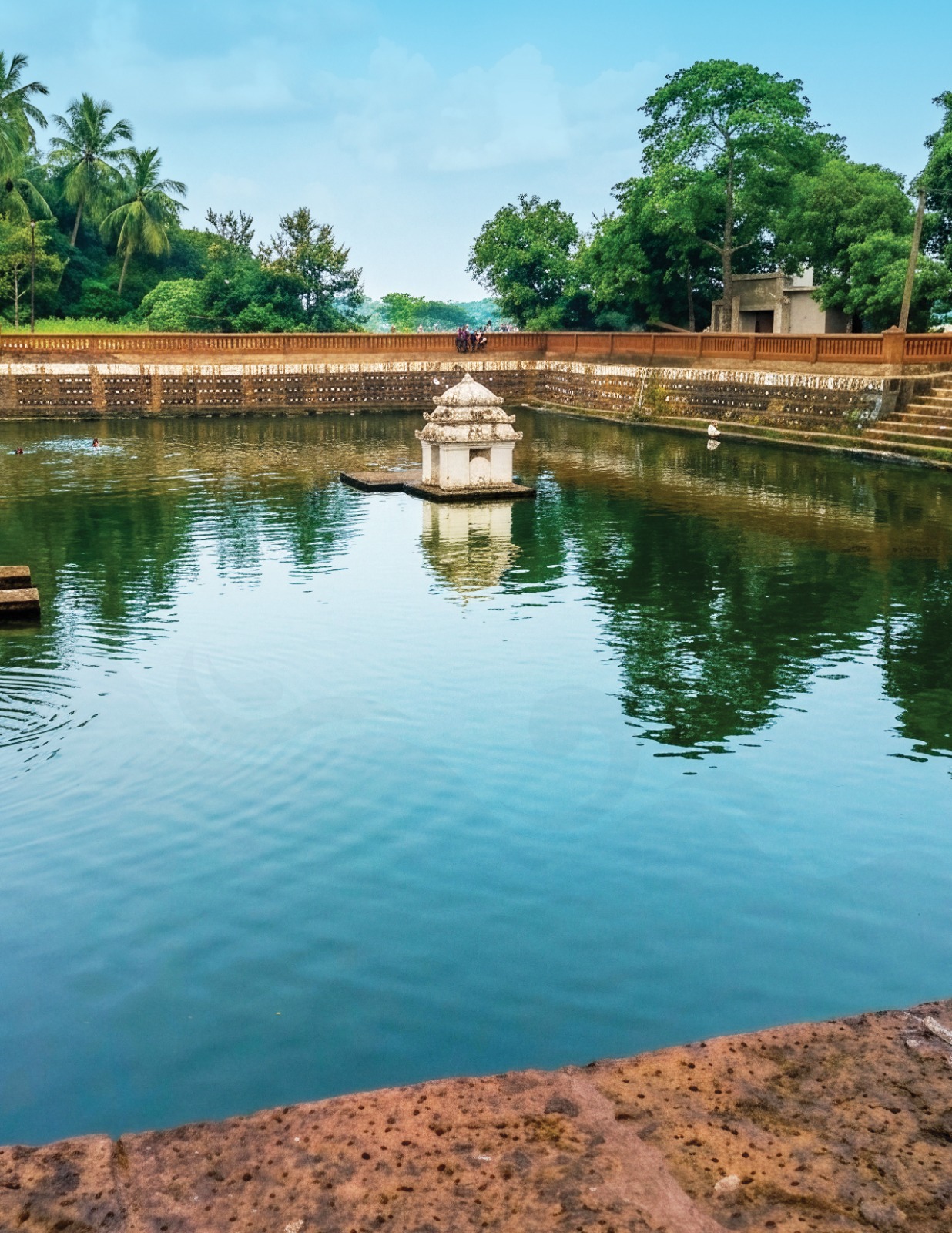
Special Features: The tank is sustained by an underground natural spring, maintaining a constant water level throughout the year. Excess and waste water exit through a channel located in the South Eastern corner of the tank. At the center of the lake stands the Ganga Mata Temple, built in the Pidha architectural style, with three receding tiers. The temple’s dimensions are approximately 1.85 square meters. Inside the sanctum resides an image of Goddess Parvati, seated in lalitasana pose atop a bull and crowned with a kiritamukuta. Though the arms of the deity are broken, the figure remains a focal point of worship, adding to the lake’s spiritual and cultural heritage.
Maintained By: Kapileswar Trust Board, A.S.I.
Ownership: Public
Current State: Perennial