

The "Cringe" Filter: How Accessibility Became the New Frontier of Indian Classism
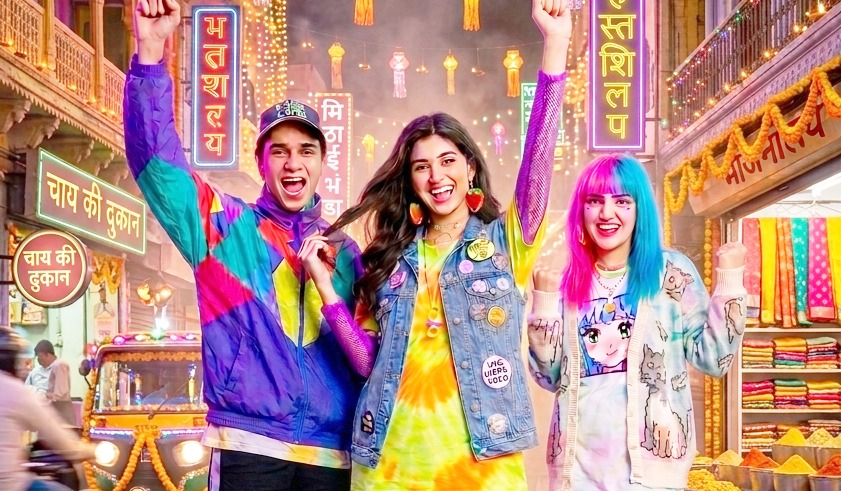
In the vibrant, often chaotic theater of Indian social life, there is a word that has recently begun to do more heavy lifting than any other: "Cringe." On the surface, it is a Gen-Z shorthand for secondhand embarrassment. But in the context of a rapidly developing India, it has evolved into a sophisticated tool of social distancing. It is the invisible fence that the privileged mass erects the moment the "common man" steps onto their lawn.
This isn't just about bad fashion or awkward reels; it is a visceral reaction to the democratization of taste. From the delicate threads of Chikankari to the gleaming surfaces of stainless steel, and the digital boom of TikTok, the pattern is identical: as soon as a symbol of status becomes accessible to the masses, it is rebranded as "cringe" by the elite. In doing so, we find that "cringe" is not an aesthetic judgment, but a sanitized vocabulary for gatekeeping.
The Death of the Chikankari Dream
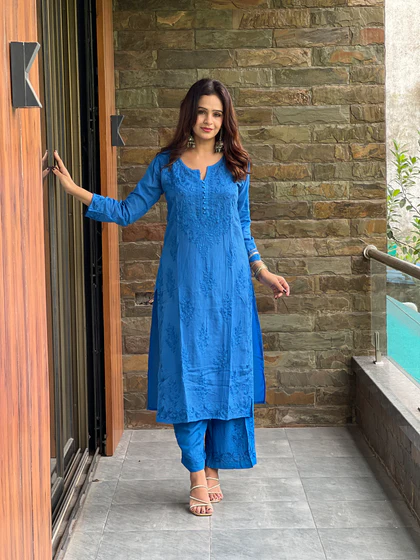
For decades, Chikankari, the exquisite shadow-work embroidery from Lucknow, was the hallmark of "old money" elegance. To own a hand-embroidered piece was to signal an appreciation for heritage, a connection to the Nawabi history of Awadh, and the financial means to afford slow, artisanal labor. It was "quiet luxury" before the term existed. However, with the rise of machine-led mass production and e-commerce platforms like Meesho, Ajio, and Flipkart, the "Chikankari look" is now available for ₹499.
Suddenly, the ivory towers of South Delhi and South Bombay have abandoned the look. As soon as the supply chain caught up and the streets of Janpath or Commercial Street began offering affordable iterations to the masses, the narrative shifted overnight. The garment wasn't "timeless" anymore; it was "overexposed."
"It’s so over," says Ananya, a 27-year-old techie from Bhubaneswar. "You see it every ten meters at the airport now; it’s available on sites like Meesho. It’s lost its soul. It’s become a uniform for people who don't understand the craft."
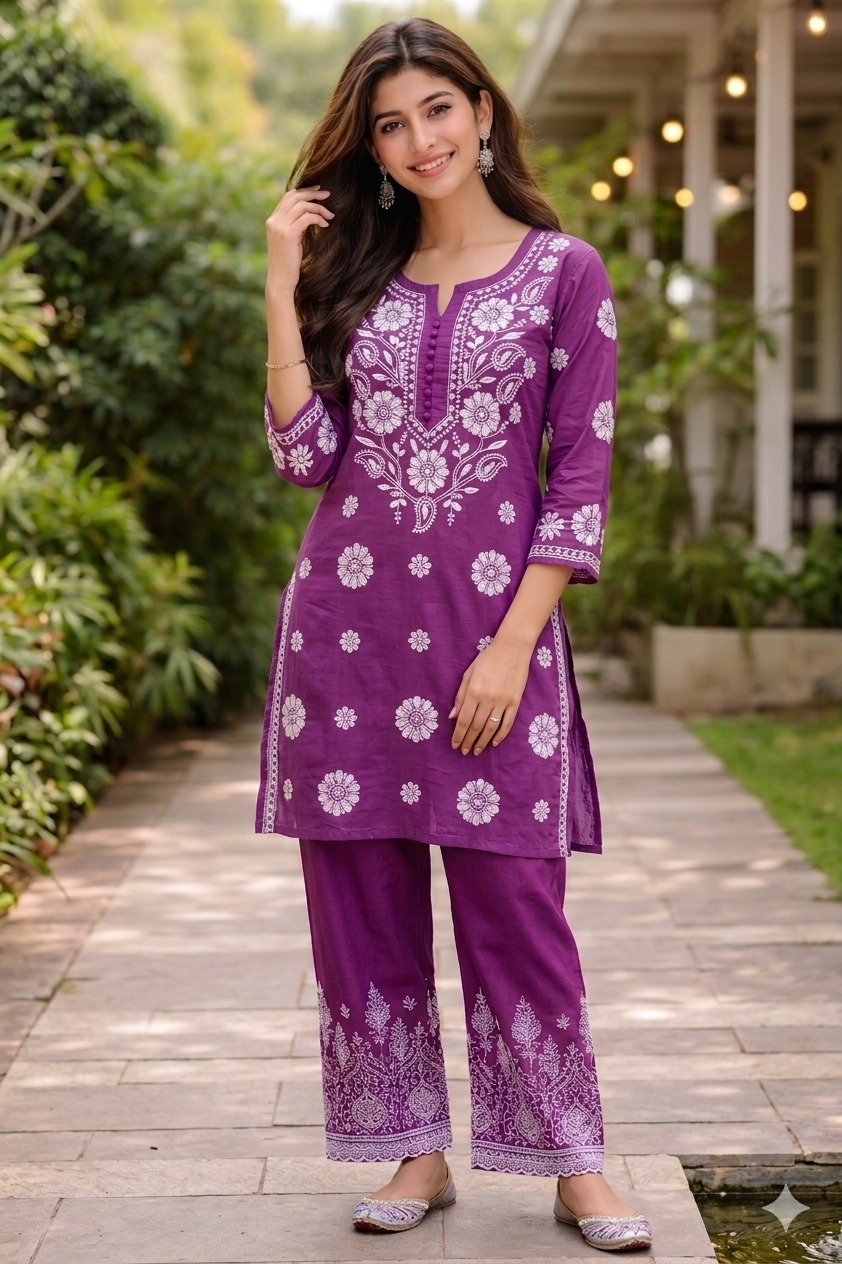
This rejection highlights a predatory phenomenon: the rebranding of accessibility as a lack of taste. When a domestic worker or a student from a tier-3 city can mirror the aesthetic of an upper-middle-class influencer, the influencer feels a sudden "disgust" for their own wardrobe. It is a defense mechanism for the privileged to maintain a boundary that physical distance no longer provides.
“Seeing the exorbitant prices of Chikankari, I’d always shied away from owning a set. I could only afford one when it became accessible online. I agree that the quality and the craftsmanship are missing, but that’s a trade-off I’m willing to make,” says Swarnima, a school teacher from Cuttack.
Steel: The Great Equalizer and Its Rejection
To understand the depth of this phenomenon, one must look at the humble steel utensil. The history of steel in India is a jagged timeline of class warfare, ritual purity, and the eventual "cringe" filter of the modern elite.
A Tool of Anonymity and Caste-Erasure
Before the 20th century, materials used in the kitchen were strictly dictated by caste and wealth. The elite used gold, silver, or heavy bell-metal (Kansa). The middle varna used brass or copper, which required constant, laborious tinning (Kalai). The marginalized were often restricted to disposable leaf plates (Pattal) or unglazed clay; materials that were considered "porous" and thus permanently "defiled" if touched by certain hands in a caste-rigid society.

Stainless steel entered the Indian market in the mid-20th century as a "miracle metal." Because it is non-porous, it was seen as a material that could be "purified" with ash and water. Steel was revolutionary because it allowed for a degree of anonymity in public dining. It allowed Dalit and Bahujan communities to eat in public spaces with a degree of dignity that was previously impossible. It didn't hold the "memory" of the touch of the person who used it before.
The Return to "Rustic" Purity
But today, steel has become too successful. Because it is in every household, from the slum to the skyscraper, it has lost its status. The elite have rebranded it as "the canteen aesthetic." In a desperate bid to remain distinct, the wealthy are moving back to "artisanal" ceramics, stoneware, or even unglazed clay; the very materials once used to enforce distance, but now sold at a 500% markup in lifestyle boutiques.
"I grew up seeing steel everywhere, so to me, it feels like a hospital or a hostel," says Debjyoti, a 29-year-old software engineer in Bangalore. "When I host people, I want stoneware or matte-finish ceramics. There's something 'massy' about the sound of a steel spoon hitting a steel plate that just feels... unrefined."
The ultimate irony of the "cringe" filter is that once the elite have successfully abandoned a material, a new cycle of "re-aestheticization" begins. We are currently witnessing this with stainless steel. After a decade of being relegated to the "tacky" or "mess-hall" category, high-end lifestyle brands are now repackaging steel as a minimalist, "industrial-chic" luxury.
This shift isn't about the material returning to the masses; it is about reclaiming the material for the privileged by stripping it of its common associations.
The "Design-Led" Rebrand
New-age Indian D2C (Direct-to-Consumer) brands are leading this charge. They aren't selling the "thali" you find in a Cuttack tiffin room; they are selling "sustainably sourced, heavy-gauge, matte-finished dining sets." By changing the finish, moving from the high-gloss shine that we associate with local hardware stores to a brushed, satin, or PVD-coated (Gold or Rose Gold) look, they create a visual distance from the "common" steel plate.
These brands use specific buzzwords to justify a 400% price markup. "Hospitality Grade": Repurposing the durability of steel as a professional virtue rather than a domestic convenience. "Architectural Forms": Shifting the focus from the utility of the vessel to the geometry of the design. "Sustainable & Forever": Playing on eco-consciousness to appeal to the urban elite who want to move away from plastic or fragile ceramics.
The marketing imagery for these products never features a typical Indian kitchen with colorful containers and chaotic spices. Instead, the steel is placed on white marble countertops, surrounded by linen napkins and eucalyptus sprigs.
By placing steel in a Scandinavian or Zen-minimalist setting, the brand tells the consumer, "This isn't the steel your cook uses. It is a design object." The Class Paradox. This creates a bizarre social paradox. The privileged mass, who once mocked steel as "cringe," are now buying it back at exorbitant prices because it has been "validated" by a design house.
Ultimately, this cycle proves that the "cringe" label is temporary. It is merely a placeholder used by the elite while they wait for a material to be "cleansed" of its association with the masses so they can buy it back as "heritage" or "high design." The steel plate hasn't changed; only the price tag and the filter through which we are told to view it have.

The TikTok Saga: Aesthetic Cleansing
The trajectory of TikTok in India offers perhaps the most explosive case study in how accessibility triggers a "cringe" response. Unlike Instagram, which began as a playground for those with high-end iPhones and curated lifestyles, TikTok was architecturally designed for the "everyman." It provided high-end editing tools to anyone with a budget smartphone and a basic data pack.
This democratization of digital expression shattered the aesthetic glass ceiling of the Indian internet. For the first time, the "privileged mass" lost control of the narrative. Their feeds were suddenly "invaded" by creators from tier-2 and tier-3 cities. These creators didn't speak the same aesthetic language; their backgrounds were often unpainted walls or rural fields.
To the elite, this was not "content"; it was "cringe."

The YouTube vs. TikTok Class War
The tension reached a boiling point during the "YouTube vs. TikTok" digital war. YouTube creators, who generally required expensive gear and "refined" editing, were framed as the "authentic" creators. TikTokers, labeled as "Jio-fed" (a derogatory reference to the affordable data revolution), were mocked as "low-IQ."
When the Indian government finally banned TikTok in 2020, the celebration among the urban elite was telling. For many, the support for the ban was about aesthetic cleansing rather than geopolitics.
"I’m glad it’s gone," one user tweeted at the time. "My feed is finally clean again. No more 'chapri' content."
The use of the word "Chapri," a casteist slur masquerading as a slang term for "tacky”, revealed the true heart of the matter. The ban was seen as a way to push the masses back to the periphery of the internet. It was a digital "eviction drive."
The Weaponization of "Cringe" as Social Distance
In the caste hierarchy, "purity" is the highest value. Historically, this was maintained through physical distance. In the digital age, "The Aesthetic" has become the new "Purity." Calling a mass-produced item or a viral TikTok "cringe" is the modern way of saying a space has been "polluted" by common access.
The Labor Gap: Caste is fundamentally a division of labor. Privilege allows one to buy the product of labor without engaging with the process. The elite love Chikankari when it represents the "exotic craft" of a distant laborer. But when that laborer themselves can wear the garment, the "magic" vanishes. The privilege isn't in the embroidery; it's in the power to own something the laborer cannot.
The Irony of the "Authentic"
The final irony is the elite's current obsession with "The Artisanal." After abandoning Chikankari because it became mass-produced, they moved to "Handloom," which costs ten times as much. After abandoning steel because it became common, they moved back to clay, the very material that was once used to marginalize people, but they buy it from luxury boutiques for ₹2,000 a bowl.
This is the “Cycle of Discard”. The privileged mass will always love a culture until the people who actually belong to that culture can afford it, too. We see this in travel, where a village is "heavenly" until a bus route makes it accessible; then it is "ruined."
If we allow "accessibility" to be synonymous with "cringe," we are essentially saying that beauty is only valid when it is exclusive. The real "cringe" isn't the woman in a machine-made kurta, the family eating off gleaming steel plates, or the teenager dancing on a dusty road in a 15-second video. The real cringe is a society that finds beauty and joy offensive the moment it becomes inclusive.