



The Ground Truth: How Soil Is Shaping the Future of Our Cities
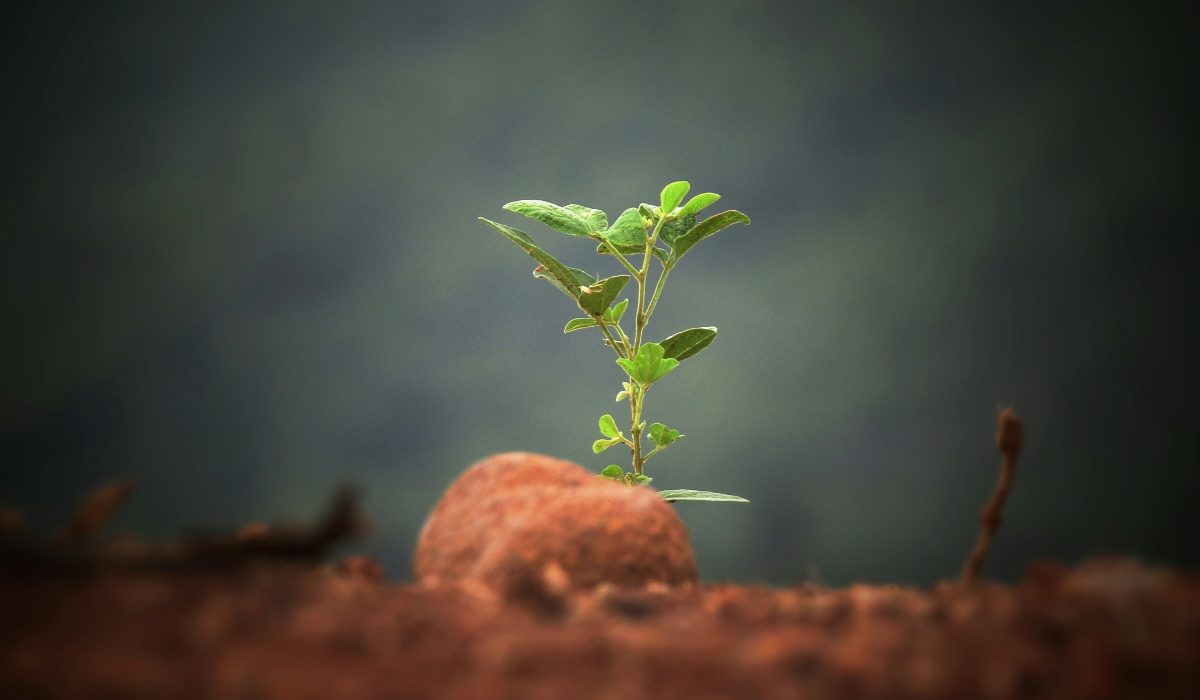
Beneath this visible growth, something more fundamental is quietly disappearing: the living soil. This soil once absorbed rain, cooled neighbourhoods, supported trees, and sustained life.

On December 5, the world observes World Soil Day, and the 2025 theme, “Healthy Soils for Healthy Cities,” brings this invisible crisis into sharp focus. For decades, soil was treated as a rural concern, something linked only to farms and forests. Today, cities across the world are discovering that ignoring soil comes with consequences they can no longer afford.
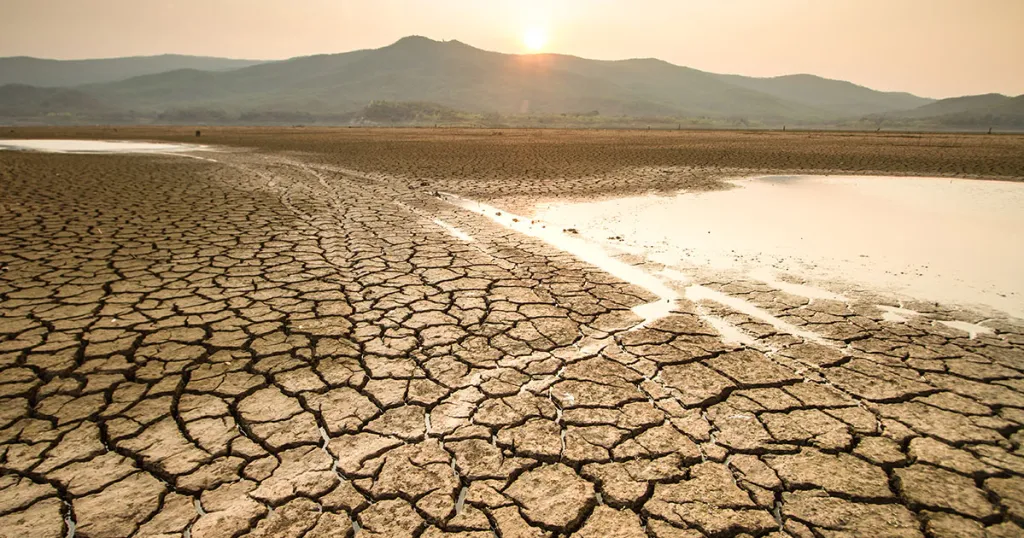
According to the United Nations Food and Agriculture Organization (FAO), urban soils are among the most disturbed ecosystems on the planet. When soil is sealed under concrete, it loses its ability to absorb rainwater, store carbon, support plant life, and regulate temperature. What follows is familiar: flooded streets, intense heat, falling groundwater levels, and shrinking green cover.
When Cities Started Losing Their Soil
Urban flooding, extreme heat, water scarcity, and disappearing green spaces are no longer isolated problems. Urban planners and environmental experts increasingly point out that these are symptoms of soil that can no longer breathe.
As cities grow, soil is often the first casualty. Roads, pavements, parking lots, and buildings seal the ground and cut off its natural functions. Soil that once filtered rainwater now sends it rushing into drains. Soil that once cooled neighbourhoods now traps heat under concrete.
FAO has repeatedly emphasized that soil is not just about food production. It is a living system that supports biodiversity, filters pollutants, regulates water flow, and acts as one of a city’s earliest defences against climate stress. Cities that protect soil cope better with climate shocks. Those that don’t are forced into expensive corrective measures, often after damage is already done.
How the World and India are Responding
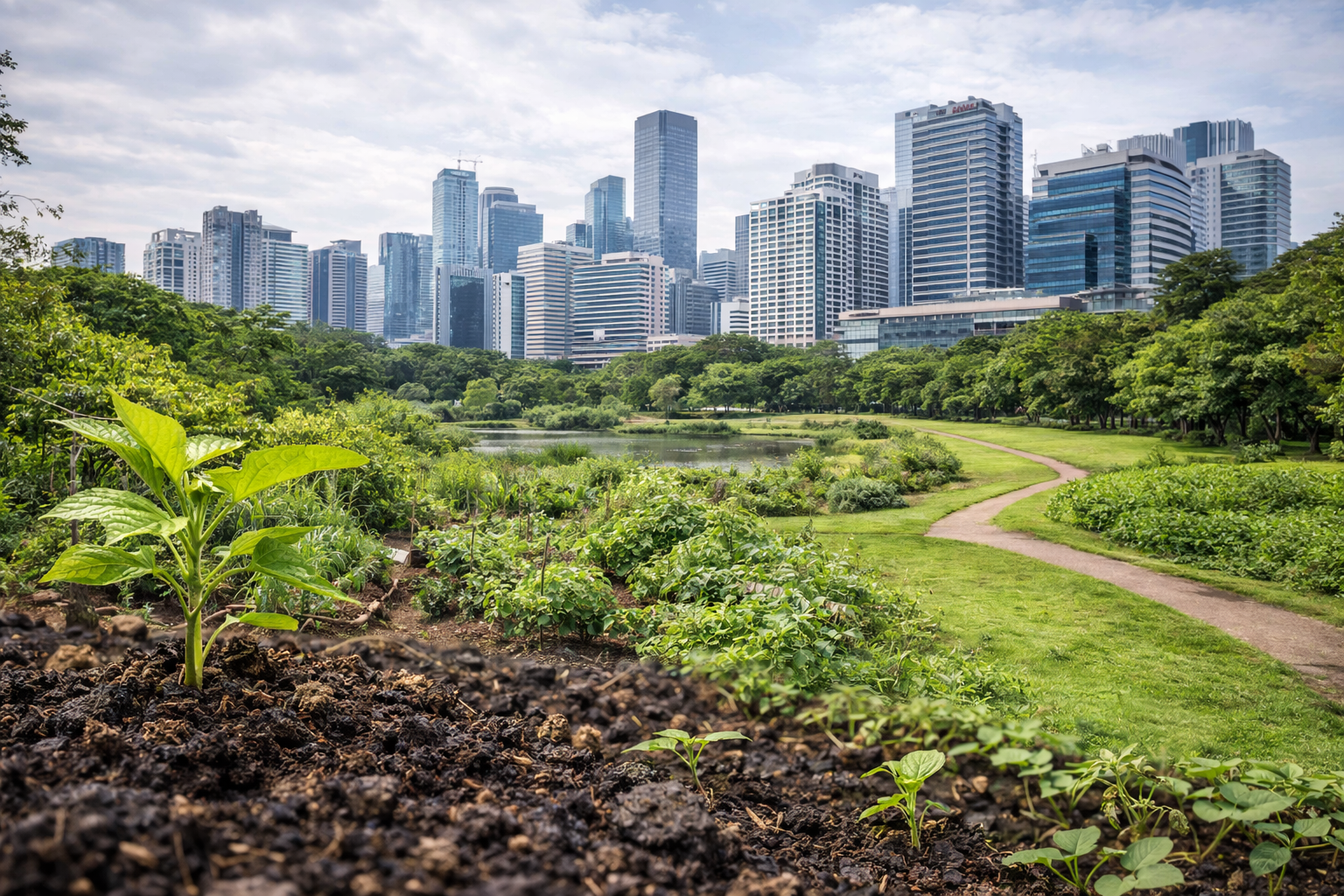
Across continents, cities are beginning to relearn how to work with soil instead of sealing it away. In Europe, urban planners are replacing impermeable concrete with permeable pavements that allow rainwater to seep back into the ground. In East Asia, public parks are being designed as flood-absorbing landscapes. In parts of Latin America, abandoned urban plots are being converted into community gardens, restoring soil life while producing local food.
According to a media release by the Food and Agriculture Organization of the United Nations (FAO) issued around World Soil Day observances, “healthy urban soils play a critical role in water regulation, climate mitigation, biodiversity support, and human well-being.” The FAO has repeatedly highlighted that restoring soil is among the most cost-effective climate actions available to cities, especially in the face of rising floods and heat stress.
India’s relationship with soil, however, predates modern urban planning by centuries. Traditional land-use systems across the country revolved around composting, mulching, crop diversity, and respect for natural cycles. Soil was not merely a resource; it was Bhoomi, the living foundation of life and livelihoods.
Yet rapid urbanization altered priorities. Open land began to be seen as “unused space.” Soil turned into real estate. While flagship initiatives such as the Soil Health Card Scheme aim to reconnect science with soil, urban soil degradation continues to remain largely invisible in public discourse.
As noted in a press communication from the Ministry of Agriculture & Farmers Welfare, “balanced nutrient management and restoration of soil organic matter are essential for sustaining productivity and ensuring long-term soil health.” The ministry has consistently emphasised that soil management is not only a farming issue but a national sustainability concern.
Behind the scenes, a coordinated institutional framework works to protect and restore soil across India. The Department of Agriculture & Farmers Welfare (DA&FW) provides national policy direction, supported by scientific institutions such as the Soil and Land Use Survey of India (SLUSI). According to official documentation and media briefings, SLUSI’s systematic mapping of soil characteristics and land capability forms the backbone of soil and water conservation planning, watershed development, and sustainable land-use decisions, especially in climate-vulnerable regions.
Research and innovation flow through the Indian Council of Agricultural Research (ICAR), India’s premier agricultural research organisation. In multiple public statements and media interactions, ICAR has underlined that “soil health is central to food security, climate resilience, and sustainable agriculture.”
Within ICAR, the Indian Institute of Soil and Water Conservation (IISWC) focuses on erosion control, moisture conservation, and restoration of degraded land. As per IISWC outreach materials quoted in agricultural journals, its work directly contributes to reducing runoff, improving groundwater recharge, and enhancing downstream water security, benefits that extend well beyond farms and into urban ecosystems.
Complementing these scientific efforts are national missions such as the National Mission for Sustainable Agriculture (NMSA) and the National Mission on Natural Farming (NMNF). According to official mission releases, NMSA promotes climate-resilient practices such as composting, integrated nutrient management, and reduced chemical dependency, while NMNF seeks to rejuvenate soil by encouraging chemical-free farming through on-farm inputs like Jeevamrut and biomass mulching.
As highlighted in a government media note on natural farming, “reviving soil biology is key to restoring productivity, reducing input costs, and enhancing climate resilience.”
What gives these national frameworks real strength is their grassroots execution. Through state governments, agricultural universities, Krishi Vigyan Kendras (KVKs), Panchayats, and self-help groups, soil policy is translated into practice. Together, they ensure that soil health is discussed not only in policy documents and laboratories, but in fields, villages—and increasingly, in conversations about how cities must rethink what lies beneath their feet.
Odisha: Where Soil Is a Question of Survival
In Odisha, soil is not an abstract environmental idea. It is the thin line between food security and hunger, resilience and vulnerability. In a state repeatedly tested by cyclones, floods, heat stress, and droughts, the condition of the soil often determines how well communities recover after a disaster strikes.
According to insights shared in multiple agriculture and climate-focused media reports, researchers from the Odisha University of Agriculture and Technology (OUAT) have consistently highlighted the role of soil organic matter in climate resilience. As per a media interaction quoted in national newspapers covering climate-resilient agriculture, OUAT scientists noted that “soils with higher organic carbon content show better water-holding capacity and are far more resilient during both floods and prolonged dry spells.”
In another OUAT-led outreach programme reported by regional and national media, agricultural experts emphasised that improving soil structure through composting and organic inputs significantly reduces crop loss during extreme weather events, an observation increasingly relevant for Odisha’s coastal and flood-prone districts.
Civil society organisations have echoed this concern from the ground. Centre for Youth and Social Development (CYSD), which has worked extensively across rural and tribal belts of Odisha, has repeatedly linked soil degradation to livelihood insecurity. According to a CYSD programme note cited in development-focused publications, “soil degradation directly affects farm productivity, increases distress migration, and weakens the economic resilience of rural households.”
As per CYSD’s field documentation referenced in reputed magazines focusing on sustainability and rural development, the organisation has promoted composting, mixed cropping, and soil moisture conservation as low-cost but high-impact interventions. These practices, the organisation notes, not only restore soil fertility but also reduce farmers’ dependence on chemical inputs and external credit.
In a statement attributed to CYSD leadership and published as part of media coverage on sustainable livelihoods in Odisha, the organisation observed that “restoring soil health is not just an environmental intervention, it is an economic strategy that strengthens communities against climate shocks.”
What emerges clearly from Odisha’s experience is that soil conservation cannot remain confined to laboratories or policy documents. While institutions like OUAT provide the science, and organisations like CYSD translate it into action, some of the most compelling soil stories unfold quietly on small farms, in self-help group initiatives, and through community-led experiments that rarely make headlines.
In Odisha, soil is the foundation on which survival, recovery, and long-term resilience are built.
A Woman, Earthworms, and a Quiet Revolution
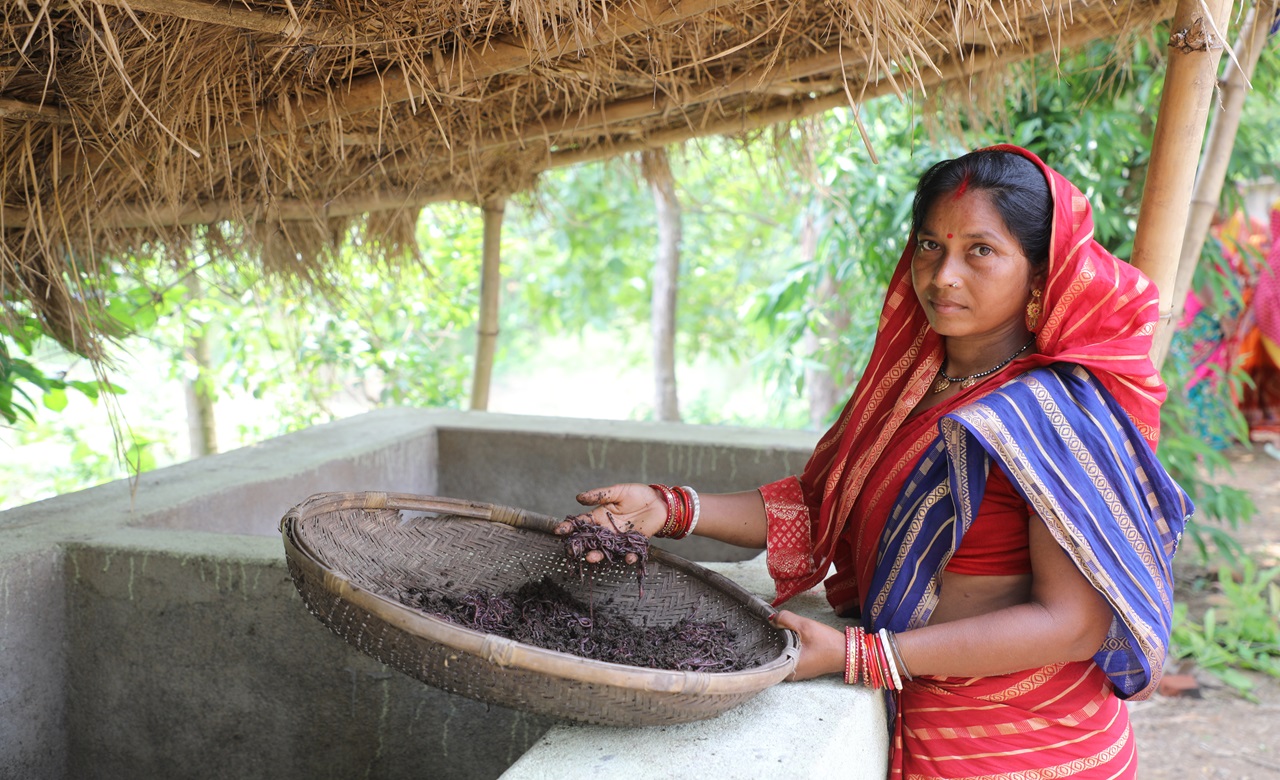
In Shamakhunta block near the Similipal forest in Odisha, Hemanti Mohant, a member of the Maa Andhamani Self-Help Group, offers a powerful example of how soil regeneration can begin quietly—and ripple far beyond one farm.
Like many farmers in forest-fringe regions, Hemanti was struggling with land exhausted by years of chemical fertiliser use. Crop yields were declining, cultivation costs were rising, and the soil had lost its natural vitality. The turning point came through the FAO–Government of India Green-Ag Project, an initiative focused on promoting sustainable agriculture in ecologically sensitive landscapes.
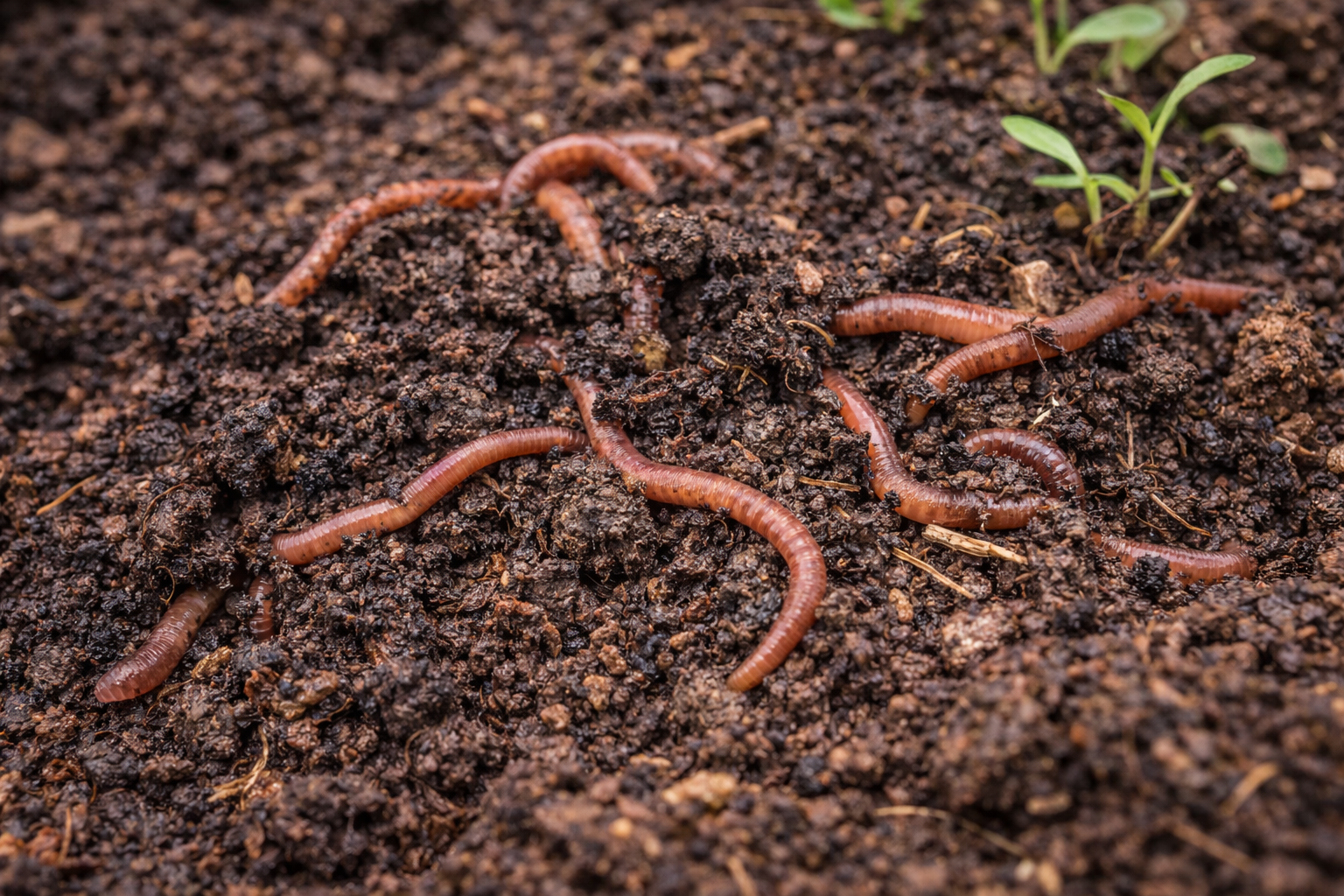
Through training sessions and field demonstrations, Hemanti was introduced to vermicomposting, the conversion of organic waste into nutrient-rich compost using earthworms. What followed was not just a change in farming practice, but a shift in how soil itself was understood.
Using kitchen waste and agricultural residue that would otherwise be burned or discarded, Hemanti began producing vermicompost—often referred to as “black gold” for its ability to restore soil health. The compost visibly improved soil structure, increased moisture retention, reduced dependence on chemical inputs, and strengthened crop resilience.
According to media releases related to the FAO Green-Ag Project, Hemanti described the impact of the practice in simple terms: “I will continue vermicomposting because it restores my farm and replenishes the soil. With vermicomposting, our fields are thriving, and so are we,” she said, reflecting on the visible changes in her land.
As per the FAO India programme documentation, within ten months, her Self-Help Group produced nearly 500 kilograms of vermicompost, selling about 300 kilograms while using the remainder on their own fields. The initiative nearly doubled the group’s income while significantly reducing cultivation costs. Earthworms bred during the process were supplied to government-supported schemes, creating an additional and unexpected revenue stream.
Beyond income, the larger impact lay in replication.
According to a media statement published by FAO India, “over 330 vermicomposting units were established in the backyards of beneficiary households across project villages, enabling farmers to produce organic fertiliser, improve soil fertility, and reduce dependence on synthetic inputs.”
Hemanti’s vermicompost pits soon became an informal learning site. Farmers, women’s groups, and field officers began visiting to observe the process firsthand. What they saw was not a complex technology, but a low-cost, decentralised solution rooted in locally available resources.
FAO officials associated with the Green-Ag Project have noted, in project updates carried by reputed media platforms, that the strength of Hemanti’s work lies not in scale but in replicability, proof that soil regeneration can be community-led, economically viable, and environmentally sound.
For cities like Bhubaneswar, grappling with mounting organic waste and shrinking landfill space, Hemanti’s story carries an important lesson. Food scraps and biodegradable waste need not be urban burdens. Redirected thoughtfully, they can become resources, replenishing rural soils while easing environmental pressure within cities.
Hemanti’s work offers an important lesson for cities struggling with waste and soil loss. The title “Vermicompost Queen” emerged not through ceremony, but through consistency. In turning waste into nourishment and exhausted land into living soil, she has shown that the future of healthy cities may well begin far from city limits, quietly, patiently, and one compost pit at a time.
What Cities Like Bhubaneswar Can Learn
For cities such as Bhubaneswar, grappling with mounting organic waste and shrinking landfill space, Hemanti Mohant’s model offers a crucial lesson. Food scraps and biodegradable waste need not be urban burdens. Redirected thoughtfully, they can become resources—replenishing soils beyond city limits while easing environmental pressure within cities.
This idea finds strong backing in global and national urban sustainability discourse. According to a media release issued by the Food and Agriculture Organization of the United Nations (FAO) around World Soil Day observances, “urban organic waste, when properly managed, can significantly improve soil health while reducing pressure on landfills and lowering greenhouse gas emissions.” FAO has repeatedly emphasised that closing the loop between urban waste and soil regeneration is essential for building resilient cities.
Bhubaneswar’s rapid transformation, however, has come at a quiet cost. Natural soil surfaces have shrunk, wetlands have been pressured, and rainwater increasingly runs off instead of soaking into the ground. Urban planners and environmental experts have long warned that such changes weaken a city’s natural defences against flooding and heat.
As per a media statement cited in national newspapers covering urban resilience, UN-Habitat has observed that “cities that protect permeable surfaces and living soils are better equipped to manage stormwater, reduce urban heat, and improve overall quality of life.” The message is clear: soil is not a leftover space—it is critical urban infrastructure.
Yet across Bhubaneswar, small acts of resistance are taking shape. Households are composting kitchen waste. Terrace gardens are returning to rooftops. Schools and institutions are introducing environmental and soil education at an early age.
According to Bhubaneswar Municipal Corporation (BMC) communications quoted in regional media, the city’s composting and waste-segregation drives aim to “reduce landfill load while encouraging decentralised composting that can support urban greenery and soil health.” While modest in scale, such initiatives signal a shift in how the city views waste and soil.
Education plays a central role in this transformation. At institutions such as the Kalinga Institute of Social Sciences (KISS), students learn soil care through hands-on plantation drives, composting units, and organic farming activities. As per media coverage of KISS’s environmental programmes, educators have highlighted that “instilling respect for soil and nature at a young age builds lifelong environmental responsibility.”
Where the Future of Cities Truly Begins
As World Soil Day 2025 reminds us, healthy cities do not begin with smart infrastructure alone. They begin with living soil.
And as cities like Bhubaneswar grow taller and faster, the most important work may still be happening quietly, where waste turns into nourishment, exhausted land becomes living ground, and the future of cities takes root beneath our feet.
