

The Kohinoor Ephemeris: A Tale of Harmony
From a city known best for its brotherhood, Cuttack, comes another tale of unwavering harmony. Amidst rising communal tensions in the country, it is important for us to remember who we really are as Indians and the story of the Kohinoor Press Panjika serves as a really good reminder. It is known to all that non-Hindus are not allowed inside the Jagannath temple of Puri, but what if someone told you that a Muslim family has managed to leave its mark, not only inside the temple but also in almost every Odia household and it’d be safe to say, in the hearts of our Odia brothers and sisters as well?
The Kohinoor ephemeris, first published in 1935 by Aminul Islam, has found its steady place in terms of consultation for suitable dates for Hindu festivals and religious rituals. Found in all Odia houses, in India or abroad, the Kohinoor Panji is considered to be one of the most accurate of all Panjis, approved by the Mukti Mandap Pandit Sabha, the highest Hindu religious body of the Jagannath temple in Puri. From finding an apt mahurat for a marriage to deciding which would be the best date for a Ghara Pratishta, or any other auspicious occasion for that matter, the Kohinoor Press Panjika is what all Pandits have turned to for reference since decades. How did this happen? To find the answer, we’ll have to delve into the past.
Born in a humble Muslim family of Sutahat in Cuttack, Aminul completed his M.E. examination in around 1911-12. Although he had to leave his aspiration of further studies, owing to familial liabilities, his unwavering interest in literature helped him develop his skills as a revolutionary writer. While working in a book shop, he had the opportunity to read books of Munshi Hakim, who was very popular among Odia readers, and was inspired by his writings. It is his love for books and the realization of the amount of their possible contribution in bringing positive change is what led him to establish the ‘Orissa Kohenoor Press’ in 1928.
With determination and loyalty to his patriotism, unbothered by the restrictions of communalism, he took the publication of the palm leaf manuscripts in Odia upon himself, which no other press owner ventured to take up. He gathered various literary and religious manuscripts like ancient Puranas, upapuranas, and manuscripts on subjects like Tantra, Jyotisa and Ayurveda and enabled their publication. These neglected manuscripts were collected in worn-out conditions from around Odisha, then Orissa. For accurate copying, correction and editing of the manuscripts, he reached out to several learned Sanskrit and Odia scholars, which included a reputed Pandit of the Mukti Mandap Pandit Sabha of Jagannath temple. Had it not been for Aminul Islam, these rare, traditional works would have been lost forever.
In a conversation with Sk. Zaharul Islam, son of late Aminul Islam, who has dedicatedly kept the legacy of his father alive, we found out how this sacred responsibility of printing the Panchang was given to a Muslim. “The members of the Mukti Mandap Pandit Sabha and the general population of Odisha had faith in my father due to his authentic and accurate work with the old religious and traditional manuscripts. It is because of this trust that Nithyananda Mohapatra, an active member of the Pandit Sabha, approached him for the production and publishing of an accurate Panji, as they had found errors with the Panji that was available previously, the Arunodaya Press Panji. Respected astronomers, Harihara and Bishnuprasad Khadiratna used to make the necessary calculations and predictions for the Panji which was then approved by the Mukti Mandap Pandit Sabha before it went into printing. Even today, the first draft of calculations is created by the same family. The son of Bishnuprasad has taken up the duty since the demise of his father. Since 1935, we have received the approval certificate every year from Sri Mandir, without fail,” says Zaharul.
He added, “My father was the first-ever Muslim to start a fund in Sri Mandir. He had contributed the first five thousand rupees, which was of much importance during that time. The fund has been since used for conducting thread ceremonies for boys that hail from underprivileged situations. It exists even today and serves the same purpose.”
Iftekhar, the grandson of Aminul Islam, joined his father, Zaharul, in this profession after completing his MBA. With mixed emotions, Iftekhar says, “When my grandfather started the publication of Kohinoor Panji, which holds so much importance for Hindus, neither did the Hindus mind the contribution of a Musalman nor did Muslims ever question his faith. The people in the olden times were more tolerant and peace-loving, it is only recently that the divide has surfaced.”
Aminul Islam, through Kohinoor Press, has published revolutionary books which have played an integral part in the freedom struggle of India. Several books published by him which talked about the barbaric imperialism and tyranny by the British government, including ‘Dhenkanal Guli Fire Kahani’, which talked about the fearless martyr Baji Raut, were declared seditious and all copies were confiscated by the autocratic rulers.
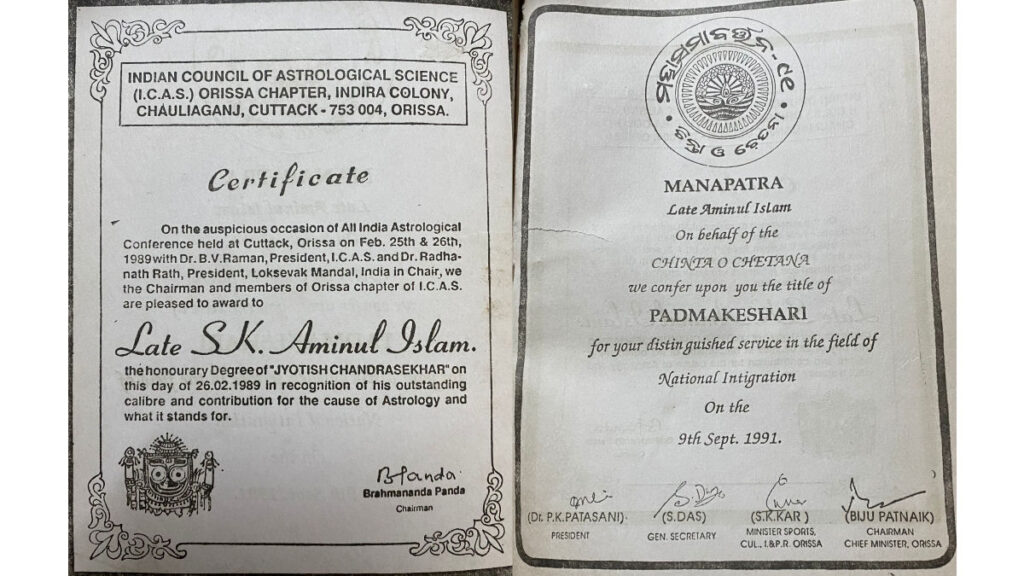
He himself has written and published booklets which included poems about Madhusudan Das, Mahatma Gandhi’s Dandi March with regards to Odisha, the Quit India Movement and the ferocious Netaji Subhas Chandra Bose. Just like how the printing methods of the Kohinoor Press Panjika has changed from block printing to offset printing, times have changed too. In this rapidly evolving, fast-paced world, every second is unpredictable, but there are certain things that time can never change. Sk. Aminul Islam’s selfless contribution for the peacekeeping between the two communities is one of them. A ‘Padmakeshari’ title holder for distinguished service in the field of National Integration, a true patriot, undeterred by the constraints of religiosity, who found acceptance in the holy Sri Jagannath Mandir of Puri decades ago, and has managed to keep it intact till date.
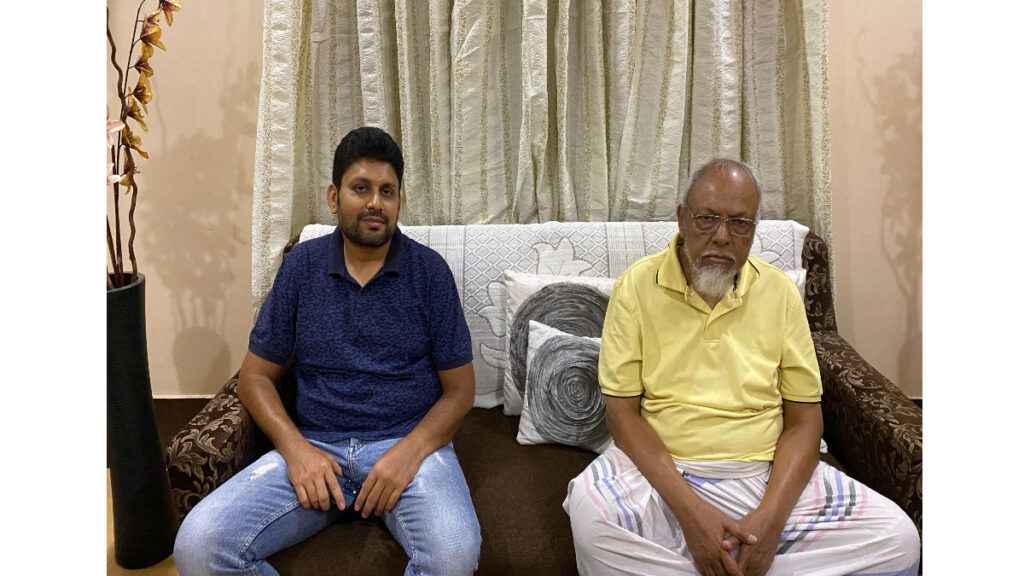
His family shares his love for the country and strong belief in respect for all religions as well as in the oneness of God. They hope to continue doing this pious work with the blessings of Allah as well as Lord Jagannath without any hindrance caused by the recent rising feelings of animosity in the name of religion and strongly believe that they will be able to because of all the blessings that they have gathered over the years. The story of The Second Salabega, Aminul Islam, is an epitome of national integrity and communal harmony.