
We, the people of Cuttack
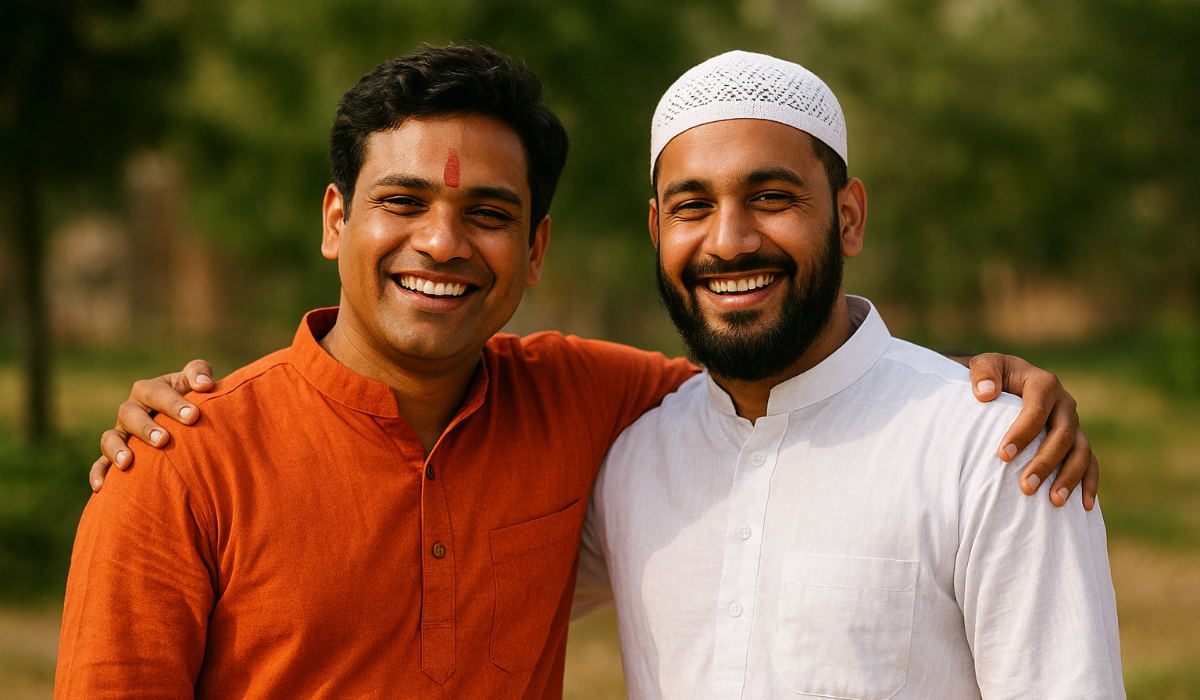
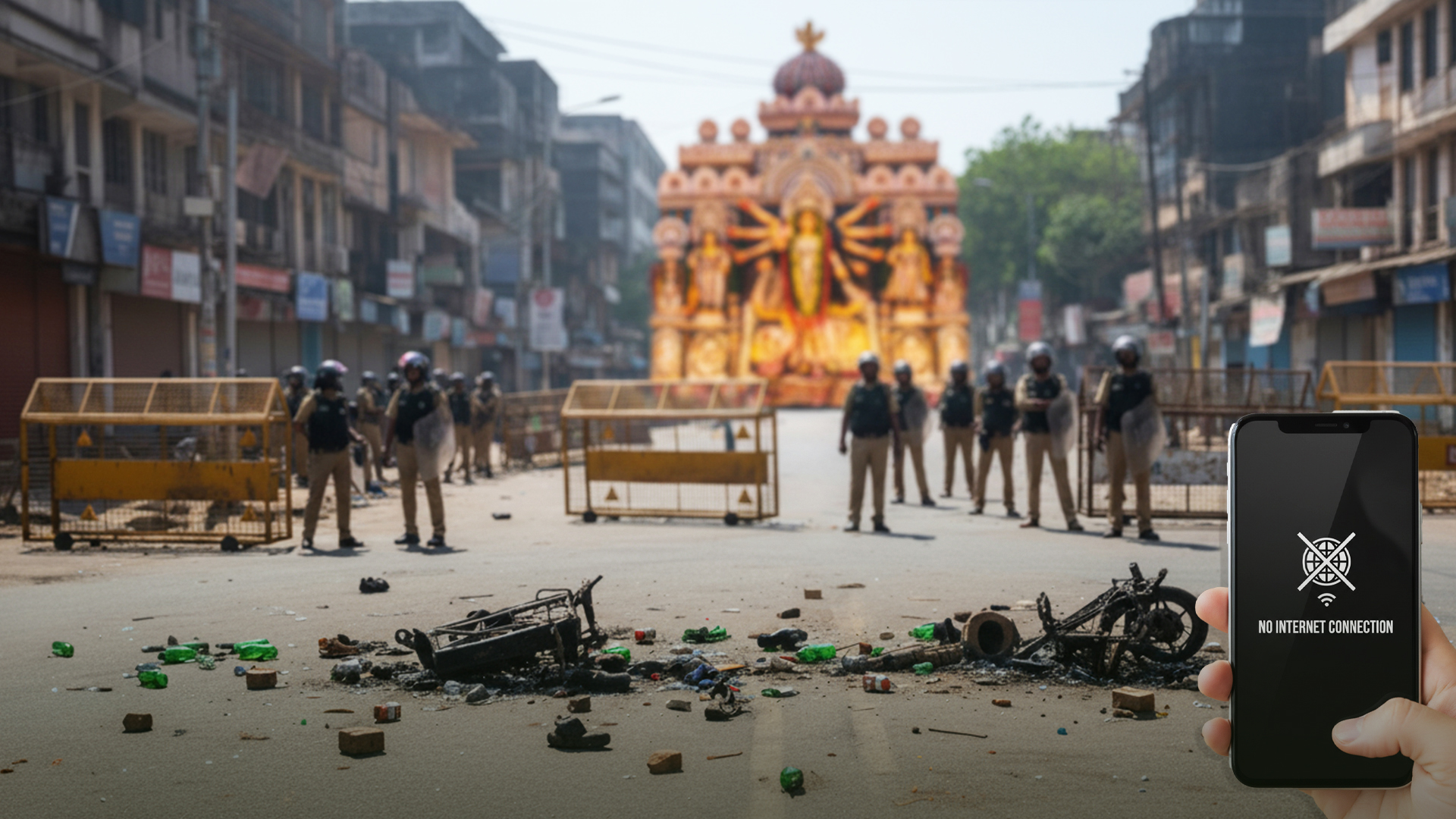
In the early hours of the 4th of October, Cuttack, the city affectionately known as the city of brotherhood, found itself at the heart of an unexpected storm. What began as a routine Durga Puja immersion procession turned tense when violence broke out, unsettling the peace that has long defined this millennium city. Swift administrative action followed. A 48-hour internet suspension, Section 144 imposed in vulnerable zones, and a visible sense of unease in the air. However, there was no official confirmation that the unrest was communally motivated; whispers and speculations spread faster than facts. For a city where people have, for generations, joined hands to celebrate each other’s festivals with warmth and inclusivity, the events of that evening struck a dissonant note. As Cuttackiyas went to bed that night, or at least tried to, one question lingered: had something changed? Or was this, perhaps, the time to reaffirm what truly makes Cuttack special, its enduring spirit of bhaichara, the brotherhood that has stood the test of time.
Cuttack’s story of harmony is not written only in its rituals and processions but in the quieter corners of its printing presses, poetry, and workshops, places where faiths met in work, friendship, and shared purpose.
Kohinoor Panji: Calendrical Harmony
The story of the Kohinoor Panji begins in 1935, when Shaikh Aminul Islam first published what would become one of Odisha’s most trusted almanacs. Over the years, it has earned a presence in all Odia houses, in India or abroad, not just as a calendar, but as a shared reference point for rituals, festivals, and life’s most important moments.
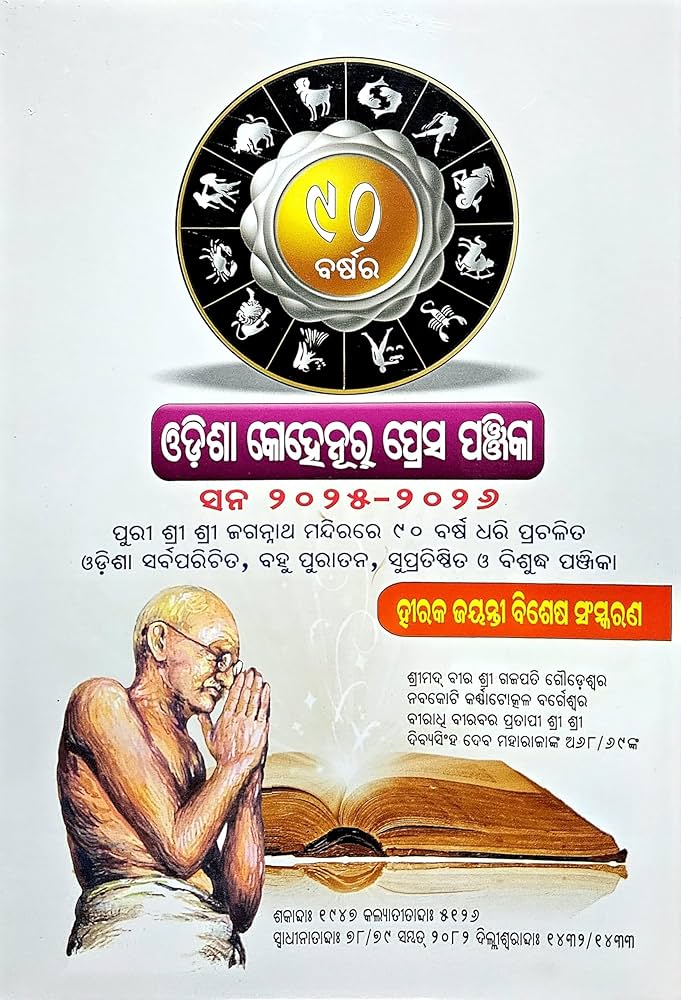
What makes the Kohinoor remarkable is that it is a Hindu religious calendar, widely consulted for auspicious timings (lagnas, nakshatras) and festival dates, yet it has always been published and maintained by a Muslim family. The very act of computing the Panji, performing astronomical calculations, determining muhurats, and publishing temple schedules requires scientific precision and religious trust, and both have been entrusted to the Kohinoor Press over decades.
The Panji is not a static ritual text; it evolves. Its calculations are cross-verified, updated, and sometimes adapted to changing astronomical data or local conditions, making it a living document rather than a rigid relic. Its adoption by temple authorities and households speaks to the confidence that Hindus have placed in a Muslim-run press, a confidence built over generations and sustained through daily practice. In this sense, Kohinoor is more than a publication; it is a bridge between communities, an institutional embodiment of bhaichara.
Even in times when communal tensions surged elsewhere in India, the Kohinoor Press continued its work undeterred. Its continuity across pre- and post-independence India, across political shifts and communal crises, underscores the degree to which its identity is woven into Cuttack’s civic fabric.
.png)
The Muslim Gazette & Syed Barkatullah Barkat: Journalism as Conscience
Parallel to this calendrical unity was another cultural thread: Urdu journalism. In 1937, Maulvi Syed Barkatullah Barkat, born in Odia Bazar, founded The Muslim Gazette, the first Urdu newspaper in Odisha. Barkatullah was a poet, scholar, orator, and freedom fighter, balancing literary sensibility with civic conscience.
Through the Gazette, he cultivated a public space that was not sectarian but intellectual and plural. He framed journalism as an ethical responsibility, writing editorials on communal harmony, civic duty, and shared progress. Barkatullah’s editorials and poems often crossed boundaries, demanding that both Hindus and Muslims see in each other not difference, but partners in building a shared society.
One of Barkatullah’s key interventions was in the formation of the Jamiat Ulama-e-Odisha in 1937, where the Muslim Gazette served as a communication organ to mobilize community members toward social upliftment and inter-communal dialogue. He also participated in public gatherings held at Qadam-e-Rasool in Cuttack, calling for unity and civic action beyond religious divides.
His poetry and journalism remain a testament that literature in Cuttack was not an insular domain; it was engaged, deeply moral, and committed to civic peace.
Here are several more examples of Hindu-Muslim unity in Cuttack, drawn from recent reporting. These can help deepen your narrative by showing how everyday cultural, economic, and artisanal life continues to bind communities together.
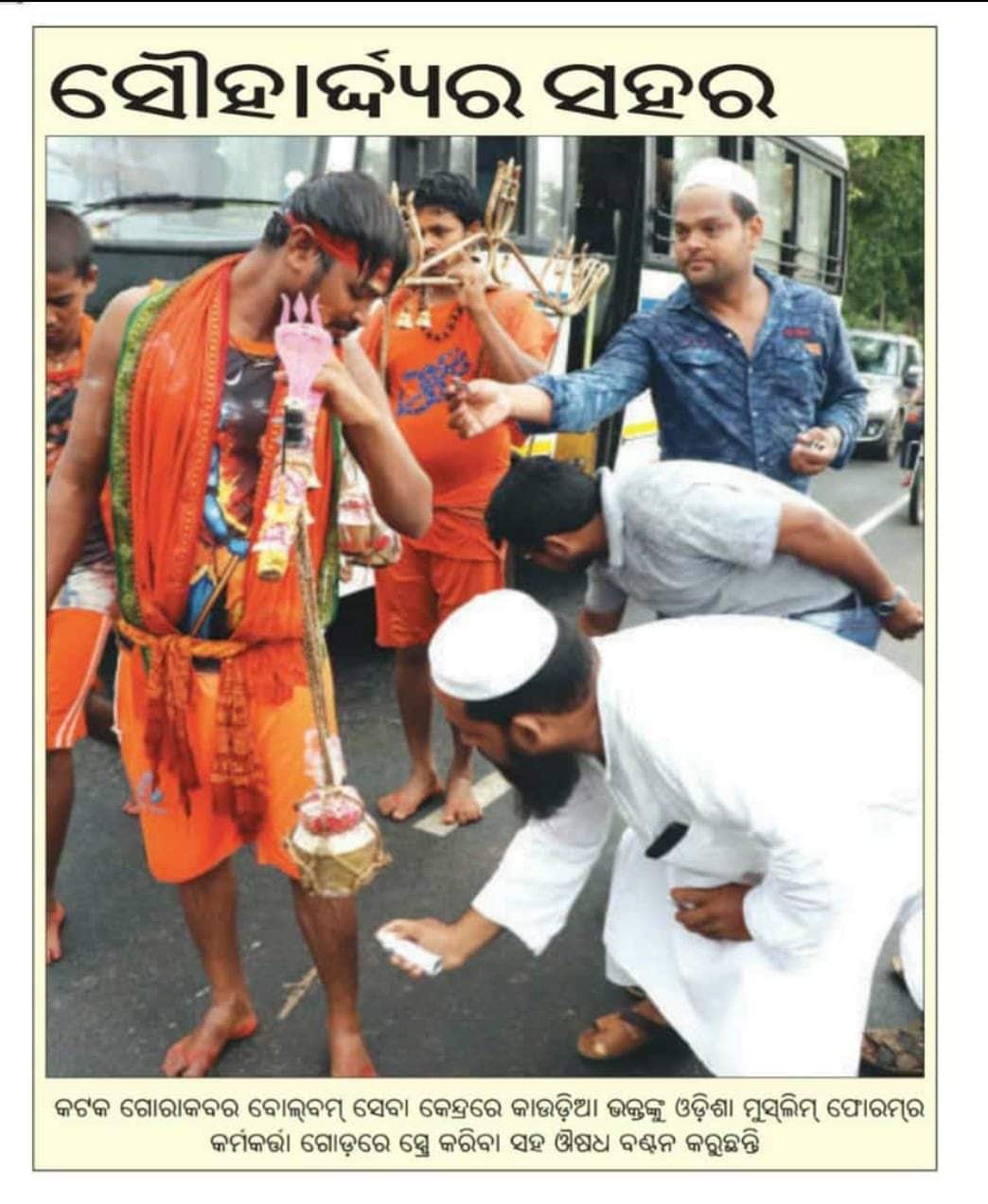
Muslim Artisans Making “Bahungi” for Hindu Devotees
In Shravan, when devotees known as Kaudias walk long distances to pour water on Lord Shiva during the Bol Bom journeys, they carry bahungis, decorative bamboo structures (often snakes, tridents, bows, etc.). These bahungis are made by Muslim artisans in Cuttack. One artisan, Mohd Sarwar Ansari, produces several per day, selling them in the range of ₹400 to 1,500.
What’s notable is that Ansari and others create these items not for their own religious ritual, but for another community’s celebration. This is more than commerce; it’s a practice of participation and shared culture. It is an example of how festivals (even ones not their own) become sites of collective creativity and livelihood.
Zari Pandals and Zari/Jari Medha Traditions
The Zari Medha (and Jari Medha) tradition in Cuttack is one of the most vivid symbols of communal harmony. Muslim artisans, some families with skills passed down over generations, make elaborate backdrops, tableaux, headgear, earrings, etc., using golden threads, zari, mirrors, glitter, sola (Indian cork), paper, and other materials.
For example, Aslam Ali’s family in Banka Bazar has been creating jari medhas for Durga Puja for over ninety years, making pieces for many Puja committees in and beyond Cuttack. They do this not only for Durga Puja, but also contribute their craftsmanship to Ganesh Puja, Kali Puja, Laxmi Puja, etc.
The artisans often say that they enjoy the work, see it as part of their identity, and feel welcomed by the Puja committees. Their contributions are essential, and their skills are admired.
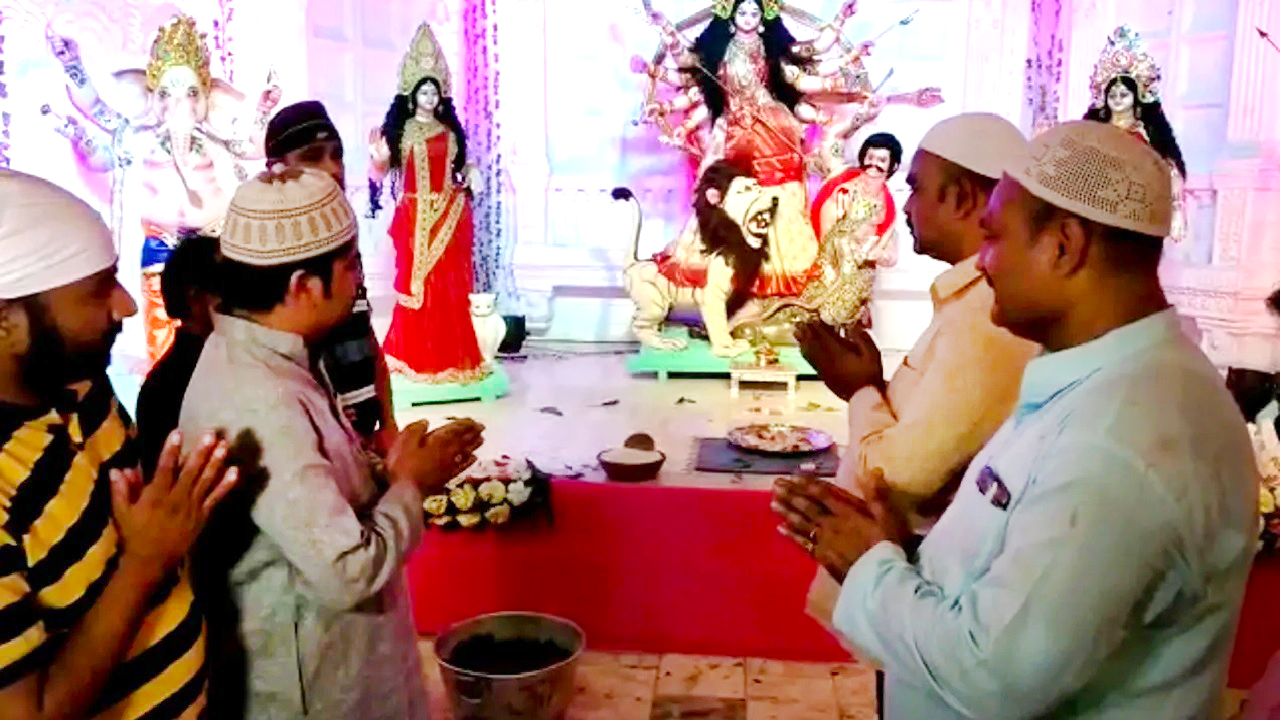
Puja Committees with Muslim Participation
Apart from artisan work, Muslims are active members of many Durga Puja committees in Cuttack. In Alisha Bazar, for example, and others, Muslim members help plan and organise from the ground level. They contribute materially (e.g., providing materials for pandal frames, hay & clay, etc.), financially, and in decision-making.
In many puja committees in Banka Bazaar, Sutahat, Mangalabag, Jobra, Dargha Bazaar, etc., Muslim families are involved regularly. At Alisha Bazaar, one member said the preparations for Puja would not begin without their involvement.
Shared Cultural and Economic Bonds
The artisans making the zari/jari work, voilà decorations, bahungis, chandi, or silver filigree backdrops are often from Muslim communities. Their supplies, workshops, training, and livelihood often depend on the festival season (Puja, etc.), which involves everyone. Hindus participate by commissioning, patronizing, and endorsing the work. Artisans say that there is respect, thankfulness, and gratitude from Hindu communities when their work is used in Puja. They see acceptance rather than suspicion. Shamim Khan, a Muslim artisan, says the Pandals would be incomplete without them; that people do not look at them as 'others' in those moments.
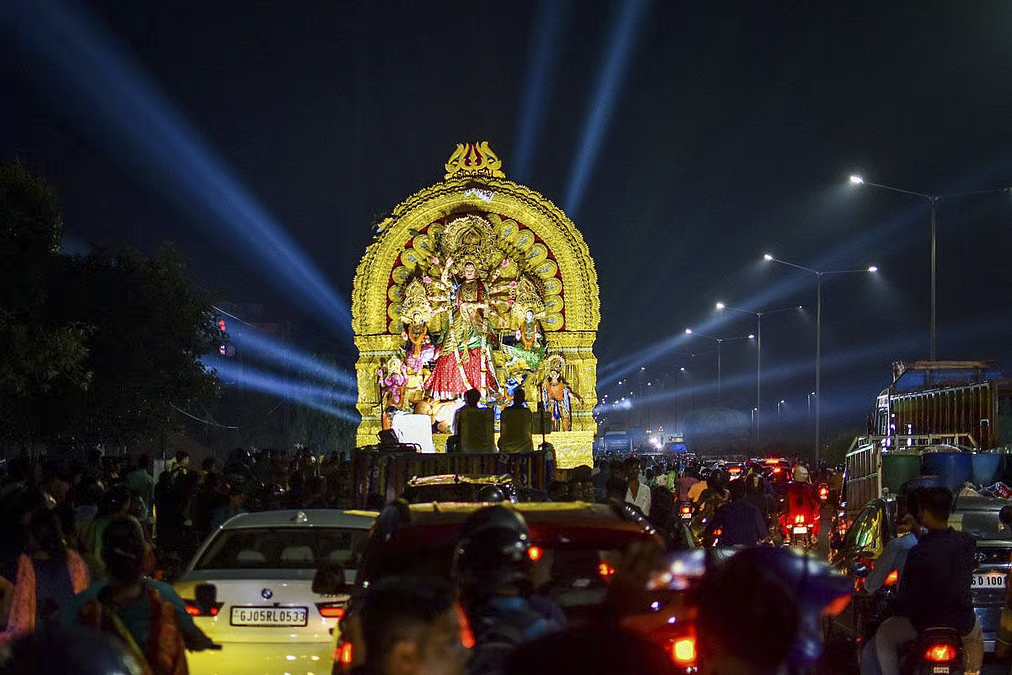
Voices of Cuttack: The City Speaks
As the city grappled with the shock of the incident that took place in the wee hours of the 4th of October, voices from every corner of Cuttack echoed one sentiment: disbelief, sorrow, and an unshaken faith in brotherhood.
For residents like Hanif Khan from Kadam-e-Rasool, the events felt alien to the Cuttack they knew. “What happened was truly unfortunate. We have lived in unison with our Hindu brothers and sisters here for decades,” he said firmly, adding that he refuses to believe true Cuttackiyas were behind the violence. “Those fringe elements were definitely not residents of Cuttack. Irrespective of what has happened, we will continue to live in unity and peace. Nobody can break us apart.”
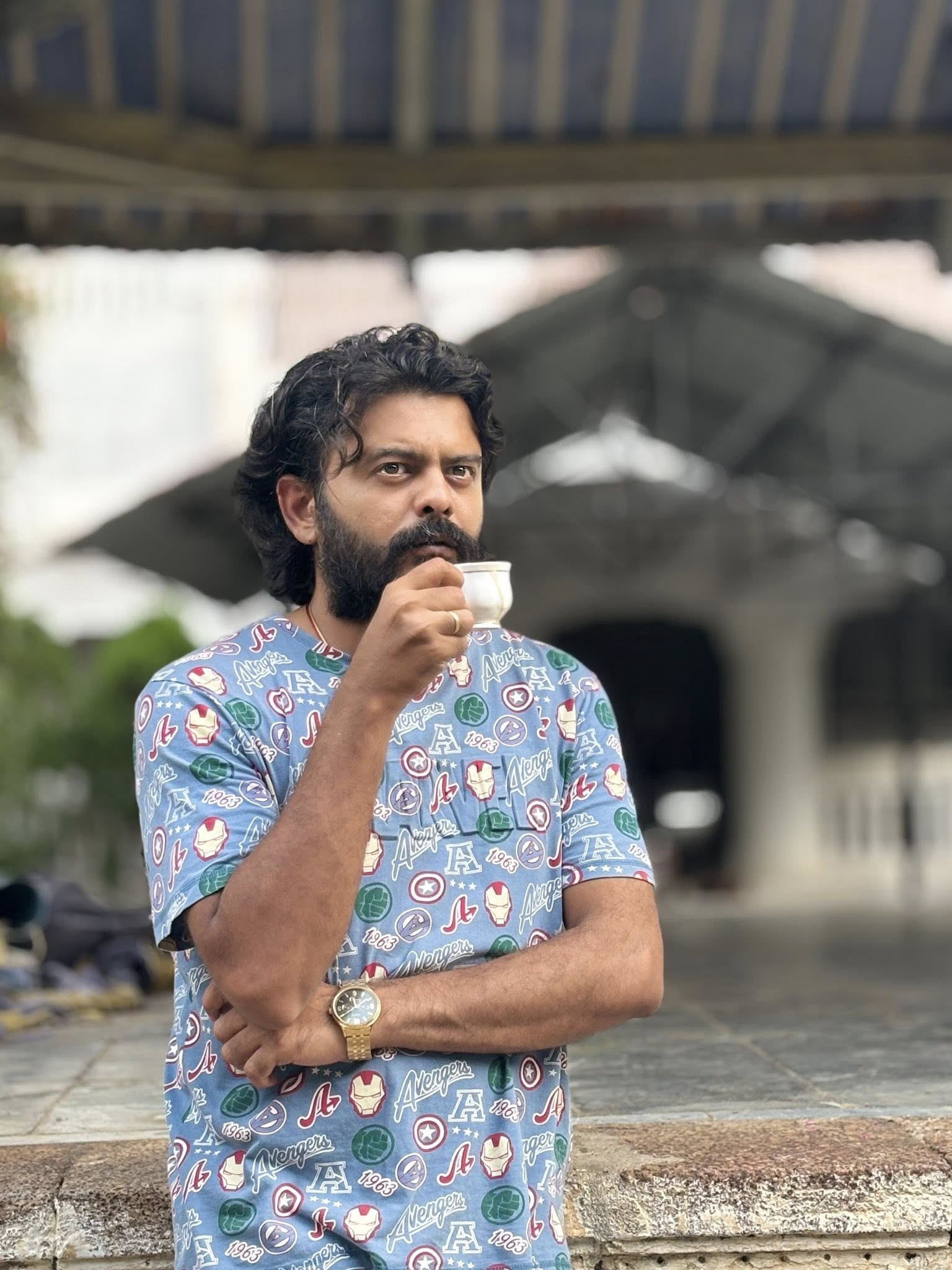
For many like Nishant Majithia, actor, commentator, and writer, the city’s essence lies in its everyday warmth. “I don’t live in Cuttack anymore, but my heart still lives there,” he shared. “Cuttack ties you with a sense of belongingness that’s unparalleled. At the heart of this is the famed brotherhood, bhaichara. In Cuttack, even a stranger is greeted as ‘bhai’. That’s our language before religion.” In his unmistakably Cuttackia style, Nishant added with humour, “If someone comes to divide us, my answer will be, ‘Bhai alia karani. Kati jaao ethu.’ Even in anger, our first word is ‘bhai.’”
Mirajul Hussainy, President of the City Muslim Youth Association, praised the city’s restraint. “Though I’m disturbed by what happened, I’m proud of the resilience of the Cuttackiyas who didn’t allow the flare-up to spread. Such incidents must always be resisted by peace-loving citizens.”
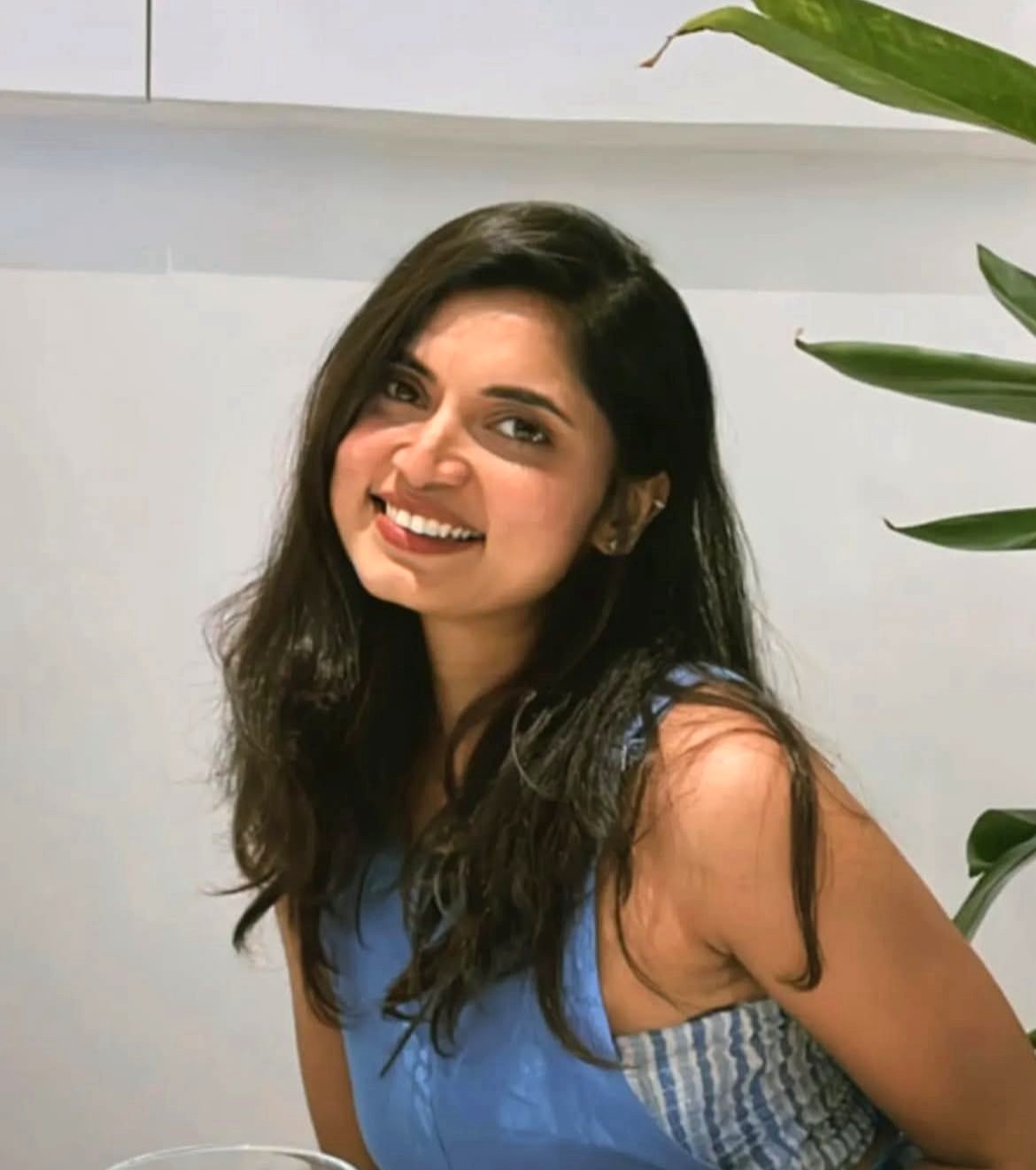
Writer Akankshya Kumari reflects on the emotional toll of the events. “For decades, my hometown has stood as a living example of unity,” she says. “What we witnessed this year was deeply unsettling. My heart goes out to those who lost their livelihoods. It reminds us how divisive politics and the reckless misuse of social media can threaten our coexistence. Yet, amidst the chaos, Cuttack rose above hate. People collectively refused to succumb. We will not let our city’s spirit be fractured: forever our bhaichara ra sahara.”
Elderly voices like Naseer Khan’s carried reassurance rooted in memory. “I am not worried. Such attempts can never impact our age-old unity or bhaichara. I believe our peaceful coexistence will continue.”
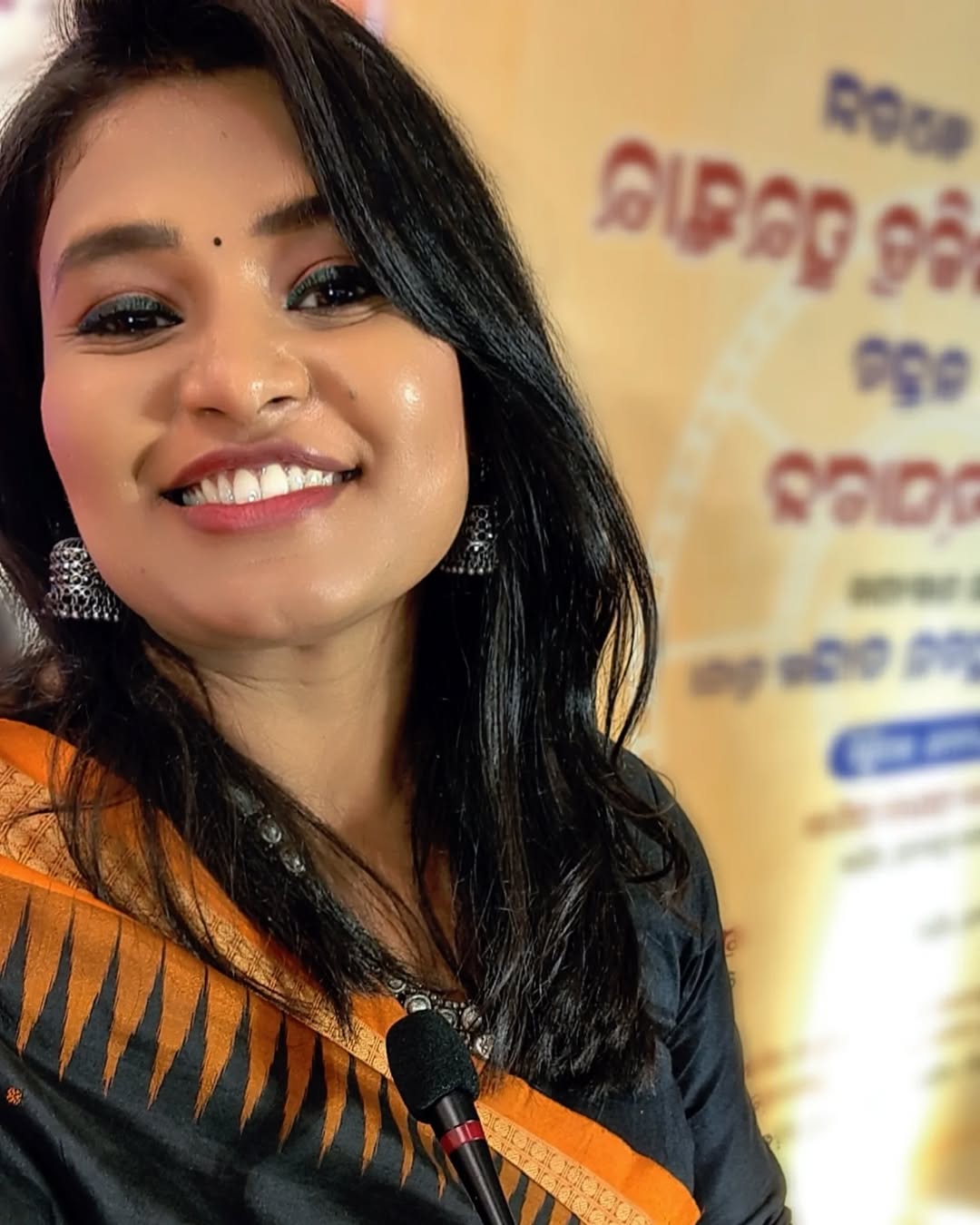
Television host Sulagna Routray expressed anguish over the loss of life and the erosion of values. “After life is lost, can anyone bring it back? Then what is the purpose of mutual destruction?” she asked. “For generations, we have lived safely together. Bhaichara is a responsibility, not just a word. When a Christian brother passes by Chandi Mandir, does Chandi Maa withhold her blessings? When a Hindu father takes his sick child to Pir Baba, does he deny healing because of religion? Cuttack Chandi has protected this city, Pir Babas have healed it, and we have never objected. Now, to see our peace guarded by police, tear gas, and curfews, it is heartbreaking. Those who love hatred more than Cuttack should leave Cuttack. We want to live in harmony.”
Abhishek Parija, filmmaker and educator, grounds these emotions in history. “Cuttack’s civilisation goes back over a thousand years,” he notes. “It has seen Hindu, Muslim, Maratha, and British rule, and through all that, the city’s identity has evolved together, not apart. Our Muslim brothers have been part of this landscape for over four centuries, their Odia-Hindustani dialect itself a living example of fusion. A hundred-year hate project cannot erase what has been built over a millennium. The hatemongers must understand that. Cuttack must cherish peace in a broken world.”
From community leaders, too, came calls for calm. Liaqat Ali Khan, Secretary of Anjuman Islamia, said, “We, the citizens of this ancient city with a thousand-year legacy of harmony, denounce any attempt to disturb our peace. Cuttack has always stood for coexistence. Let us stand united as true Cuttackiyas to protect our spirit of humanity.”
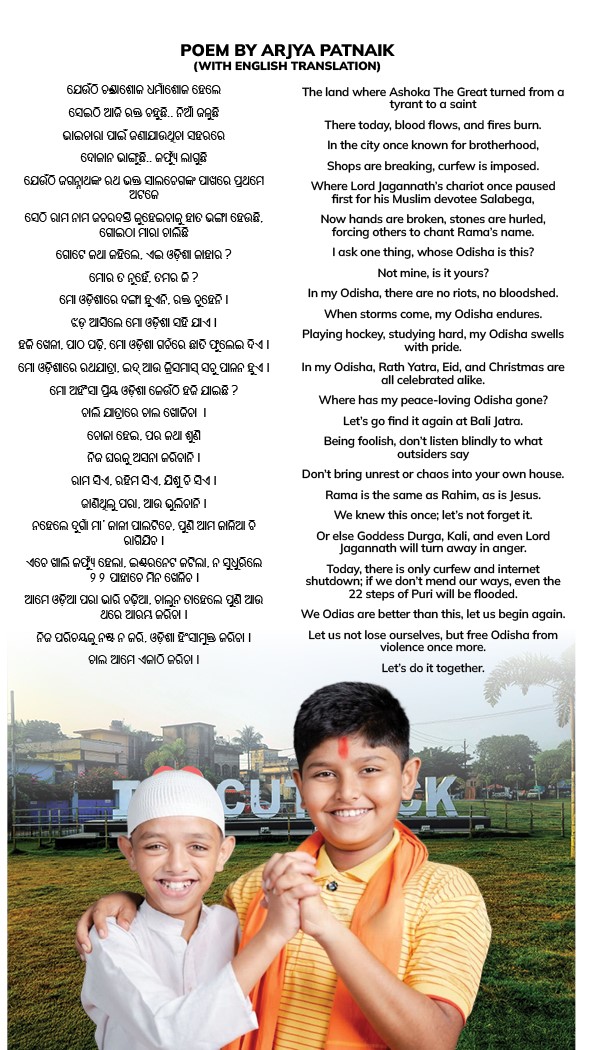
Even as words of reason filled the air, art also became a form of resistance. Arjya Pattnaik, TV producer and daughter of the late actor Hara Pattnaik, captured the city’s anguish in a moving Odia poem, a plea to rediscover the Odisha of peace and compassion.
Restoring Harmony: The City Stands Together
In the days that followed the unrest, while fear still lingered in the narrow lanes and markets of Cuttack, another movement quietly began to take shape, one rooted not in anger, but in hope. On October 9, 2025, just days after the violence that shook the city, a crucial peace meeting was convened at Gandhi Bhawan, Sunshine Field, under the banner of the Shanti Sadhbhavna Samiti.
The meeting was held to chart out a comprehensive peace plan for the city in the wake of the communal flare-up that had erupted during the Durga Puja Bhasani procession in the early hours of Saturday, October 4, near Dargha Bazar. The unrest had escalated further the next evening, when a mob of nearly 5,000 youths, defying restrictions, took out a motorcycle rally that led to vandalism, arson, and looting across parts of the city. Around 25 police personnel sustained injuries while trying to restore order and were admitted to SCB Medical College and Hospital for treatment.
For a city that has long prided itself on its centuries-old legacy of communal harmony, these incidents felt like an attack on its very identity. But the response that followed reaffirmed why Cuttack continues to be called the City of Brotherhood.
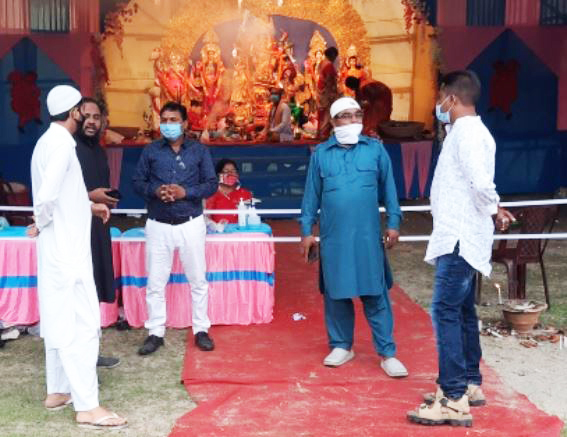
Chaired by Dr. Biswajeet, the emergency meeting of the Shanti Sadhbhavna Samiti brought together eminent citizens, community elders, religious leaders, and representatives from both Hindu and Muslim communities. The hall at Gandhi Bhawan buzzed not with accusations, but with purpose. Everyone agreed that restoring peace was not just the job of the administration — it was the moral duty of every Cuttackia.
The Samiti resolved to take tangible, community-driven steps to rebuild trust. Among the key decisions were plans to organize an anti-communal street play, a peace rally, and a 12-hour fast by members under the statue of Mahatma Gandhi, each symbolizing the city’s rejection of hate and its embrace of unity. Youth-focused workshops on communal harmony and awareness drives in sensitive areas were also proposed to ensure that dialogue replaced misinformation, and empathy triumphed over prejudice.
A unanimous resolution was passed to urge the Cuttack Police Commissionerate to take strict action against those spreading fake or inflammatory content on social media, recognizing that in the digital age, rumours often become the first sparks of unrest.
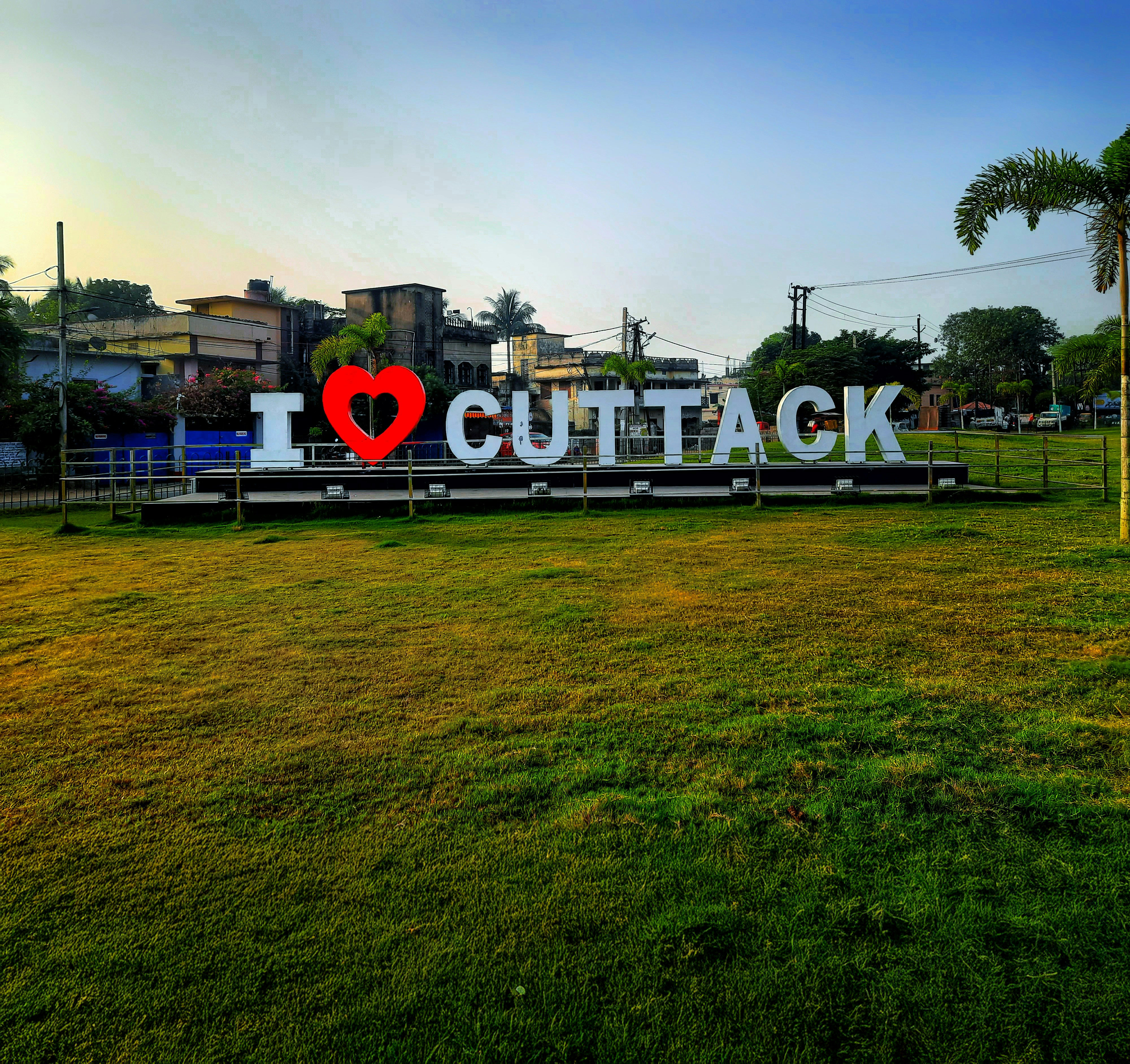
As the meeting drew to a close, a shared conviction filled the air that peace in Cuttack would not just be restored, it would be rebuilt, stronger than before. The citizens in attendance pledged to stand united, to protect the soul of the city, and to ensure that its long legacy of brotherhood, tolerance, and coexistence remains unbroken.
Cuttack has seen a thousand years of change, kingdoms rising and falling, rivers shifting course, festivals evolving, yet its essence has always endured. The events of October tested that essence, but the people’s response proved that bhaichara is not just a word here; it is the heartbeat of the city. And as the lights of Kali Puja and Kartikeswar Puja approach, they will shine as a reminder that no matter how dark the night, Cuttack’s spirit of unity will always find its dawn.